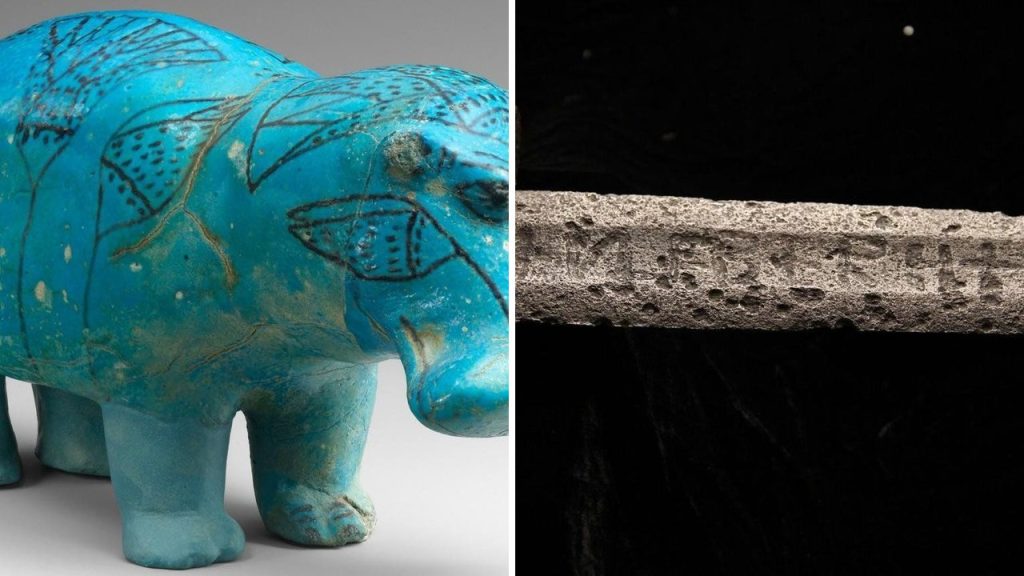
Before the Enlightenment came along and politely suggested that maybe animals couldn’t be held morally accountable for their actions, European courts spent several centuries operating under a very different assumption. From the 13th through the early 20th century, pigs, rats, beetles, roosters, and at least one monkey were formally charged, summoned, tried, and sentenced by real judges following real legal procedure, and some of them were assigned defense lawyers who took the job seriously. The list ahead covers the most documented cases, and every single one of them is real.
The swine of Falaise, France (1386)

A sow was convicted of killing and eating an infant, dressed in human clothing including a jacket and trousers for her execution, maimed in the head and forelegs to mirror the injuries she’d caused, and then publicly hanged while a crowd in their best clothes watched, with the entire scene commemorated in a church fresco that survived until 1820.
The bull of Mooskirch, Germany (1314)

A bull that had gored a man to death was formally tried, convicted of murder, and executed in Germany in 1314, with the proceedings conducted with the same seriousness the court would have applied to a human defendant facing the same charge.
The slugs of Berne, Switzerland (1451)

Church authorities in Berne formally summoned slugs to court for destroying crops, and when the slugs predictably failed to appear, a defense lawyer was appointed to argue on their behalf, eventually securing them a designated piece of land to retire to, which the court hoped they would be content with.
The rats of Autun, France (1508)

A group of rats was charged with destroying barley crops, and their court-appointed lawyer Bartholomew Chassenée filed so many successful delay motions, including arguing that his clients couldn’t attend court safely because the townspeople’s cats posed a threat, that the case was eventually dismissed without a verdict.
The rooster of Basel, Switzerland (1474)

A rooster was put on trial for the “heinous and unnatural crime of laying an egg,” which medieval courts believed could hatch a basilisk capable of destroying the Christian faith, and the bird was convicted, sentenced to death, and burned at the stake alongside the offending egg.
The weevils of St. Julien, France (1587)

Vine weevils were formally prosecuted for destroying a vineyard, given a defense lawyer, and offered a plot of land as an alternative habitat in the court’s verdict, and the case actually went to appeal in 1603 when the weevils refused to leave, making it one of the longest-running insect litigations in history.
The sow and piglets of Savigny, France (1457)

A sow was convicted of killing a five-year-old boy and hanged from a tree by her hind legs, while her six piglets, found with blood on them and technically charged as accomplices, were acquitted on the grounds of their youth and their mother’s corrupting influence, which remains one of the more extraordinary mitigating circumstances in legal history.
The dog of Fontenay-aux-Roses, France (1606)

A dog was tried for attacking a human and formally sentenced, with the court records showing that the proceedings were indistinguishable in format from those used in human criminal cases, including the appointment of counsel and the weighing of testimony from witnesses.
The dolphin of Marseilles, France (1596)

Legal historian E.P. Evans recorded that dolphins were tried and executed in Marseilles in 1596, though the surviving record offers almost no details beyond the fact and the location, making it one of the most tantalizing and least explained entries in the entire history of animal prosecution.
The donkey of Vanves, France (1750)

When Frenchman Jacques Ferron was caught in a compromising situation with a female donkey and both were brought to court, the donkey was acquitted on the grounds that she had not consented and therefore bore no guilt, while Ferron was executed, making the donkey one of the very few animal defendants in history to walk free on a consent defense.
The flies of the Palace of Justice, France (1394)

In a case that reads more like a bureaucratic formality than a genuine prosecution, flies at the Palace of Justice were formally ordered to leave the building or face legal consequences, and the church’s role in issuing the order was treated as entirely routine by everyone involved, which says something remarkable about how these proceedings were normalized.
The dogs of Basing, Switzerland (1519)

A group of dogs was excommunicated from the parish of Basing for disrupting church services with persistent barking and nipping at parishioners’ legs, with the ecclesiastical court finding them guilty of “blasphemous barking” and “unchristian conduct,” which are charges that no legal system has attempted to bring back since.
The Hartlepool monkey, England (early 1800s)

When a French ship wrecked off the coast of Hartlepool during the Napoleonic Wars, the only survivor was the ship’s monkey, and local fishermen who had never seen a Frenchman put the animal on trial as a suspected French spy, found it guilty based on its unintelligible chattering, and hanged it on the beach, and Hartlepool has never quite escaped the story since.
The locusts of Lausanne, Switzerland (1479)

Church authorities in Lausanne issued a formal ecclesiastical summons to a swarm of locusts devastating local crops, appointed a lawyer to represent the insects’ interests, and delivered a verdict ordering them to leave the region under threat of divine punishment, which was about as enforceable as it sounds.
The horse of Dijon, France (1389)

A horse that had kicked and killed its rider was formally tried for homicide in Dijon, convicted, and executed, with the court record noting that the animal had been provoked but that provocation was not considered sufficient mitigation for the taking of a human life, a standard that the court applied consistently regardless of the species involved.
The termites of Brazil (1713)

A Franciscan friary in Brazil filed a formal complaint against termites that were destroying the building’s foundations, and the church court appointed a lawyer to represent the termites, who successfully argued that the insects had been there first and that the friars were the intruders, resulting in an order that the friars provide the termites with an alternative food source.
The goat of Burgundy, France (1405)

A goat was charged with fatally wounding a child and tried before the secular court of Burgundy, with the proceedings following the same format used for human defendants including witness testimony, deliberation, and formal sentencing, and the animal was ultimately convicted and executed.
The two Salem dogs, Massachusetts (1692)

During the Salem witch trials, at least two dogs were accused of being instruments of the devil after witnesses claimed to have seen their spectral forms participating in supernatural activities, and both animals were executed before any formal trial could establish whether they had acted with sufficient independent malice to be found culpable.
The cock of Basel redux (15th century)

A second rooster case from the same Swiss city recorded a cock being tried not for laying an egg but for crowing at an unusual hour, which local superstition associated with demonic activity, and the animal was convicted and killed before the city’s relationship with unusual roosters could develop any further.
The moth of Germany (early 18th century)

A moth that had eaten a vestment at a German church was formally prosecuted in an ecclesiastical court, represented by counsel, and found guilty of sacrilege, and while the punishment for a moth found guilty of sacrilege is not recorded in detail, the fact that a lawyer was paid to defend it suggests the proceedings were taken entirely at face value.
The pig of Paris, France (1494)

A young pig that had mutilated the face and neck of an infant was tried before a Parisian court, prosecuted by a licensed attorney, found guilty, and sentenced to be hanged and strangled on a wooden gibbet “near and adjacent to the gallows,” with the verdict written out in the same formal language used for every other capital case that year.