The Victorian era is often remembered for its elegance and strict social customs, but it also had a surprisingly dark side. From unusual mourning rituals and strange medical practices to bizarre superstitions and everyday habits, many traditions from the period seem unsettling by modern standards. Here are 25 creepy Victorian traditions you didn’t know about.
Hair Jewelry

Locks of hair from loved ones were woven into rings, bracelets, necklaces, and brooches. Mourning jewelry made from a deceased person’s hair became especially popular.
Elaborate Mourning Clothes

Widows were expected to wear black for years after their spouse’s death. Strict etiquette even dictated what fabrics, jewelry, and colors were acceptable during each stage of mourning.
Keeping Death Masks

Plaster casts of a person’s face were made shortly after death. These masks preserved their exact features and were displayed or stored as keepsakes.
Spirit Photography

Photographers claimed they could capture ghosts standing beside living relatives. Many of these images were clever double-exposure tricks that fooled grieving families.
Corpse Viewing at Home

Instead of funeral homes, families often kept the deceased inside the house for several days while friends and neighbors visited to pay their respects.
Fear of Being Buried Alive

Victorians feared premature burial so much that inventors designed “safety coffins” equipped with bells, flags, breathing tubes, or signaling devices.
Collecting Human Teeth

Dentures were often made using real human teeth purchased from poor people or collected from battlefield casualties.
Preserving Dead Children’s Toys

Parents frequently kept bedrooms, toys, and clothing exactly as they had been after a child died, sometimes for decades.
Wearing Jet Jewelry

Black gemstone jewelry made from fossilized wood became the fashionable accessory for mourners, especially after Queen Victoria popularized it.
Hidden Mourning Mirrors

Many households covered mirrors after someone died, believing spirits could become trapped inside the glass or that uncovered mirrors brought bad luck.
Mourning Dolls

Some families commissioned dolls dressed like deceased children or wearing mourning clothes as emotional keepsakes.
Language of Flowers

Specific flowers carried coded meanings. Lilies, rosemary, cypress, and forget-me-nots all sent different messages during funerals.
Calling Cards for Death Visits

Visitors left specially designed calling cards after attending a funeral or visiting a grieving household as a sign of respect.
Collecting Funeral Cards

Families printed decorative memorial cards featuring religious verses, poems, and portraits that guests often kept for years.
Public Executions as Entertainment

Early Victorian Britain still held public executions that attracted huge crowds, food vendors, and spectators before the practice ended in 1868.
Taxidermied Pets

Some wealthy owners preserved beloved pets through taxidermy so they could remain on display inside the home.
Black Crepe Decorations

Doors, furniture, and even portraits were draped with black crepe fabric after a death to signal that the household was in mourning.
Collecting Locks of Baby Hair

Parents often carefully saved a baby’s first haircut inside albums, lockets, or decorative frames that remained family heirlooms.
Mourning Embroidery

Women embroidered memorial samplers featuring names, dates, angels, willow trees, and verses honoring deceased relatives.
Cemetery Picnics

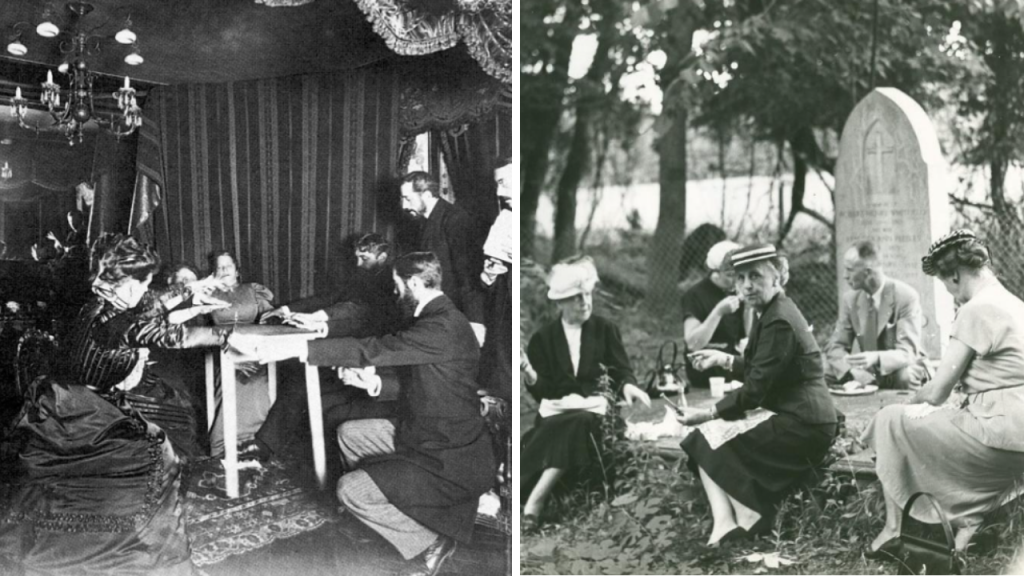
Large garden cemeteries doubled as public parks, and families often spent entire afternoons picnicking among the graves of loved ones.
Seances in the Living Room

The spiritualism craze convinced many Victorians that mediums could communicate with the dead through table-turning, knocking sounds, and ghostly messages.