Art has long been a window into the truth of human conflict, revealing the pain, chaos, and raw humanity of war. These 30 paintings don’t glorify battle; they reveal it for what it truly is.
1. Guernica – Pablo Picasso
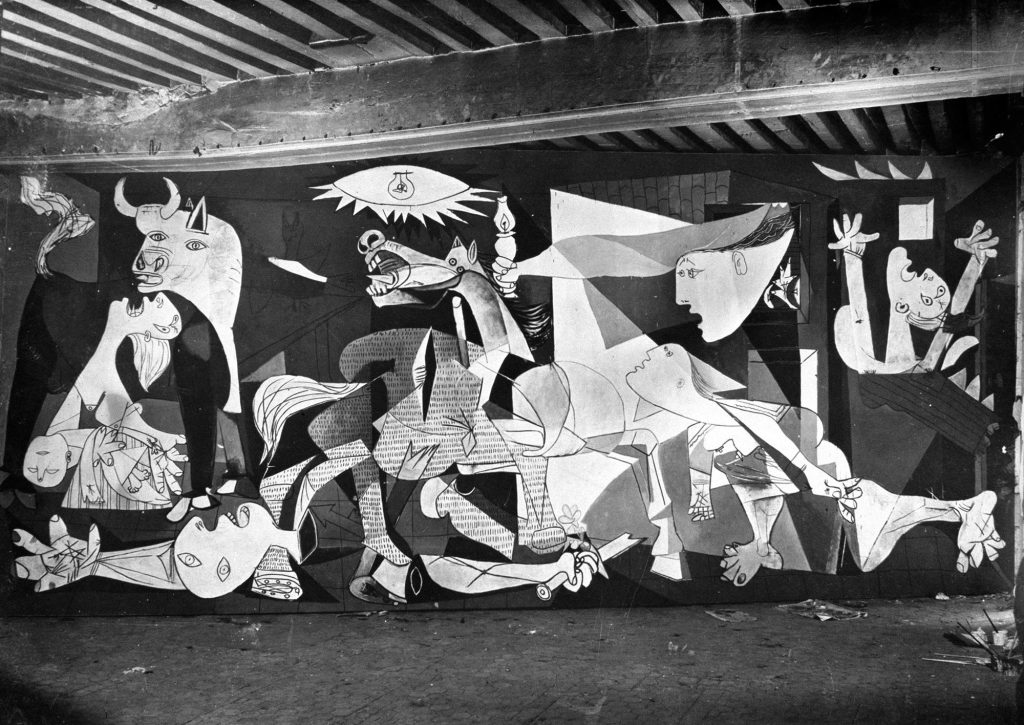
This black-and-white masterpiece depicts the bombing of Guernica during the Spanish Civil War. With distorted figures and screaming faces, it’s one of history’s most haunting anti-war statements.
2. Otto Dix’s War Triptych – Otto Dix
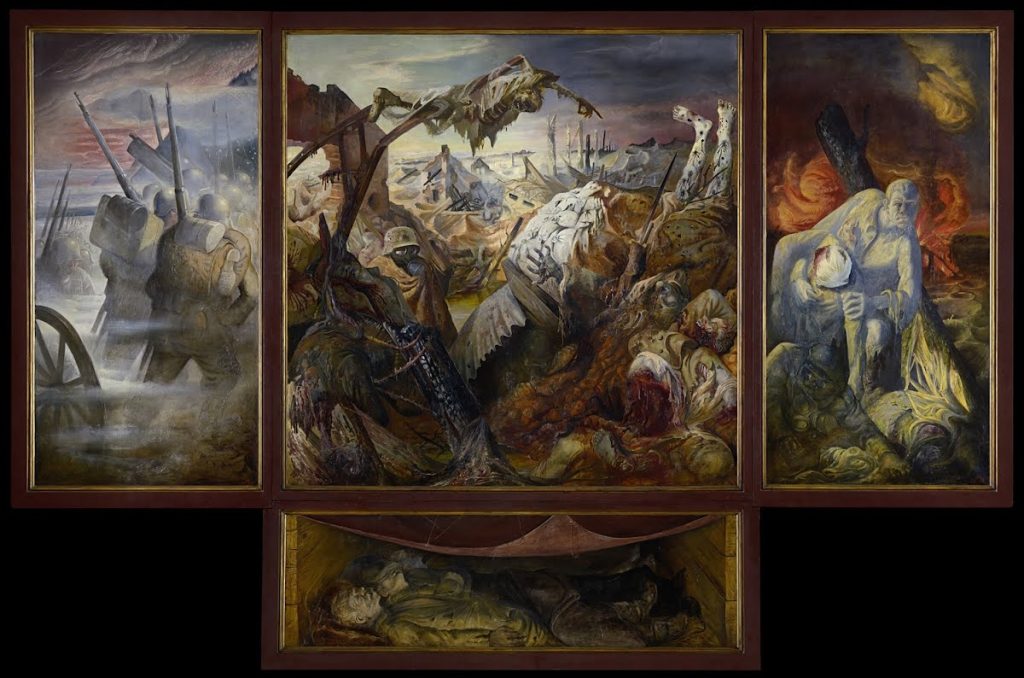
In three chilling panels, Dix chronicles the horrors of World War I from battlefield to aftermath. His grotesque realism strips away any illusion of heroism.
3. The Battle of Trafalgar – J.M.W. Turner
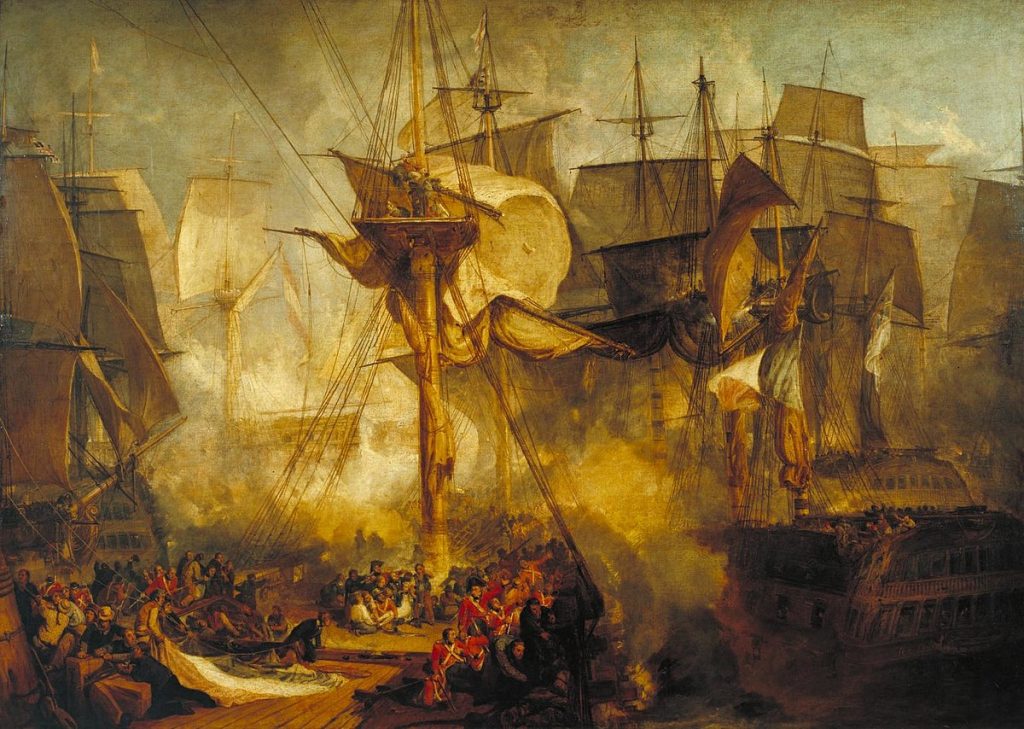
This epic naval scene shows the chaos and destruction of the famous sea battle. Turner’s swirling brushwork captures the confusion of combat more than its glory.
4. We Are Making a New World – Paul Nash
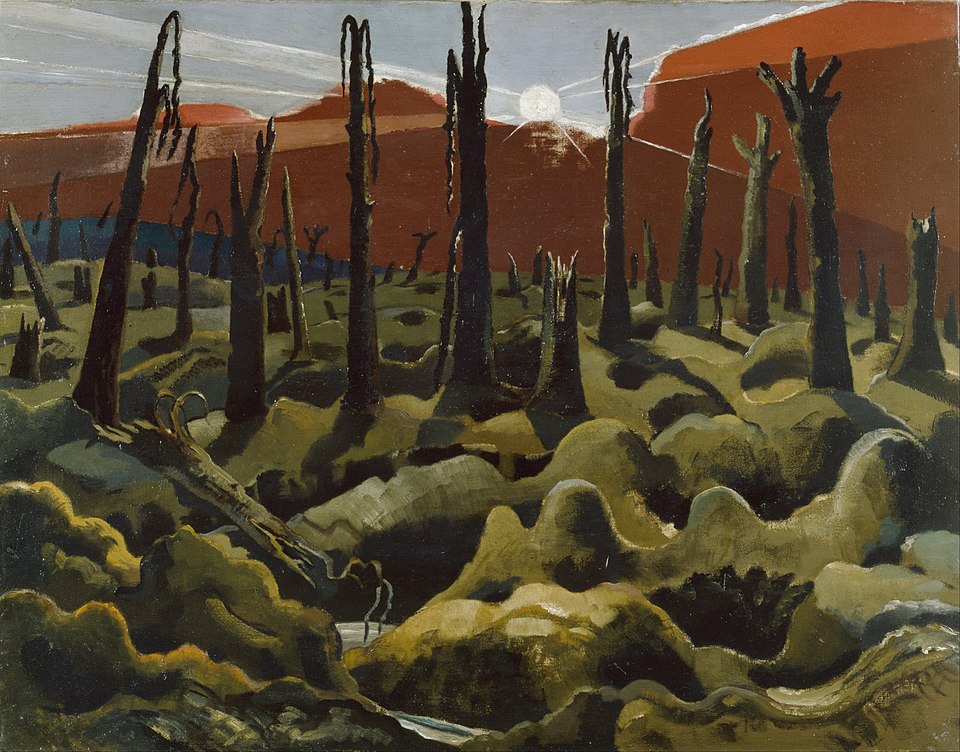
This World War I landscape shows a devastated battlefield under a blood-red sky. The title is bitterly ironic, contrasting progress with destruction.
5.
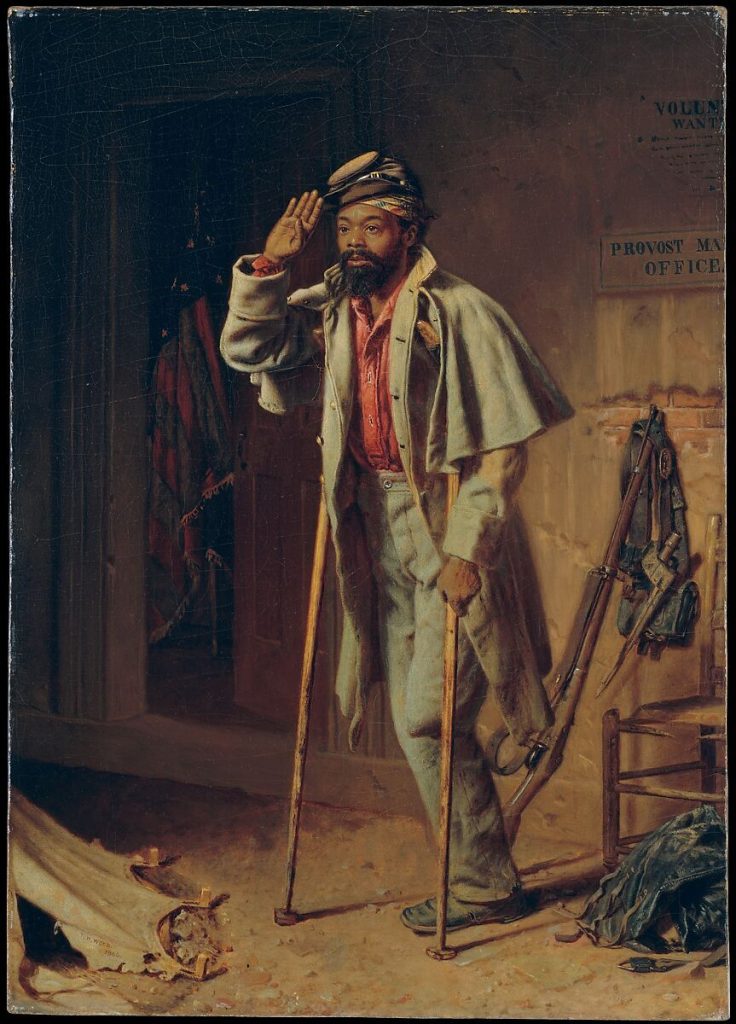
This Civil War-era triptych by Thomas Waterman Wood traces a Black man’s journey from enlistment to veteran, highlighting African American service in the Union Army. Painted with empathy during a time of racist caricatures, it honors the role of Black soldiers, who made up over ten percent of the military.
6. Bombing of London – Henry Moore
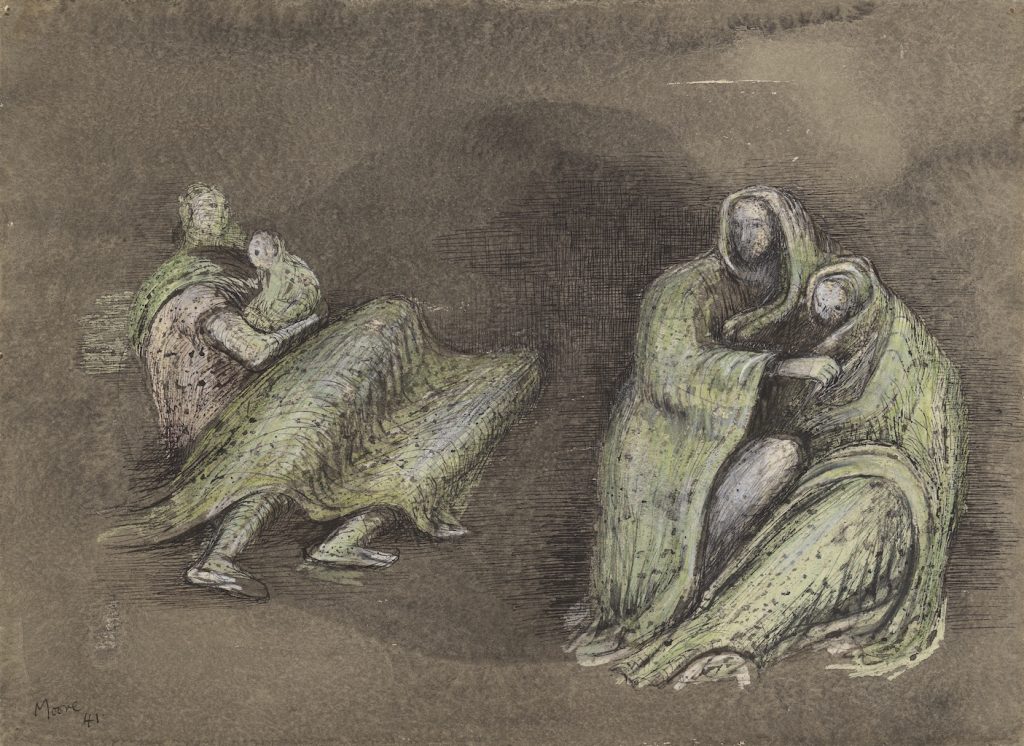
Moore’s drawings of people sheltering during the Blitz offer a deeply human perspective. The cramped, shadowy figures convey fear, resilience, and community.
7. The Wounded Cuirassier – Théodore Géricault
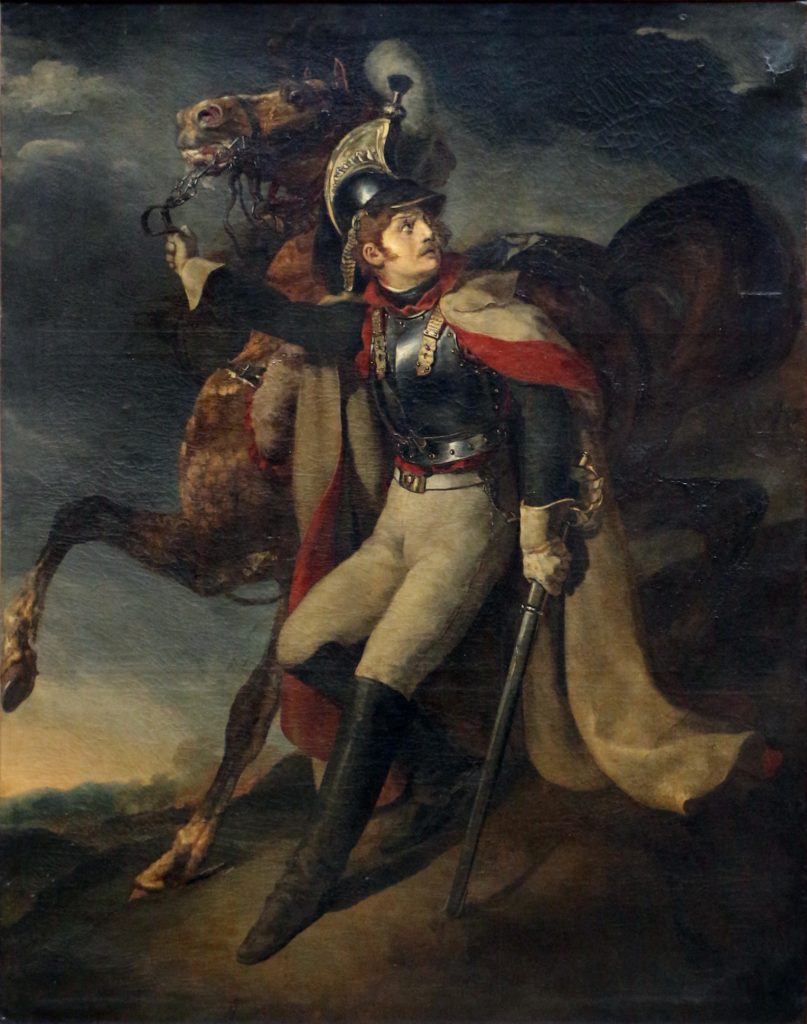
A proud cavalryman appears stoic, but his posture betrays pain and defeat. This early 19th-century painting quietly critiques war’s personal toll.
8. A Battery Shelled – Wyndham Lewis
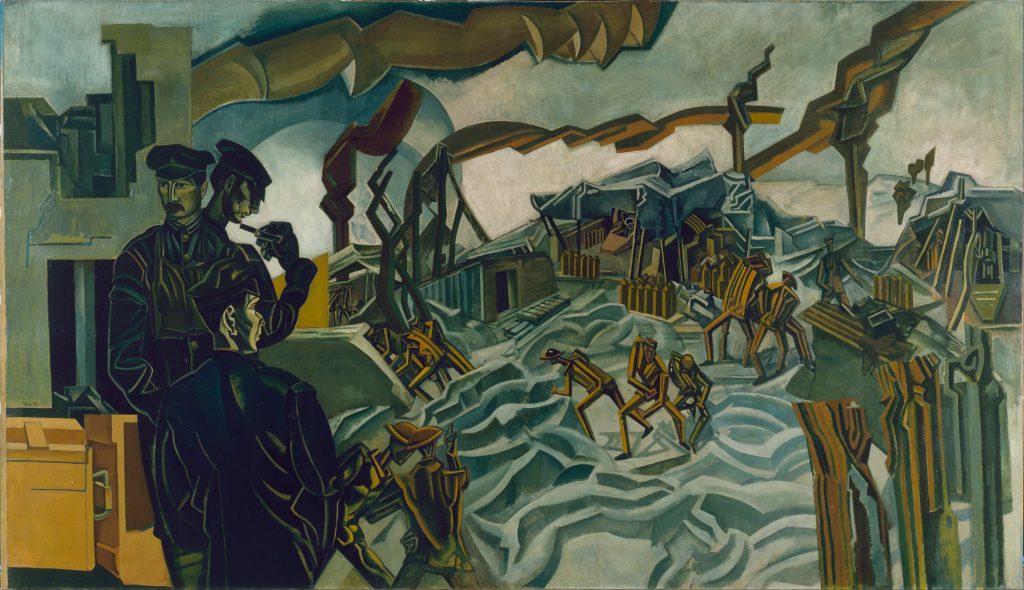
This Vorticist piece combines abstraction with war imagery to portray mechanical violence. Sharp lines and jagged forms evoke the trauma of artillery fire.
9. Saving the Flag – Don Troiani
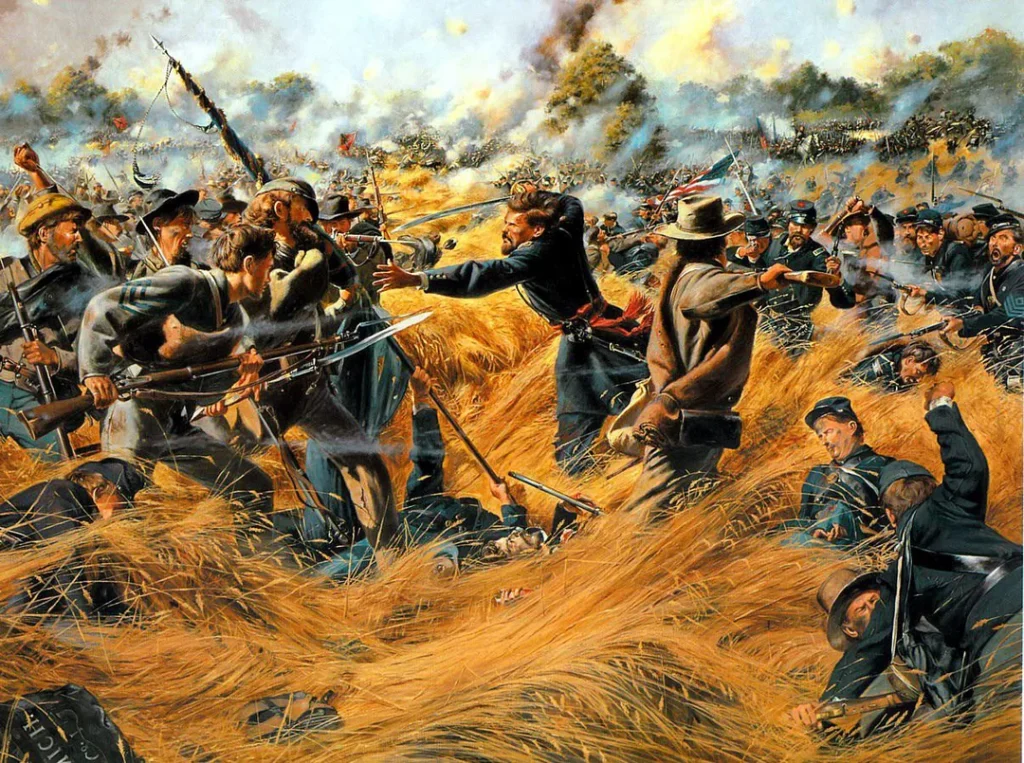
Here, the painter depicts Union soldiers at Gettysburg’s Wheatfield on July 2, 1863, heroically defending their regimental colors amid fierce combat. The painting captures a pivotal moment of courage and sacrifice during one of the Civil War’s bloodiest battles.
10. The War – Félix Vallotton
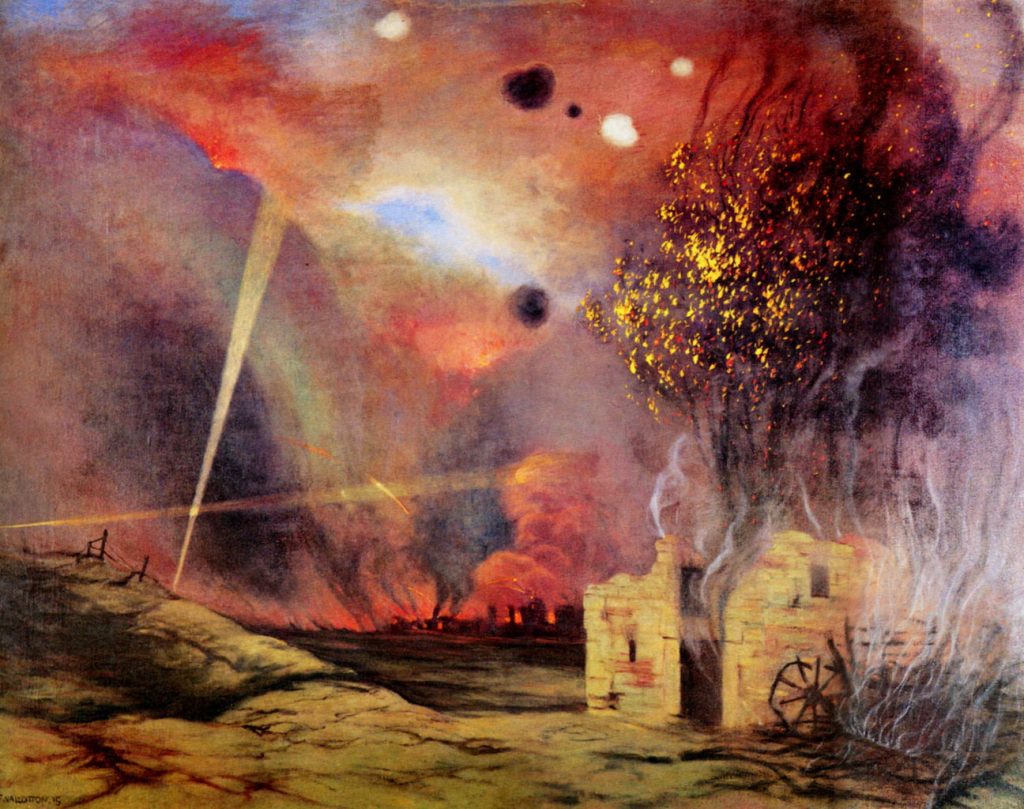
This post-impressionist work shows faceless soldiers engulfed in smoke and fire. The anonymity reflects the loss of identity in modern warfare.
11. The Scream – Edvard Munch
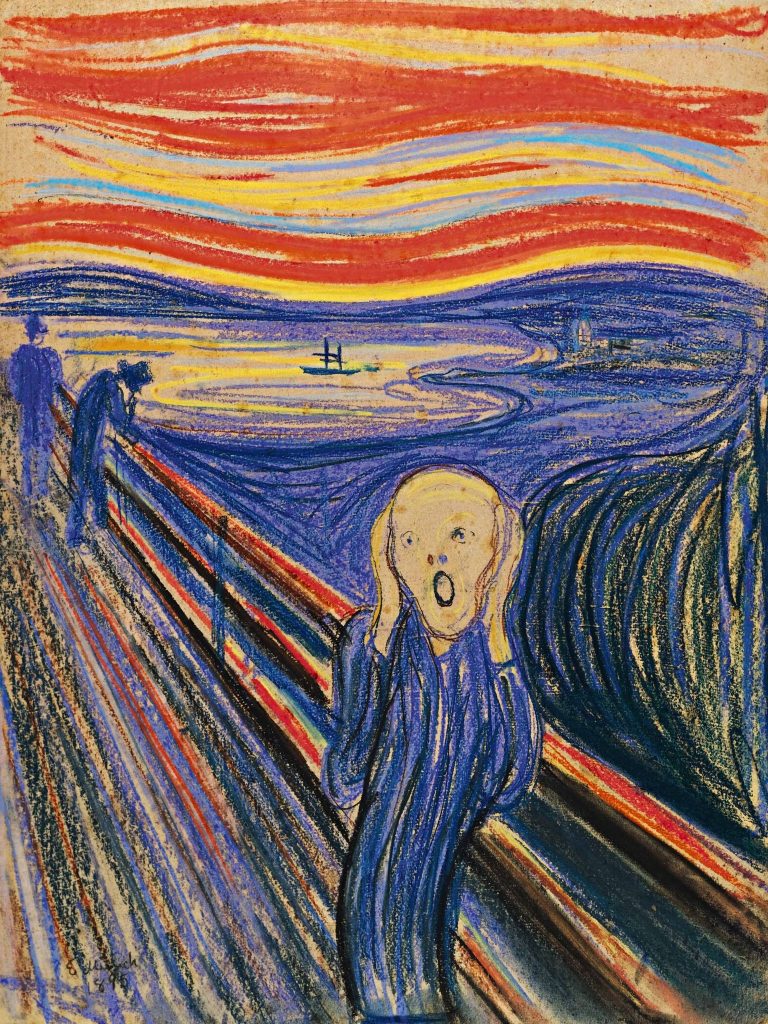
Though not explicitly about war, its raw emotion mirrors the inner torment of those living through conflict. The timing of its creation echoes pre-war anxiety.
12. The Confederates’ Last Rally – Mort Künstler
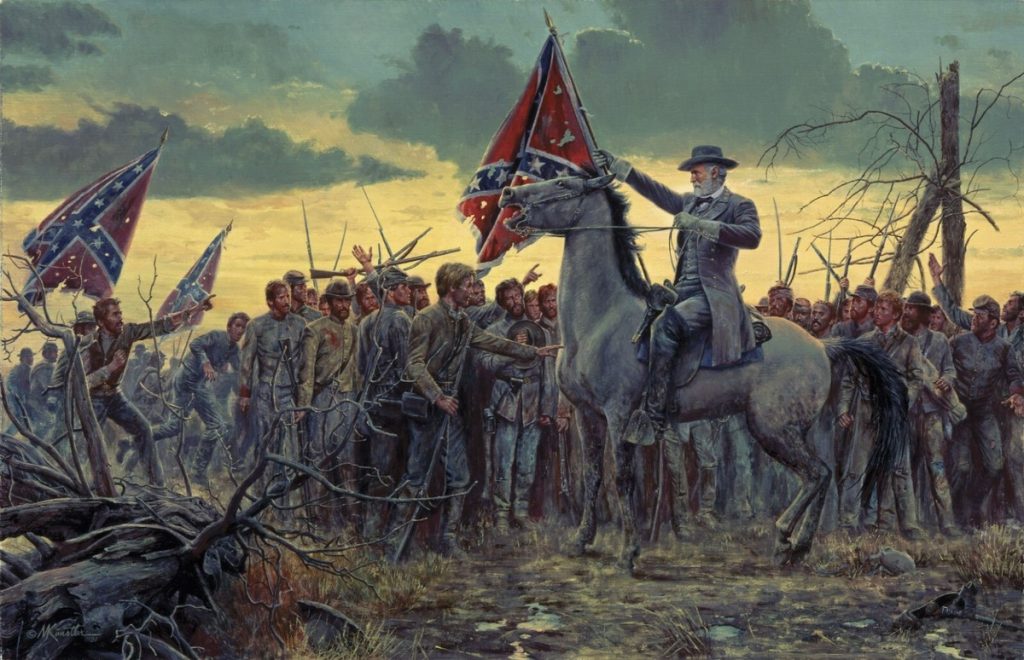
This painting was created by acclaimed American military artist Mort Künstler, depicting the desperate final stand of a Confederate unit in April 1865 at Sayler’s Creek. It captures General Robert E. Lee rallying his men in one of the last major battles before the Confederacy’s surrender.
13. Vietnam II – Leon Golub
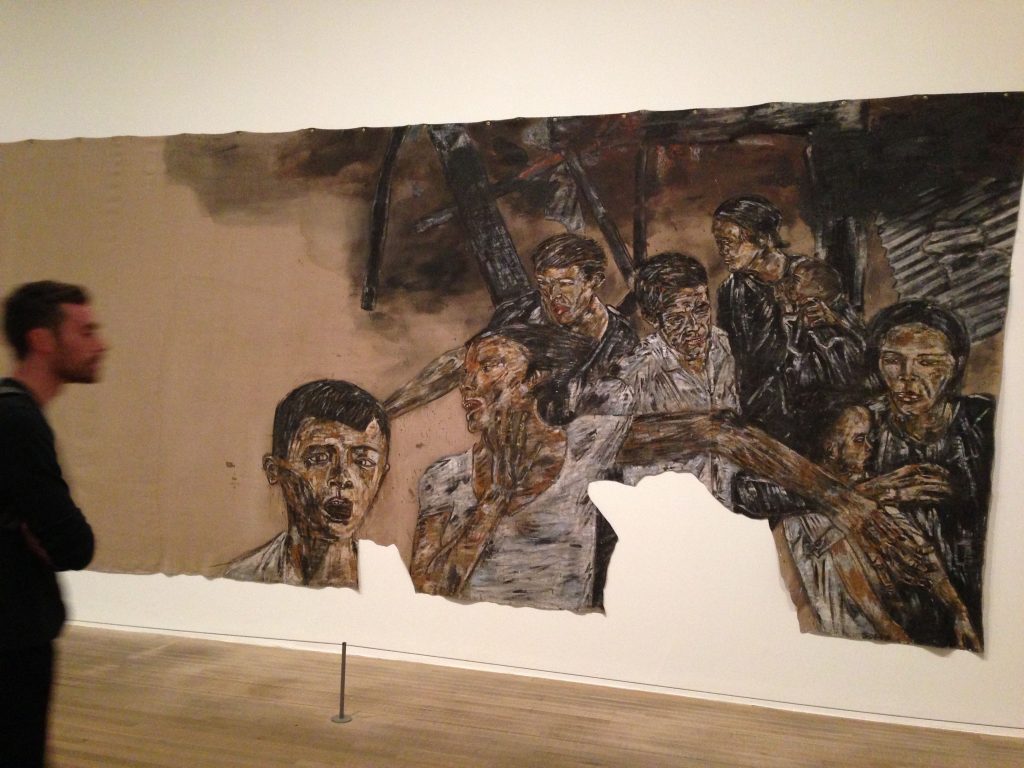
Golub’s aggressive brushwork and raw figures depict the brutality of American involvement in Vietnam. The painting is confrontational, political, and painfully real.
14. The Nameless Ones – Albin Egger-Lienz.
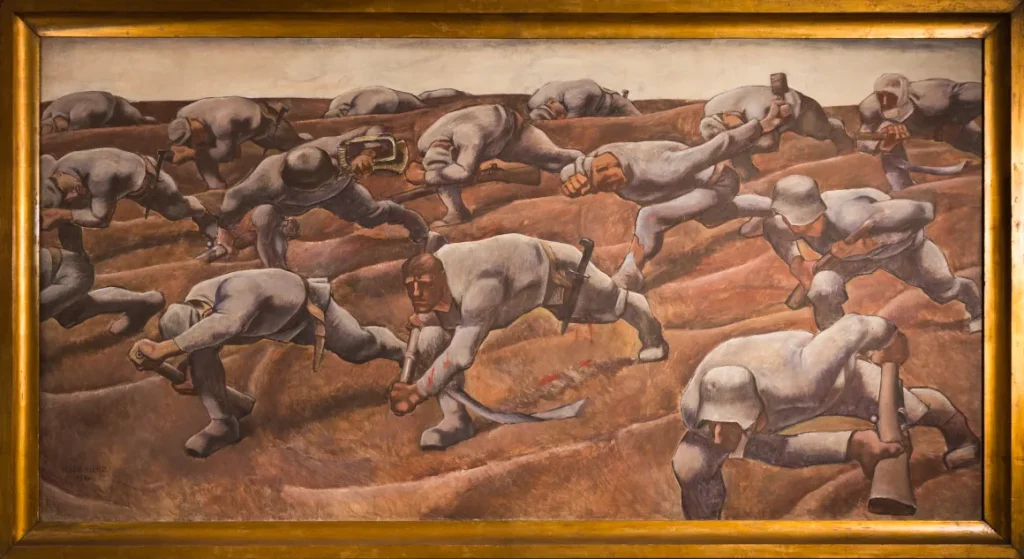
Painted during World War I, the artwork depicts advancing figures so bowed-down that their bodies almost blend with the earth beneath them.
15. Execution of Emperor Maximilian – Édouard Manet
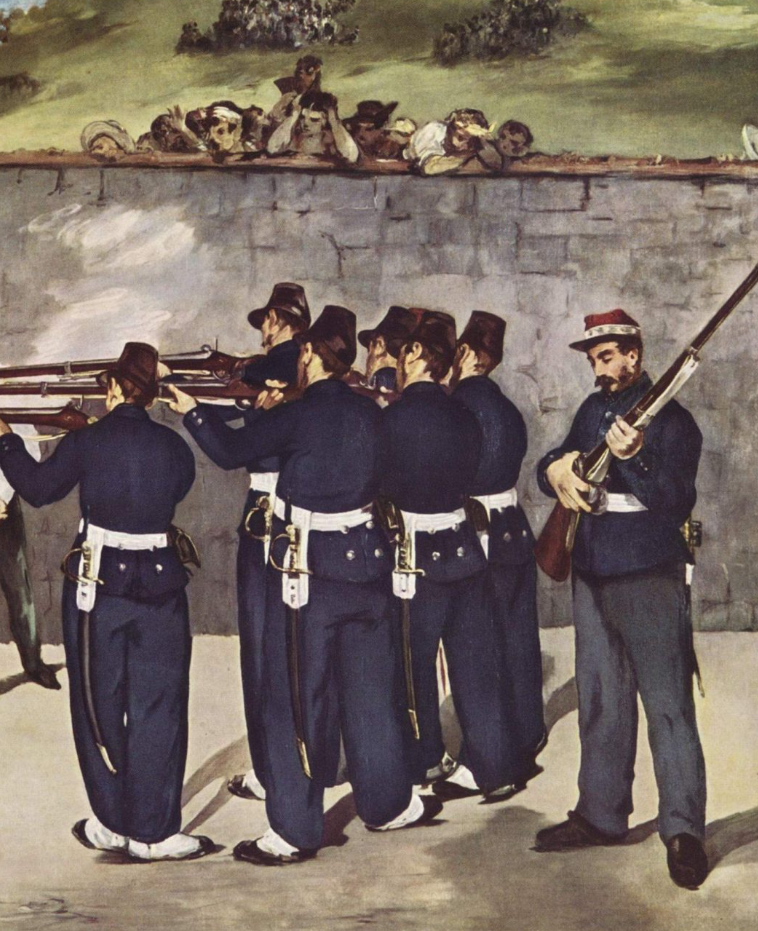
This painting mirrors Goya’s Third of May but in a 19th-century Mexican context. Manet captures the cold detachment of the executioners and the shock of death.
16. The War Series – Käthe Kollwitz
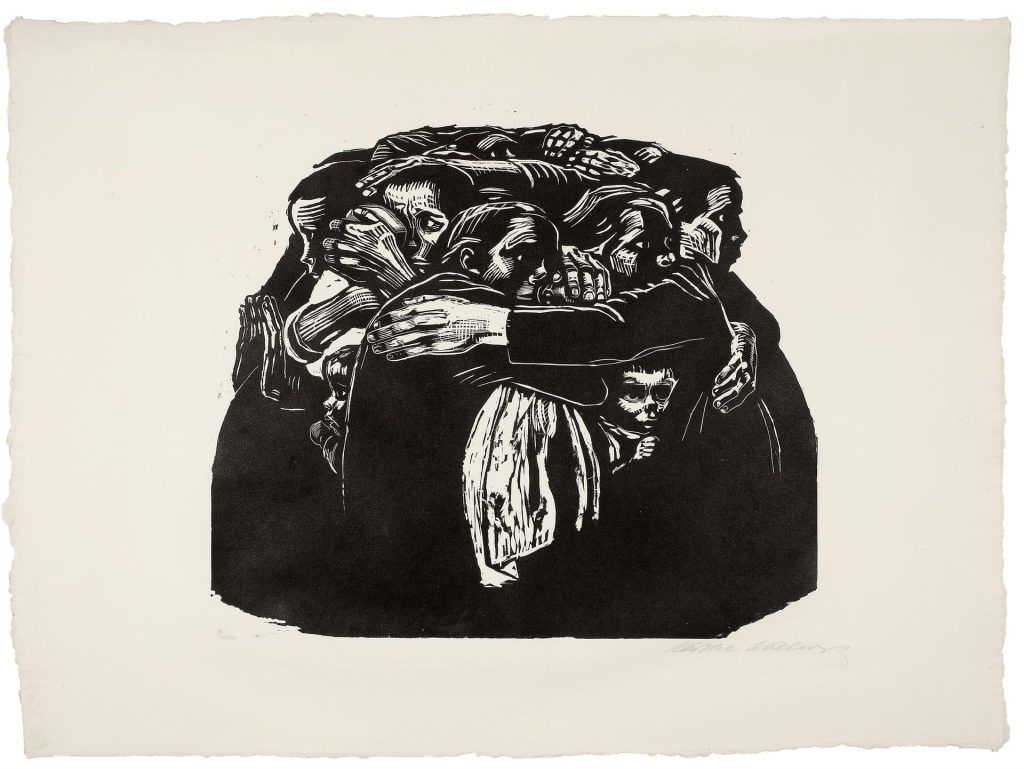
Through stark prints and drawings, Kollwitz mourns the personal cost of war—especially on mothers and children. Her grief becomes a universal cry.
17. The Battle of San Romano – Paolo Uccello
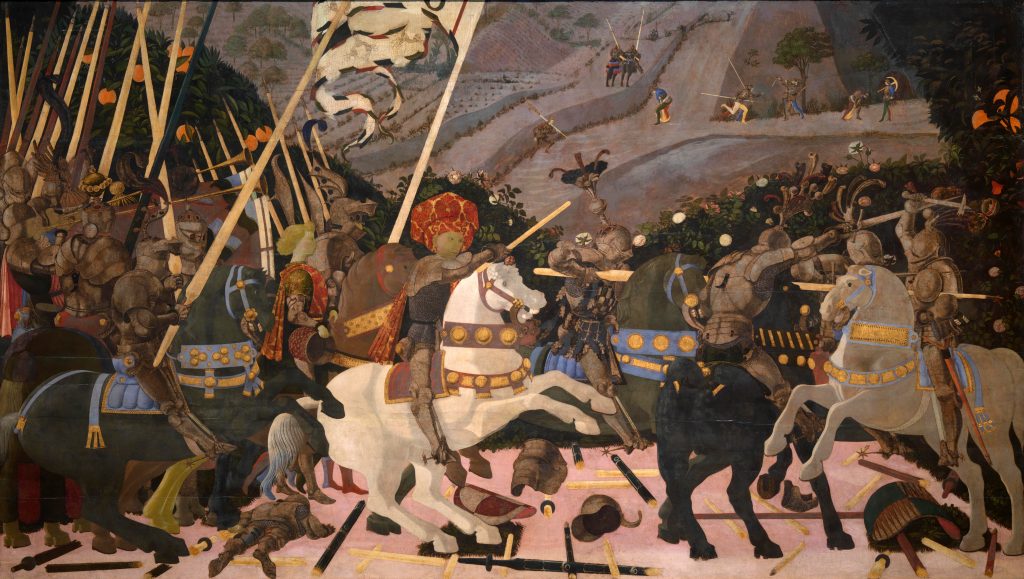
Though it has a stylized, almost abstract look, this Renaissance painting shows the chaos of a cavalry clash. The skewed perspective captures the war’s disarray.
18. The Horrors of War – Jacques Callot
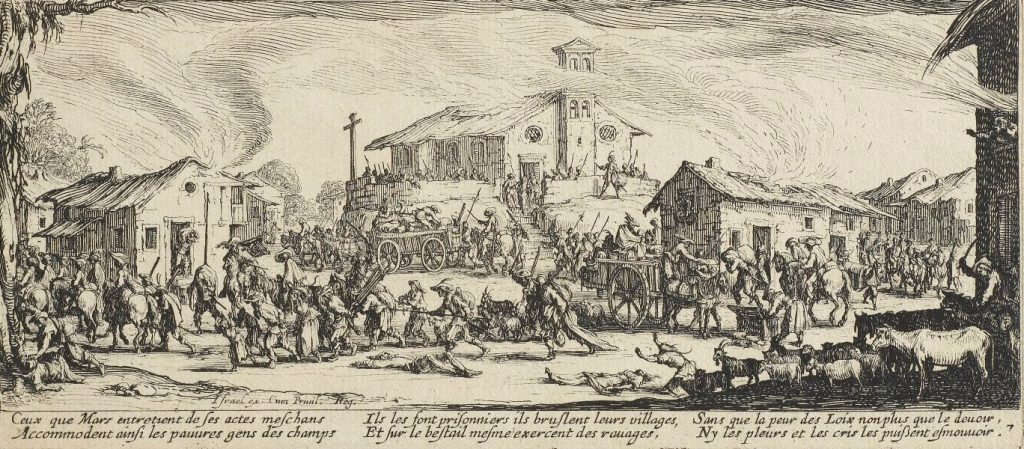
Callot’s etchings show the Thirty Years’ War through scenes of pillaging, torture, and loss. It’s an unflinching documentary in visual form.
19. Prague Street (Devoted to my Contemporaries) – Otto Dix
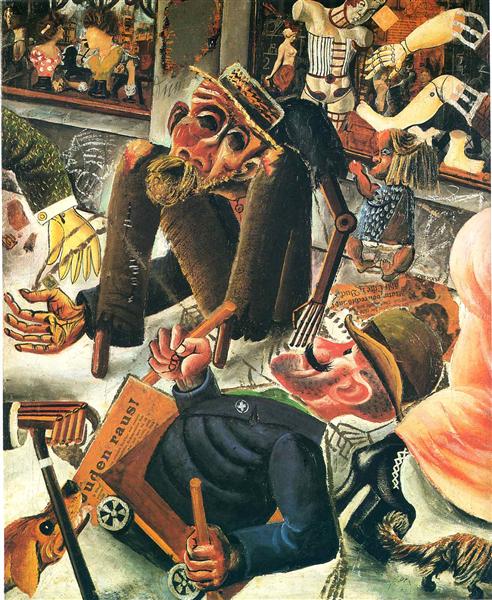
In Prague Street, Otto Dix highlights the isolation of war veterans through a dynamic composition that centers on a crippled figure, symbolizing both physical and social displacement. Surrounding details like prosthetics and a damaged mannequin critique a society that forces wounded soldiers to mask their injuries to be accepted.
20. The Return from Inkerman – Lady Elizabeth Butler
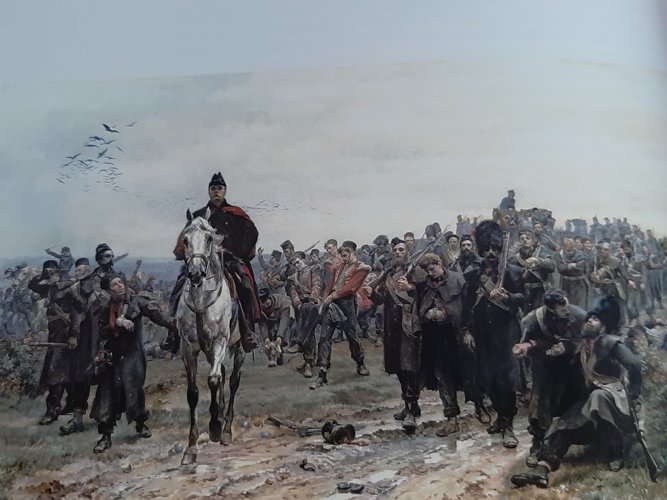
Here, Lady Elizabeth Butler portrays weary British soldiers trudging back after the brutal 1854 battle during the Crimean War. With somber realism, the painting honors their endurance and the heavy cost of war.
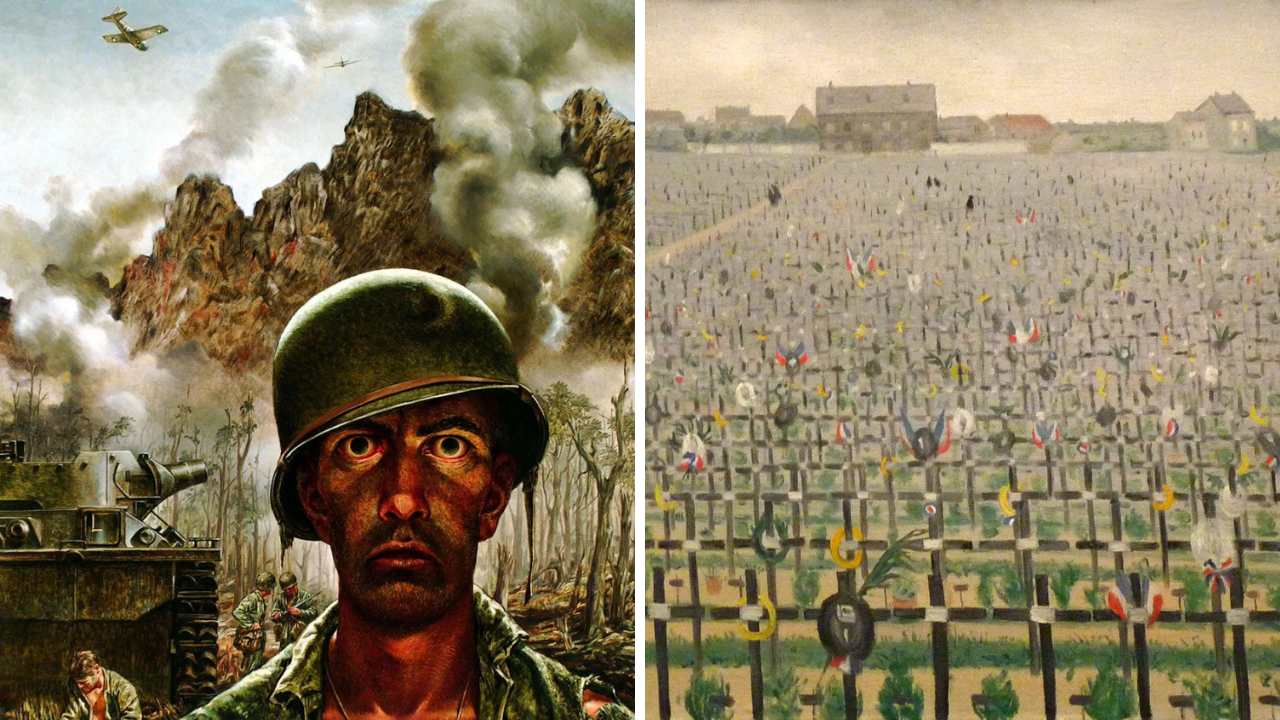
21. The 2000 Yard Stare – Thomas Lea
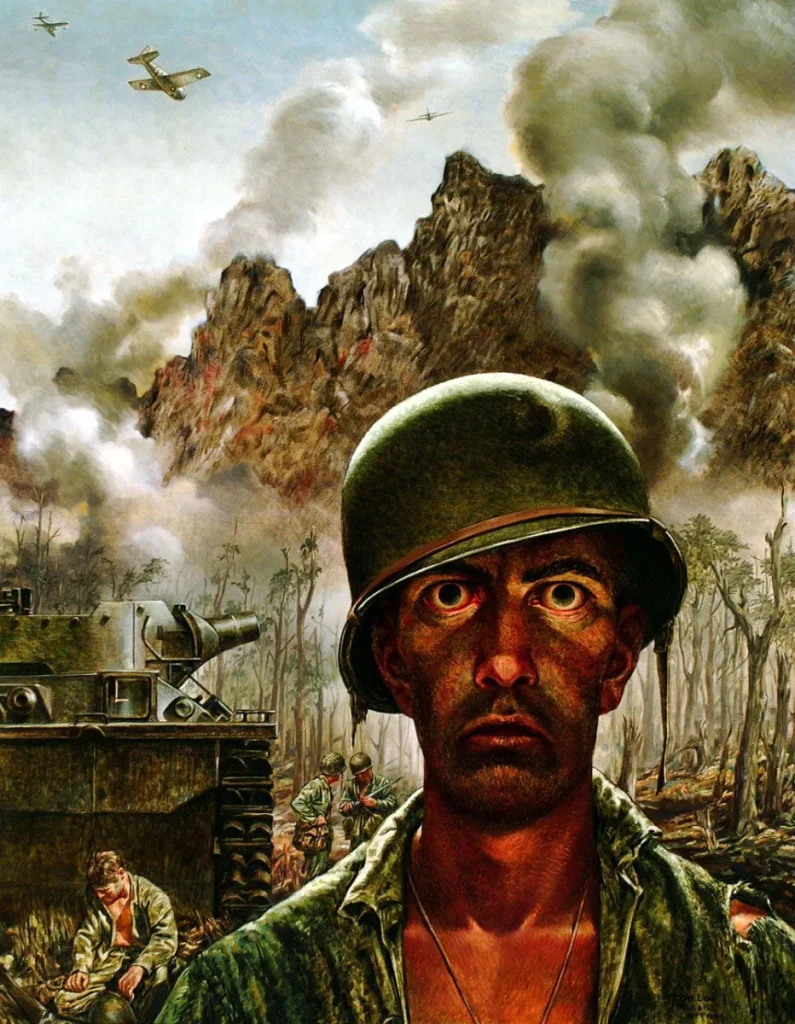
The downcast gaze is a typical symptom of victims who have succumbed to traumatic experiences, due to dissociation. The phrase comes from the work of war artist Thomas Lea, The 2000 Yard Stare, which depicts the true condition suffered by a U.S. Marine during the Battle of Peleliu. It is a sign of severe psychological distress that can occur in any situation and is not limited to soldiers or the military context.
22. The Menin Road – Paul Nash
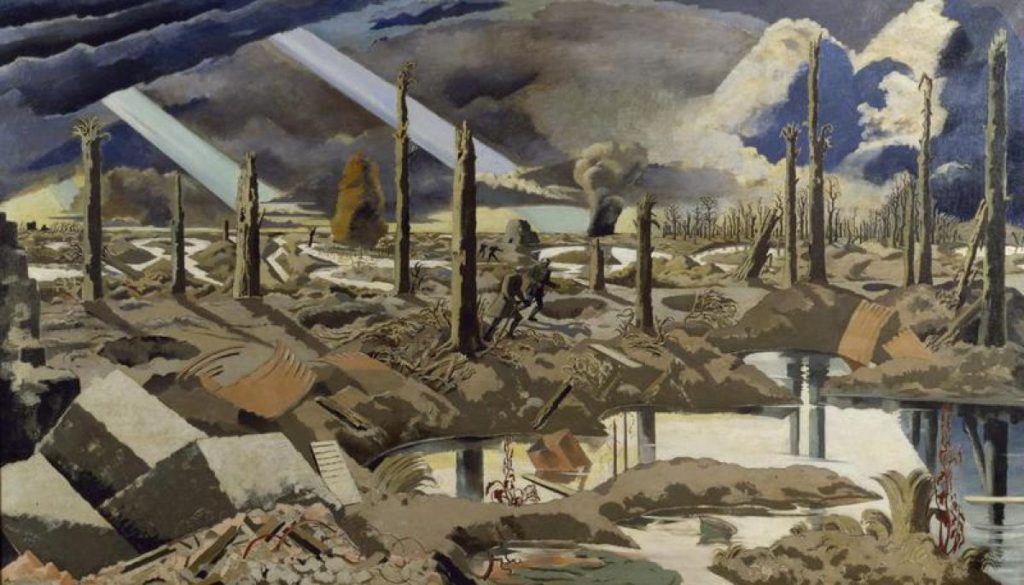
Nash’s work shows a section of the Ypres Salient known as Tower Hamlets, after what is now a part of eastern London. This area was destroyed during the Battle of the Menin Road Ridge. Nash started work on this large canvas in June 1918, completing it the following February.
23. Châlons War Cemetery – Félix Vallotton
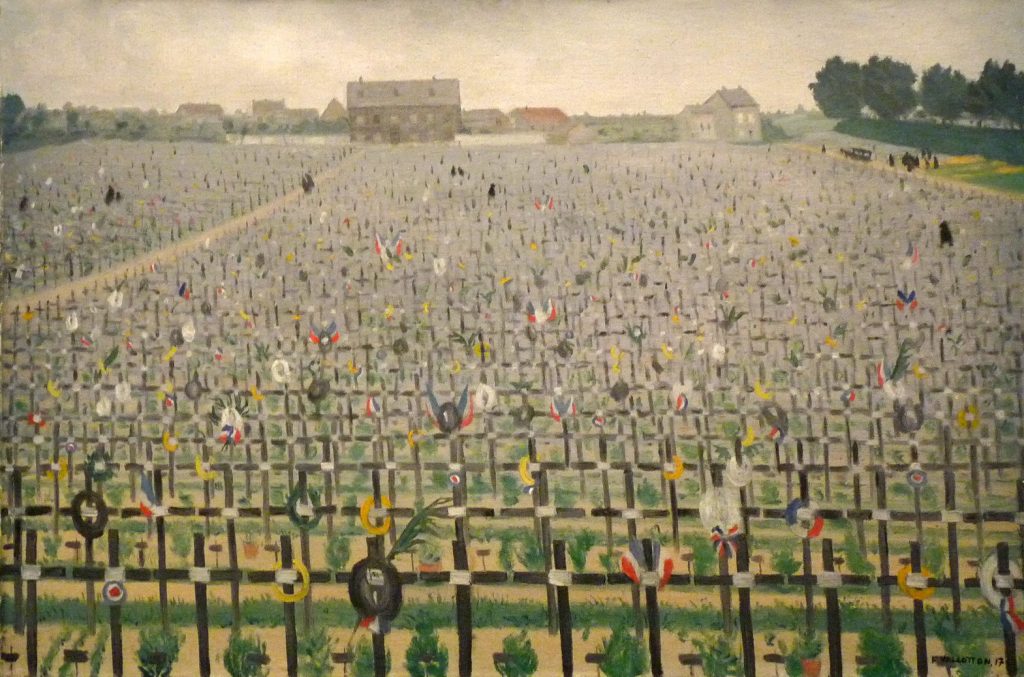
Félix Vallotton’s 1917 painting of Châlons War Cemetery shows thousands of WWI graves, with more added after WWII.
24. La Déshumanisation Des Soldats – Marcel Gromaire
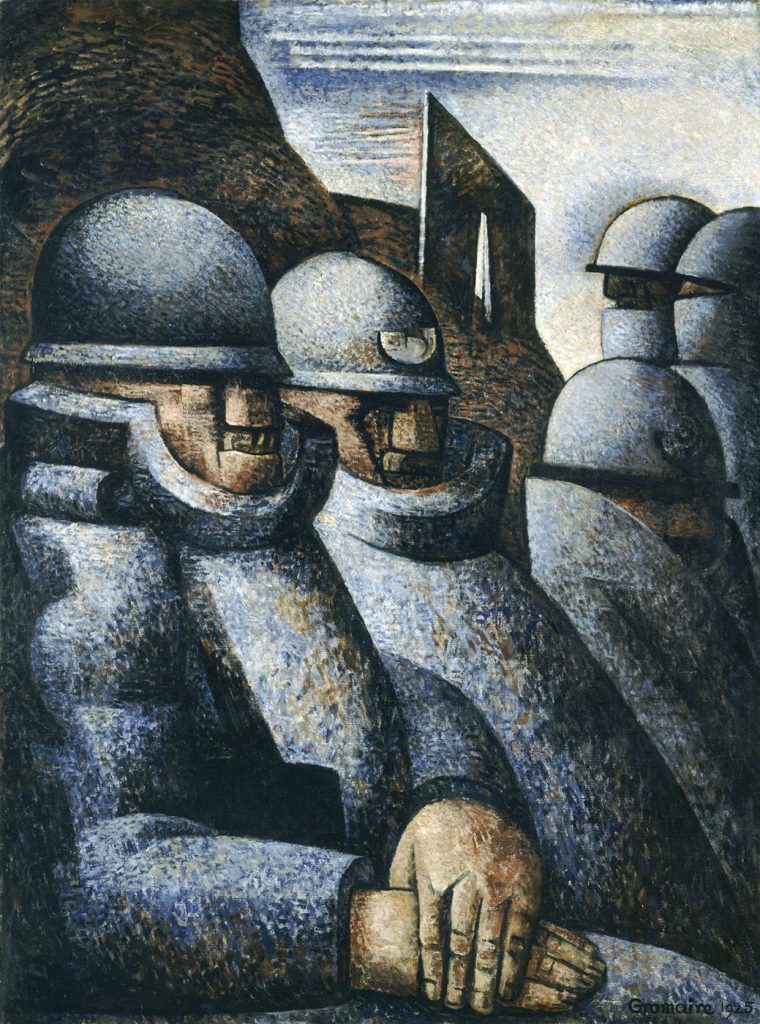
La Déshumanisation des soldats portrays the loss of identity and humanity among soldiers during war. The painting uses distorted figures and somber tones to reflect the emotional and physical toll of combat.
25. Troops Resting – Jean-Baptiste Debret
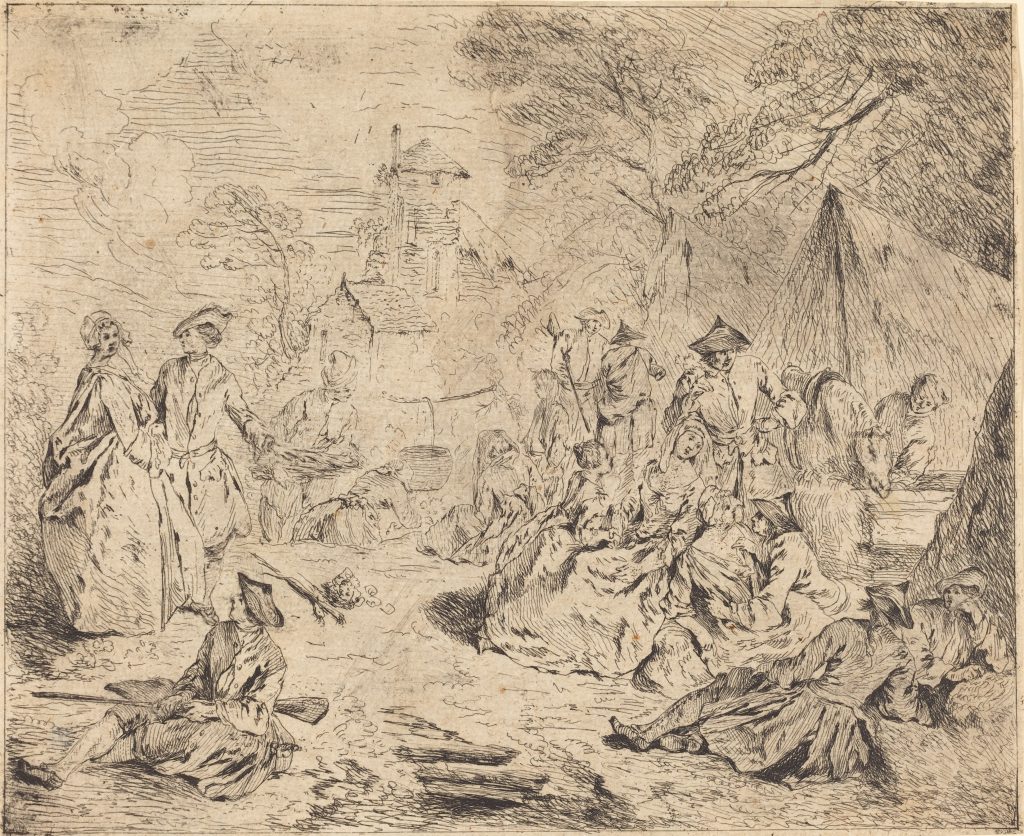
This early 19th-century work shows exhausted soldiers sprawled on the ground. It strips away heroism and focuses on survival.
26. Battle of Britain – Paul Nash
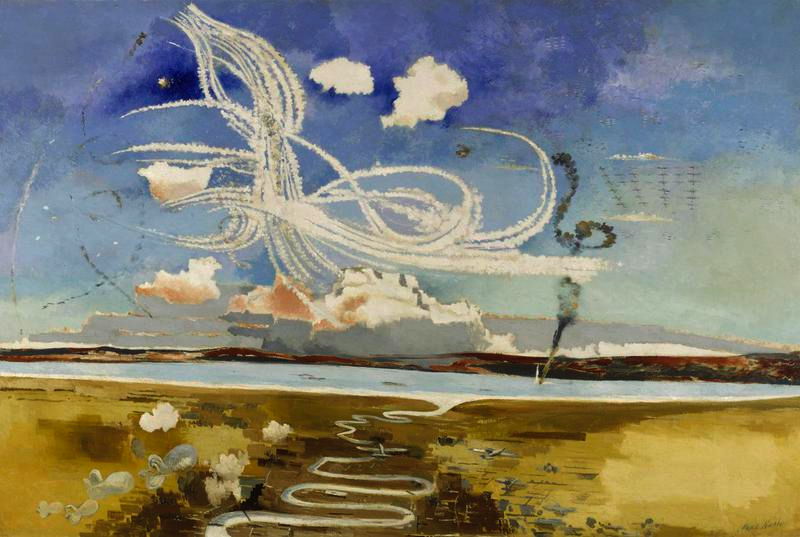
Paul Nash’s 1941 painting Battle of Britain captures key elements of this aerial warfare against a typical English coastal landscape. Meanwhile, many other painters were tragically killed due to their background, religion, or ethnicity.