Money has changed dramatically throughout history, with entire currencies disappearing as countries collapsed, governments changed, or new monetary systems took their place. Some were replaced by familiar modern currencies, while others vanished along with the nations that issued them. Here are 28 currencies that no longer exist.
German Deutsche Mark

For generations of Germans, the Deutsche Mark represented economic stability. Even decades after the euro arrived, plenty of people still remember it fondly.
Italian Lira (1861–2002)

Being a millionaire in Italy wasn’t particularly impressive by the late 1990s. One million lire was worth only about €516 when the currency was replaced.
French Franc (1795–2002)

France gave up more than two centuries of monetary history when it adopted the euro. At least its old banknotes left behind some gorgeous artwork.
Spanish Peseta (1868–2002)

The peseta survived a monarchy, a republic, a dictatorship, and the return of democracy. The euro finally retired it after 133 years.
Greek Drachma (1832–2002)

Few currency names have a history as impressive as the drachma. Its ancient Greek origins made its retirement feel particularly significant, even though the modern currency was a separate monetary system.
Dutch Guilder (1816–2002)

Dutch banknotes were among the most adventurous in Europe. The famous 250-guilder lighthouse note still looks remarkably modern.
Austrian Schilling (1925–2002)

The schilling was once nicknamed the Alpine dollar for its reputation as a stable currency. Not a bad nickname for a relatively small country’s money.
Irish Pound (1928–2002)

Ireland’s old pound, affectionately called the punt, had its own identity despite sharing a name with British money. It was an important symbol of the country’s economic independence.
Portuguese Escudo (1911–2002)

Portugal’s escudo lasted through dictatorship, revolution, and democracy. Its final banknotes celebrated figures associated with the country’s maritime history.
Finnish Markka (1860–2002)

Finland’s final markka notes featured cultural icons such as composer Jean Sibelius. Quite a stylish way to celebrate a country’s achievements every time someone opened their wallet.
Belgian Franc (1832–2002)

Belgium even put saxophone inventor Adolphe Sax on its money. That’s a pretty good claim to fame for a banknote.
Luxembourg Franc (1854–2002)

Luxembourg had its own currency despite being surrounded by much larger economies. Its franc was also tied to Belgium’s, making the two countries’ money closely connected.
Slovenian Tolar (1991–2007)

The tolar barely made it to its sixteenth birthday. Slovenia introduced it after independence from Yugoslavia, then became the first former Yugoslav republic to adopt the euro.
Maltese Lira (1972–2008)

The Maltese lira was another surprisingly valuable currency. At the official conversion rate, one lira was worth about €2.33.
Slovak Koruna (1993–2009)

The Slovak koruna was born when Czechoslovakia peacefully split in 1993. Sixteen years later, Slovakia traded it for the euro.
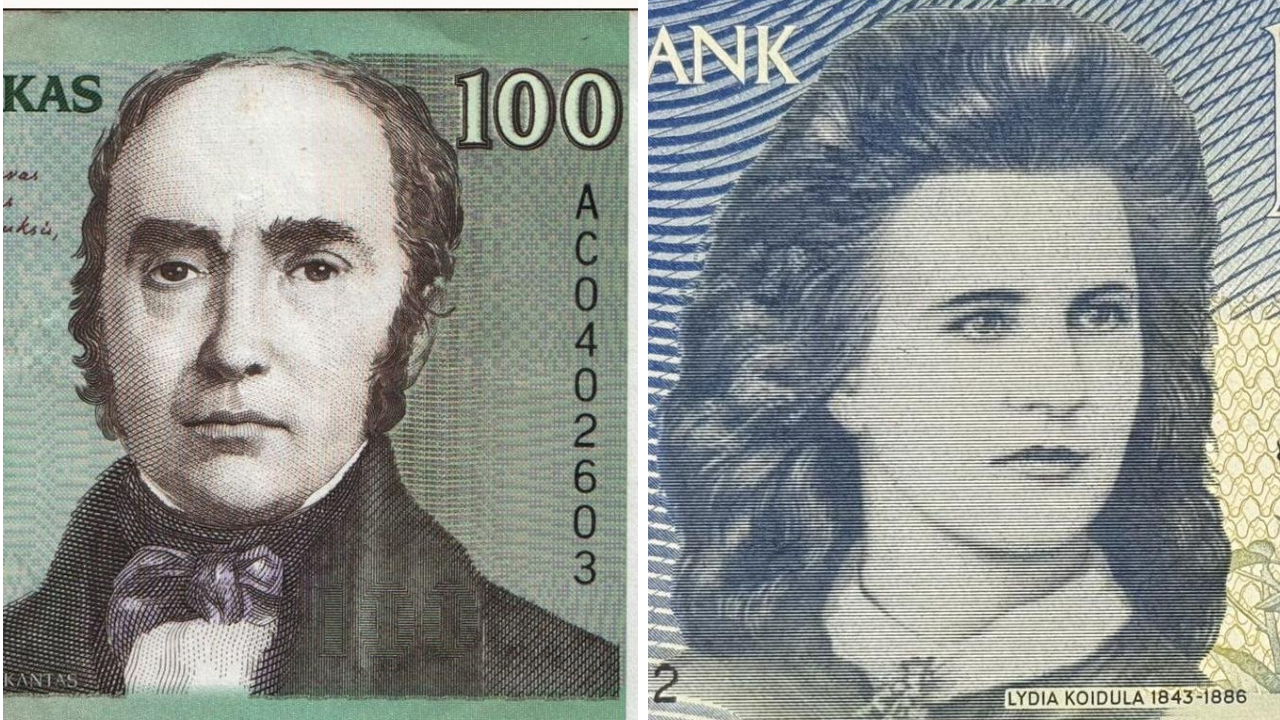
Estonian Kroon (1992–2011)

Restoring the kroon after Soviet rule was a powerful statement of independence. Its retirement for the euro was a very different kind of national milestone.
Latvian Lats (1993–2014)

The lats was worth more than the euro when Latvia joined the eurozone. It also had some particularly attractive banknotes, including a 500-lat note that was worth over €700.
Lithuanian Litas (1993–2015)

Lithuania’s litas made a comeback after independence, having also existed before World War II. Its second life lasted just over two decades.
Croatian Kuna (1994–2023)

The kuna was named after the marten, an animal whose fur had historically been used in trade. Croatia kept the unusual name until joining the eurozone in 2023.
Bulgarian Lev (1881–2026)

The lev was one of Europe’s longest-surviving national currency names. Bulgaria’s adoption of the euro in January 2026 finally brought its long history to an end.
Yugoslav Dinar (1918–2003)

Yugoslavia’s hyperinflation produced some truly absurd banknotes. By 1993, even bills worth billions of dinars couldn’t keep up with soaring prices.
Czechoslovak Koruna (1919–1993)

When Czechoslovakia split into two countries, its shared currency didn’t last much longer. The first replacement notes were made by putting stamps on existing banknotes.
East German Mark (1948–1990)

East German marks became obsolete during reunification, months before the country itself officially disappeared. For millions of people, exchanging their money was one of the most tangible signs of a new era.
Soviet Ruble (1922–1991)

Lenin’s face was once familiar to shoppers across the Soviet Union. After the USSR collapsed, its former republics gradually introduced their own currencies, ending the Soviet ruble’s dominance.
Ottoman Lira (1844–1922)

The Ottoman lira belonged to an empire spanning three continents. Its ornate banknotes are fascinating reminders of just how different the region’s political map once looked.
Zimbabwe Dollar (1980–2009)

Zimbabwe’s 100-trillion-dollar note might be the most famous example of worthless money in modern history. Imagine needing twelve zeros on a banknote and still struggling to buy groceries.
Ecuadorian Sucre (1884–2000)

Ecuador abandoned the sucre during a severe economic crisis and adopted the US dollar. It was a dramatic decision, but it also ended more than a century of national currency history.
Argentine Austral (1985–1991)

Argentina introduced the austral to fight inflation, only for inflation to overwhelm the new currency too. It lasted barely six years before being replaced by the peso.