The masterpieces hanging in the world’s most prestigious museums often feel detached from reality, existing purely within the realm of artistic genius. However, every brushstroke on a famous canvas anchors itself to a tangible source of inspiration, whether a living person or a physical location. Painters have long relied on these external anchors to channel their deepest emotional and visual breakthroughs. These 28 historical subjects change how viewers interpret legendary artworks.
Lisa Gherardini – “Mona Lisa”
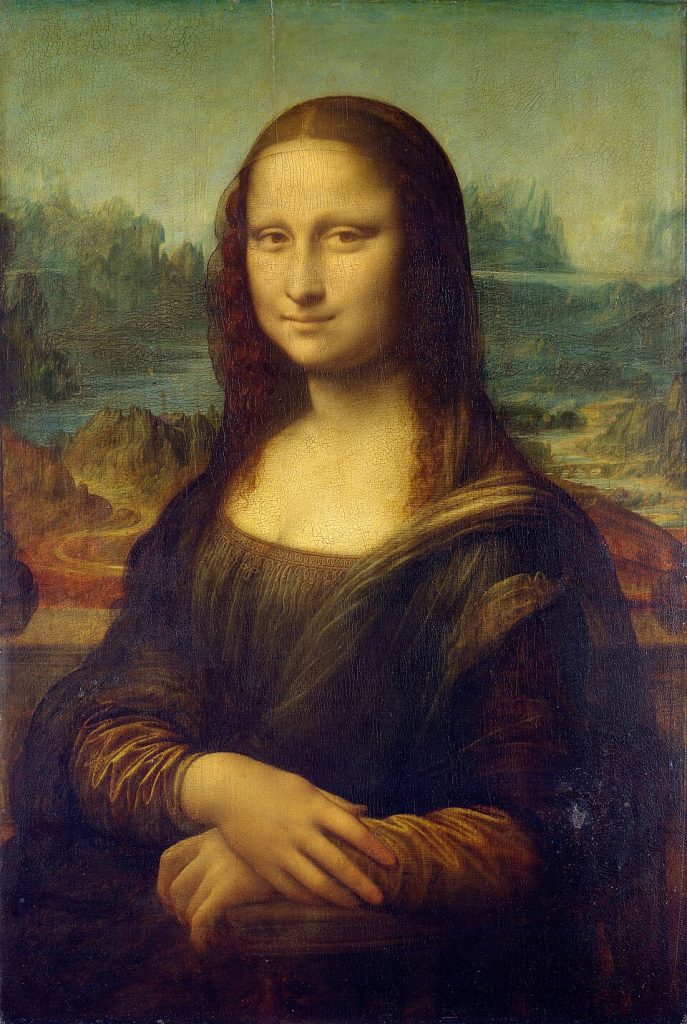
A modest silk merchant’s wife in Florence provided the blueprint for history’s most debated facial expression. Leonardo da Vinci spent years refining this portrait, keeping it with him across international travels rather than delivering it to the client. Factual municipal records uncovered in Italy put an end to centuries of bizarre identity theories.
Saint-Rémy-de-Provence – “The Starry Night”
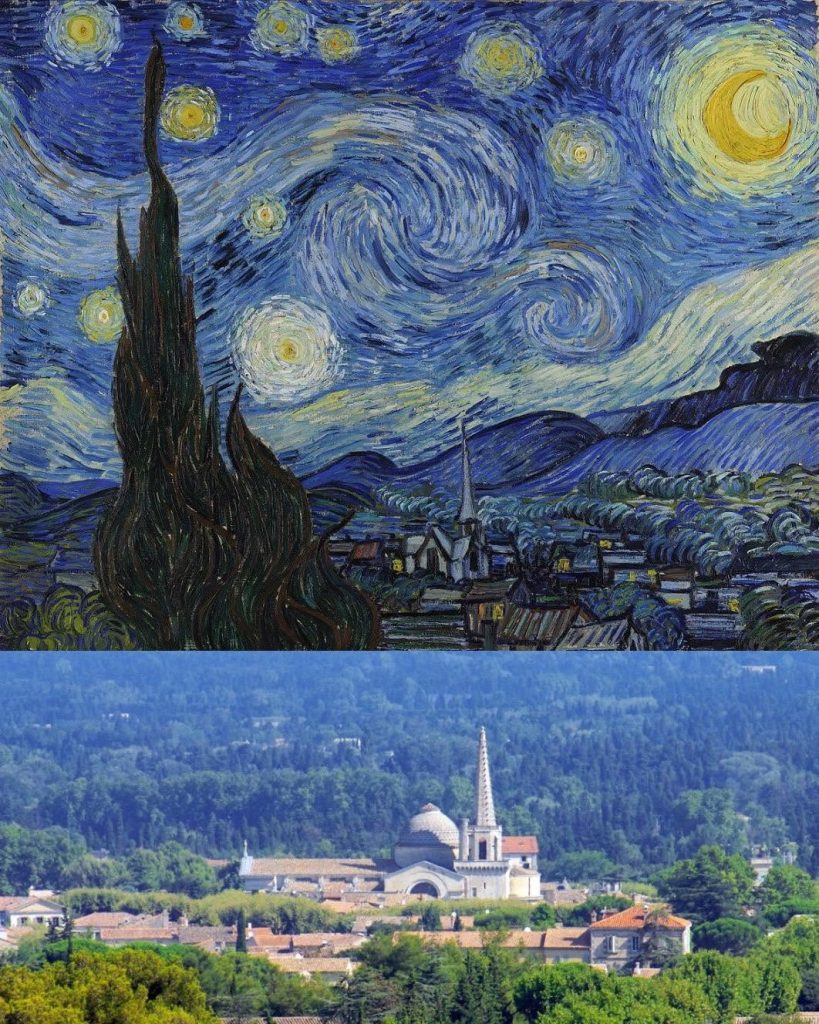
Look closely at the iconic swirling sky, and you are actually viewing the restricted vista from an asylum window. By omitting the physical iron bars of his cell, Vincent van Gogh turned psychological confinement into a timeless monument of artistic freedom.
Nan Wood Graham and Dr. Byron McKeeby – “American Gothic”
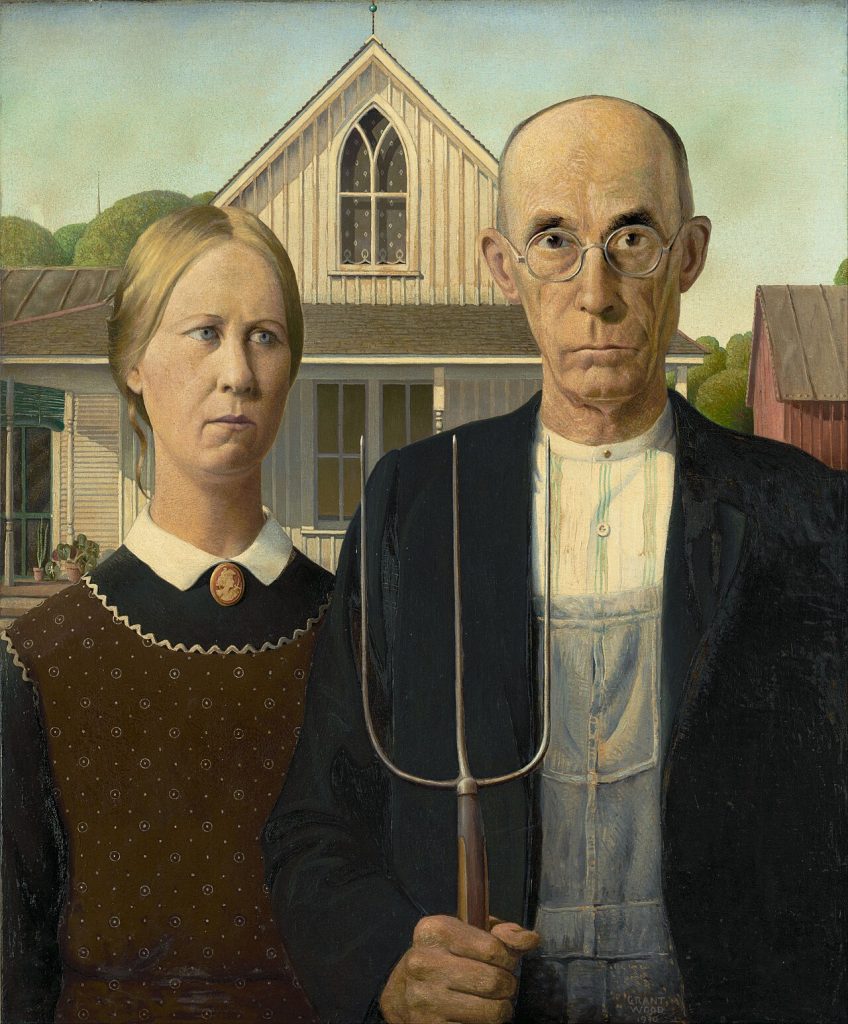
Finding the perfect embodiment of Midwestern stoicism led Grant Wood to recruit his own family dentist and his sister. The artist meticulously paired them with a unique residential building featuring a distinct neo-Gothic window. Many viewers initially assumed the painting depicted a husband and wife, though the creator intended them to represent a father and daughter. The resulting rural portrait sparked immediate resentment from the sister, who despised being framed as a severe, old-fashioned wife.
Giverny – “Water Lilies”
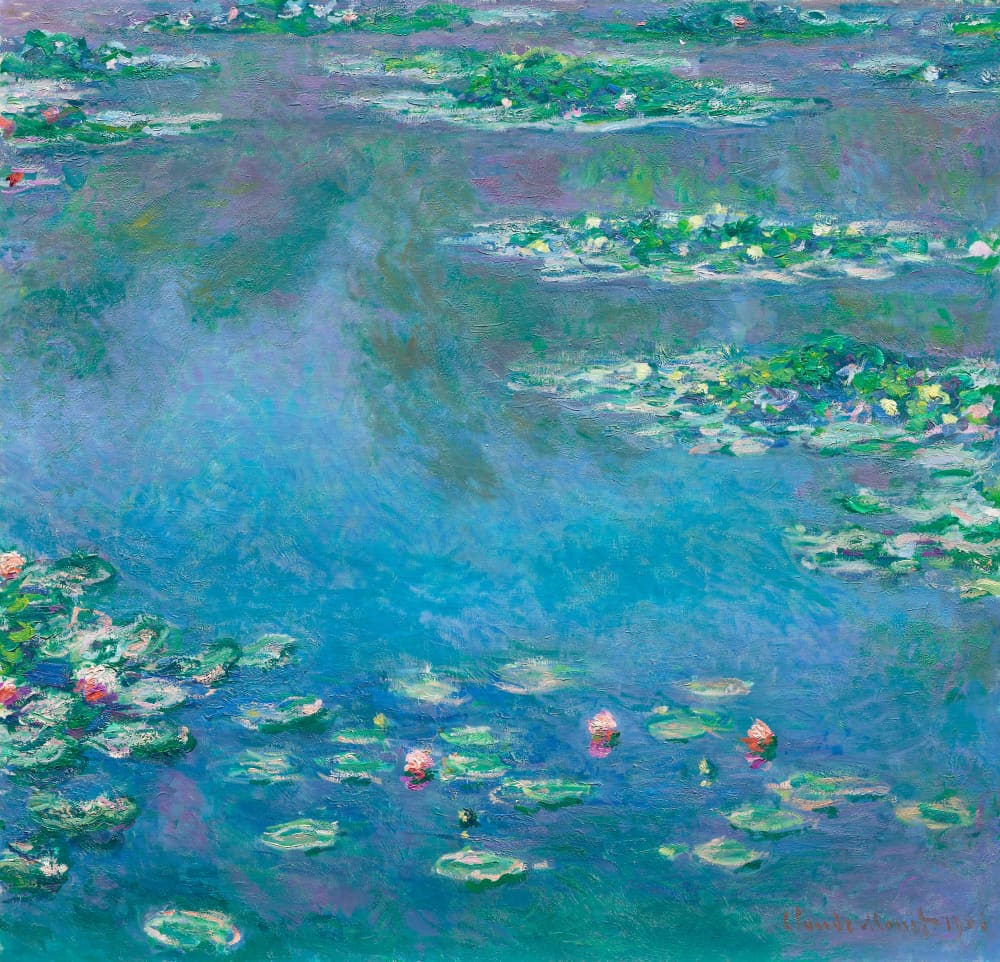
Cultivating a landscape specifically to paint it requires a rare level of horticultural obsession. Claude Monet transformed his private French estate into a living studio, diverting a local river to construct his famous Japanese-style pond. The master went so far as to hire workers to meticulously wipe dust off the aquatic plants every single morning before mixing his colors.
Adele Bloch-Bauer – “Portrait of Adele Bloch-Bauer I”
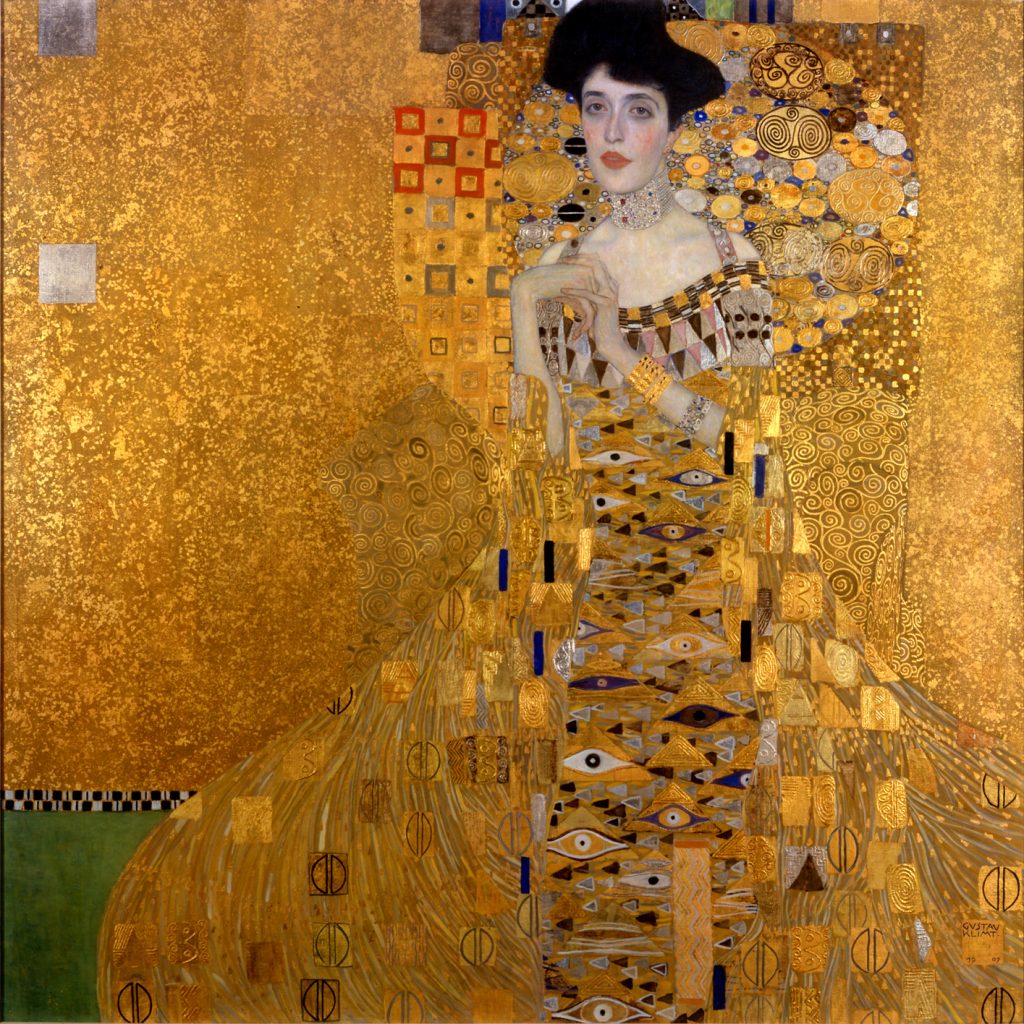
Wrapped in shimmering gold leaf, this prominent Viennese hostess became the only woman painted twice by Gustav Klimt. The masterpiece required hundreds of preparatory sketches and years of intense technical execution. Following its illegal confiscation by N*zi forces, the legendary canvas sparked a historic international legal battle that reshaped museum ownership laws forever. A private gallery in New York City eventually acquired the piece for a record-breaking sum.
Christina Olson – “Christina’s World”
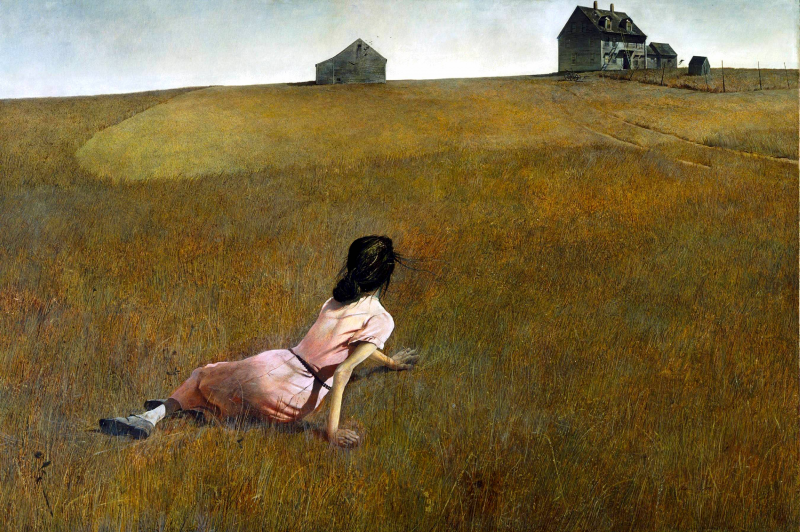
Dragging herself across a weathered field in Maine, a neighbor suffering from a severe degenerative disorder caught Andrew Wyeth’s attention. The artist watched her refuse a wheelchair, choosing instead to navigate her family’s coastal farm using her torso. The harsh realism of her daily struggle inspired a profound visual essay on human grit and spatial isolation.
Oslofjord from Ekeberg – “The Scream”
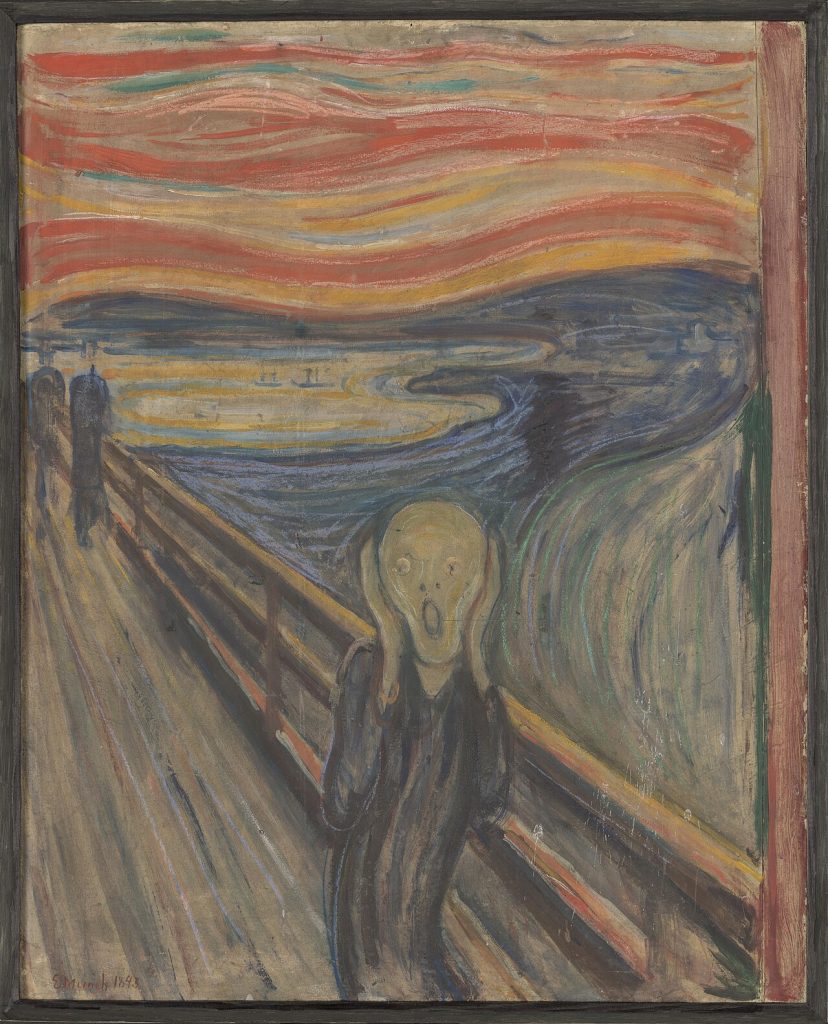
Existential dread took visual form when an unusual crimson sunset panicked Edvard Munch during a casual evening stroll. The painter felt an infinite scream passing through nature while standing on a path overlooking a Norwegian fjord. Modern atmospheric scientists attribute the blood-red clouds to volcanic dust floating globally from the cataclysmic Krakatoa eruption.
Victorine Meurent – “Olympia”
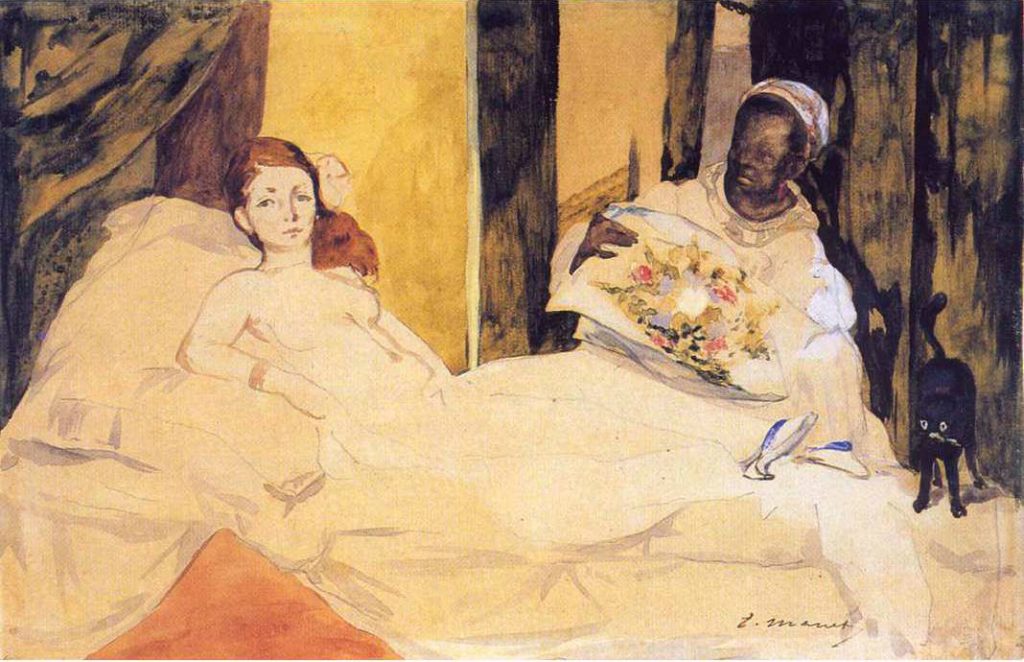
Facing down conservative Paris with an unblinking, unapologetic gaze, this model shattered traditional academic n*de conventions. Édouard Manet collaborated with Meurent frequently, valuing her fierce independence and her own formidable talents as an exhibited painter. Her defiant pose caused such an intense public scandal that the gallery had to post armed guards to protect the canvas from physical vandalism. This institutional uproar permanently altered the trajectory of modern French realism.
Place du Forum – “Café Terrace at Night”
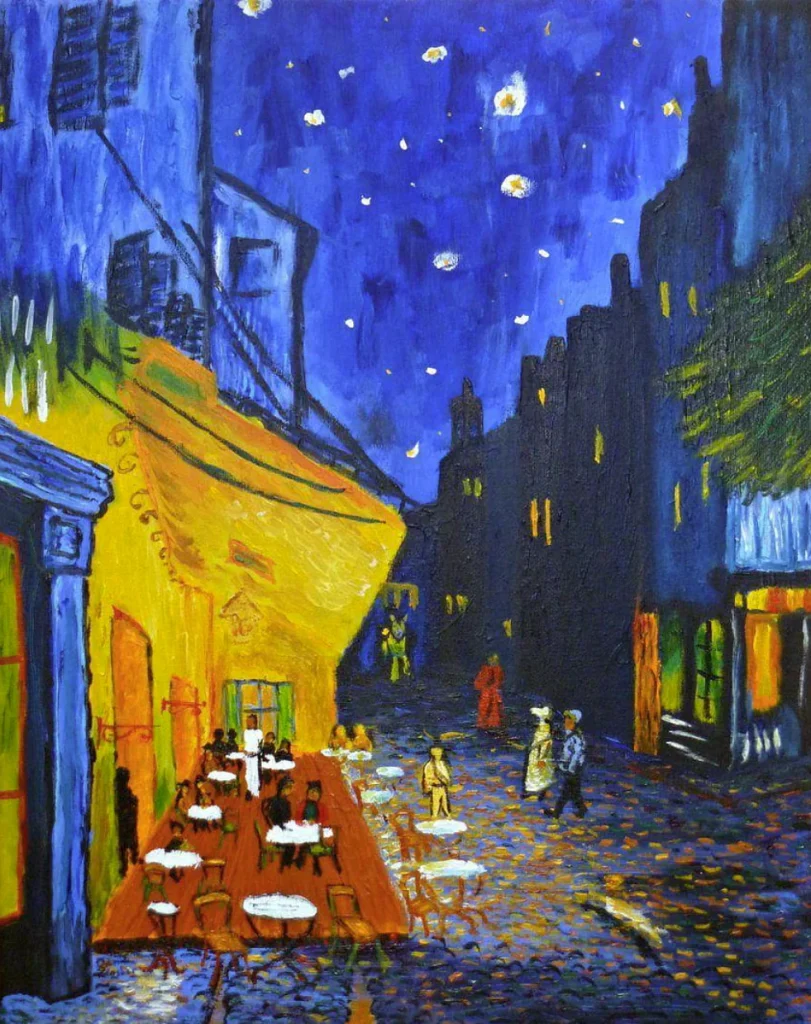
Returning to the warm southern light of France, Vincent van Gogh set up his easel directly on the cobblestones of Arles. He successfully illuminated this bustling outdoor restaurant terrace under a brilliant starlit sky without utilizing a single drop of black paint.
Jeanne Hébuterne – “Jeanne Hébuterne with Hat and Necklace”
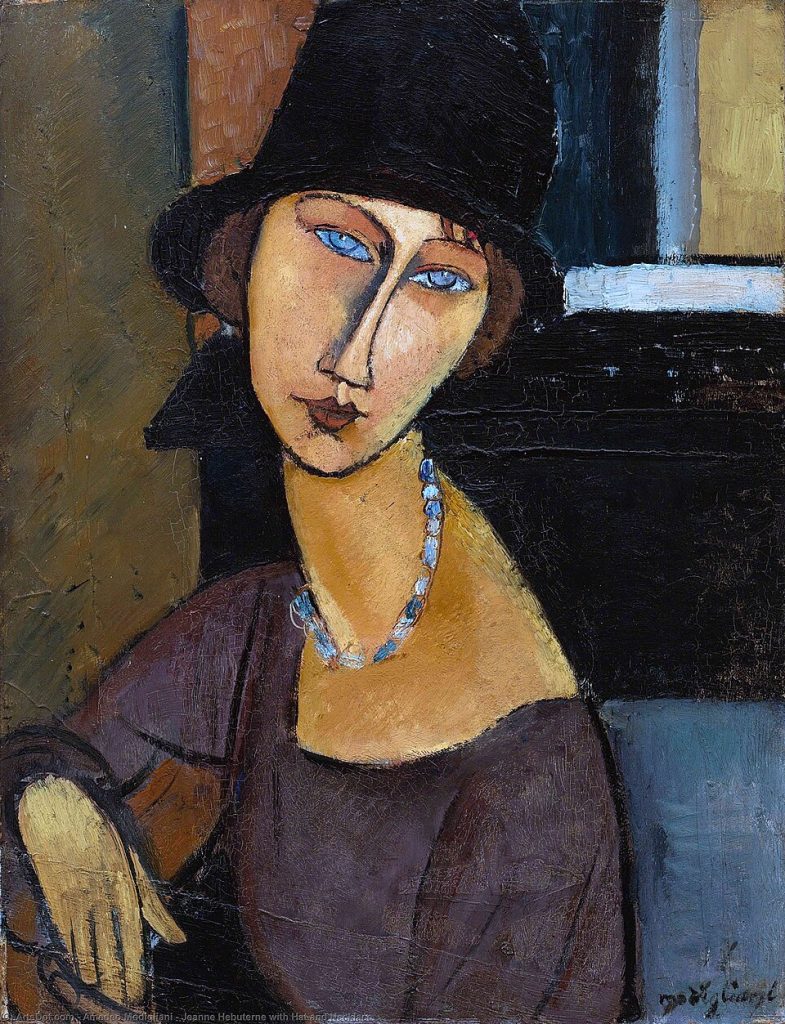
Elegance and tragedy collide in the elongated, almond-eyed portraits crafted by Amedeo Modigliani. His signature avant-garde style captured the likeness of his young partner during their turbulent years in Paris. Their overwhelming emotional codependency led to a grim reality when Jeanne chose to end her own life a mere two days after the artist’s death.
Maison Fournaise – “Luncheon of the Boating Party”
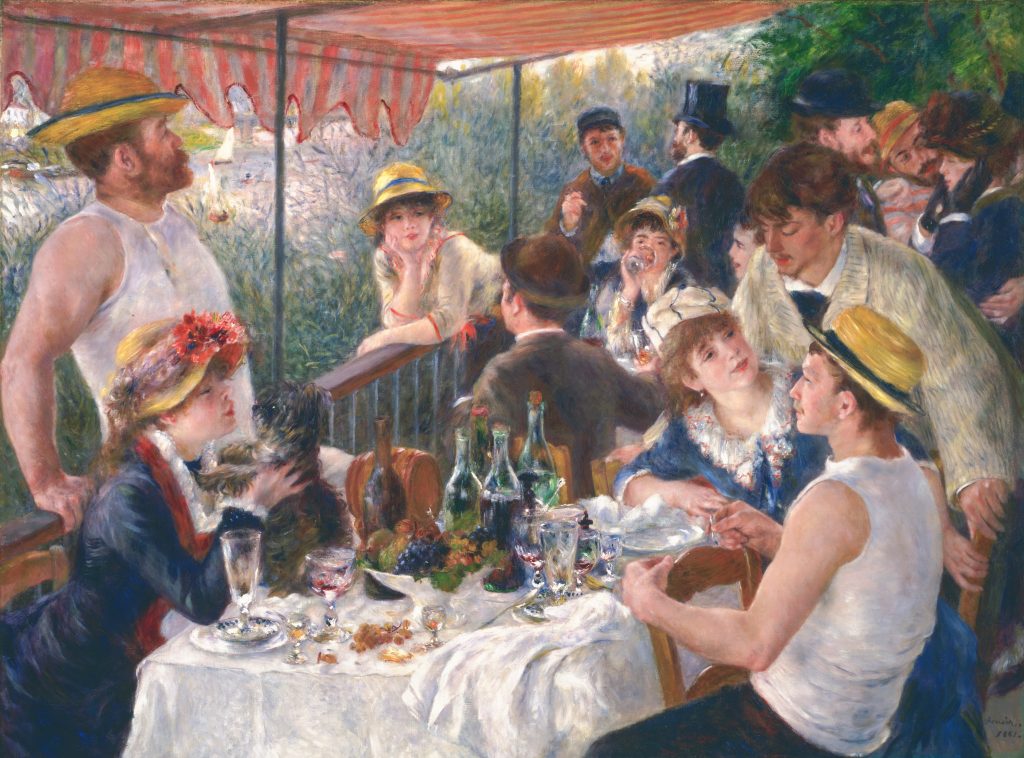
Gathering a lively group of friends for a sun-drenched meal along the Seine allowed Pierre-Auguste Renoir to celebrate French leisure. The crowded balcony features a mix of real actors, patrons, and the seamstress who would eventually become the master’s wife. Today, the preserved riverside venue operates as a museum dedicated to Impressionist history.
Dora Maar – “Dora Maar au Chat”
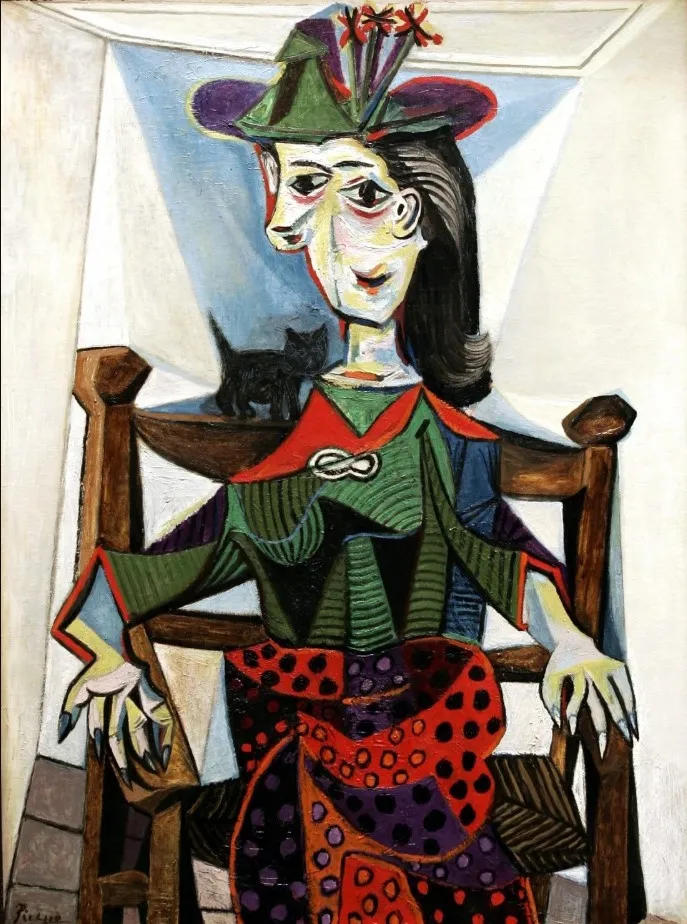
Fractured lines and a highly distorted perspective document a brilliant surrealist photographer trapped in a volatile romance. Pablo Picasso deliberately used jagged shapes to manifest the profound emotional distress Maar suffered during their artistic collaboration.
Toledo – “View of Toledo”
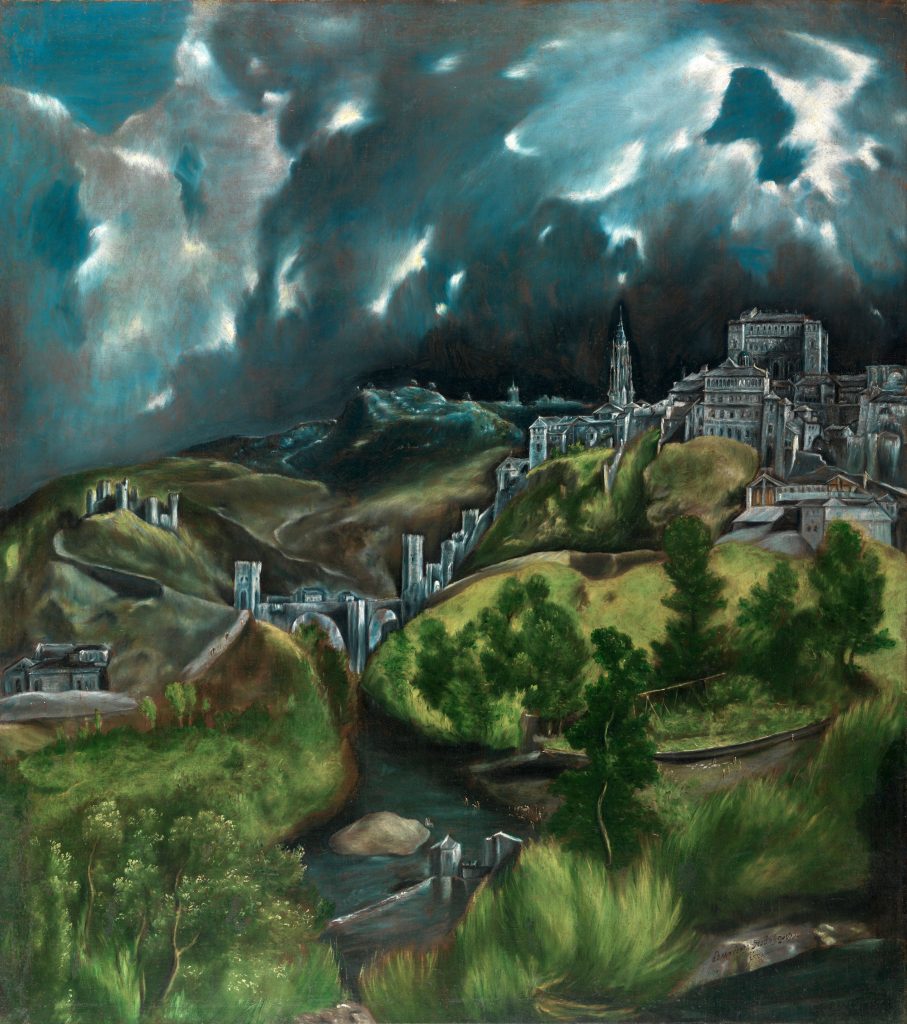
The menacing, electric skyline of this historic city proves that landscape painting can be deeply psychological. El Greco radically rearranged the real positions of local landmarks to enhance the spiritual, apocalyptic mood of his adopted home. The dark canvas stands as one of the few pure environmental studies the Renaissance master ever completed.
Marie-Thérèse Walter – “Le Rêve”
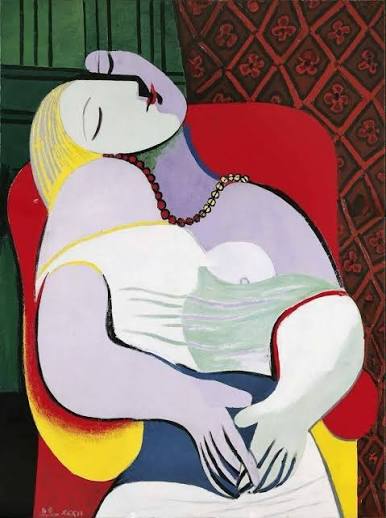
Posing in secret while Pablo Picasso hid their affair from his wife, a seventeen-year-old girl inspired a massive wave of artistic rebirth. Soft pastel hues and gentle, flowing curves capture her resting peacefully in a vibrant red armchair. Her youthful presence directly broke a creative block for the aging pioneer of Cubism. Decades later, a prominent casino billionaire accidentally drove his elbow directly through the canvas right before completing a record-breaking private sale.
Mont Sainte-Victoire – “Mont Sainte-Victoire”
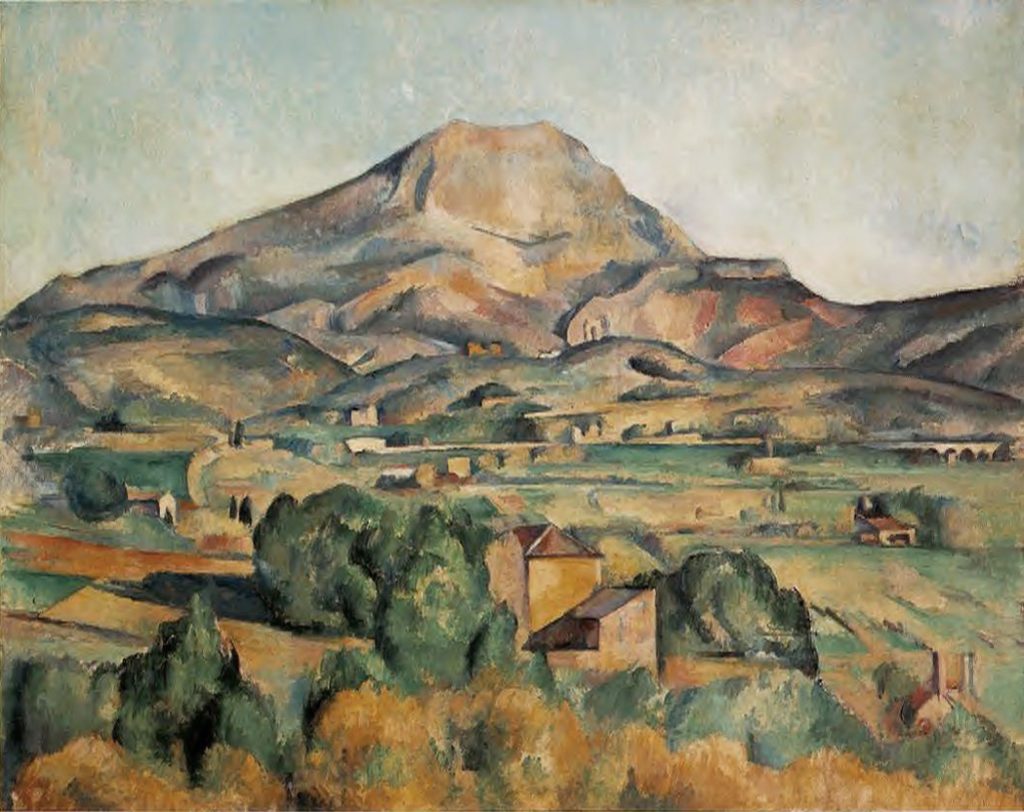
Rising sharply above the countryside of Aix-en-Provence, this limestone ridge became Paul Cézanne’s lifelong obsession. The Post-Impressionist pioneer returned to this specific vantage point dozens of times across his later career. His endless repetitions of the mountain using flat geometric planes systematically dismantled traditional perspective and laid the groundwork for Cubism.
Gala Dalí – “Leda Atomica”
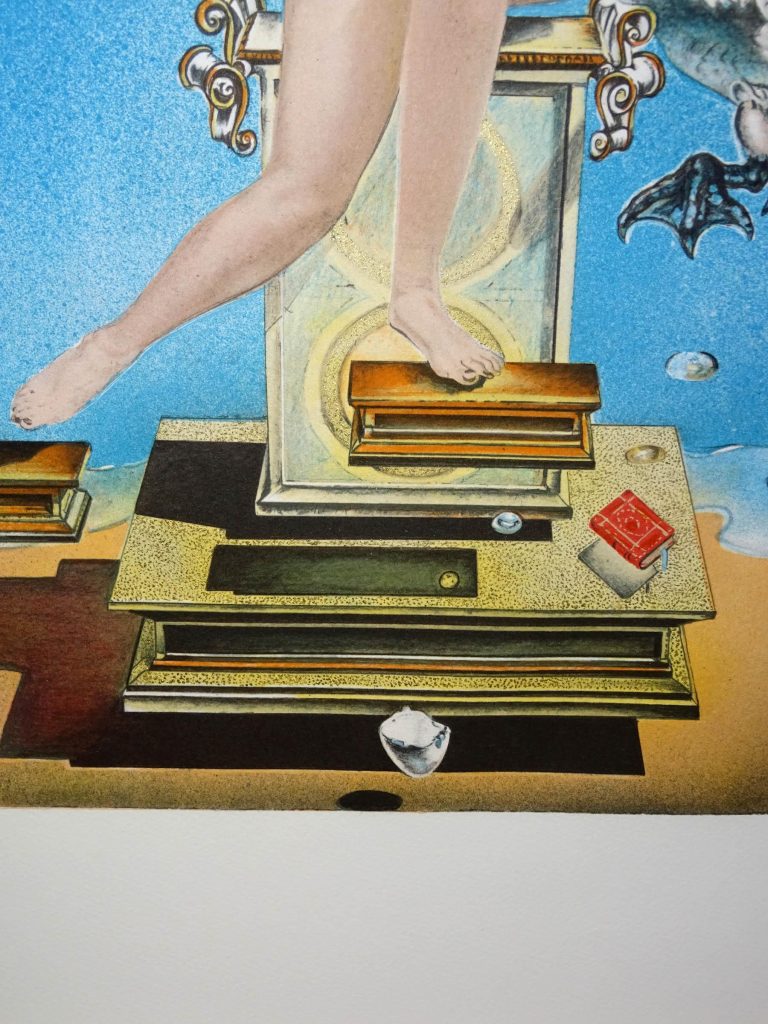
Floating objects and rigorous mathematical symmetry define this bizarre tribute to early nuclear physics. Salvador Dalí painted his formidable wife as a mythological queen, calculating the composition so that nothing physically touched, mirroring atomic structure. Gala managed the painter’s erratic career with an iron fist, cementing her status as the most powerful business manager in Surrealism.
Palace of Westminster – “Houses of Parliament”
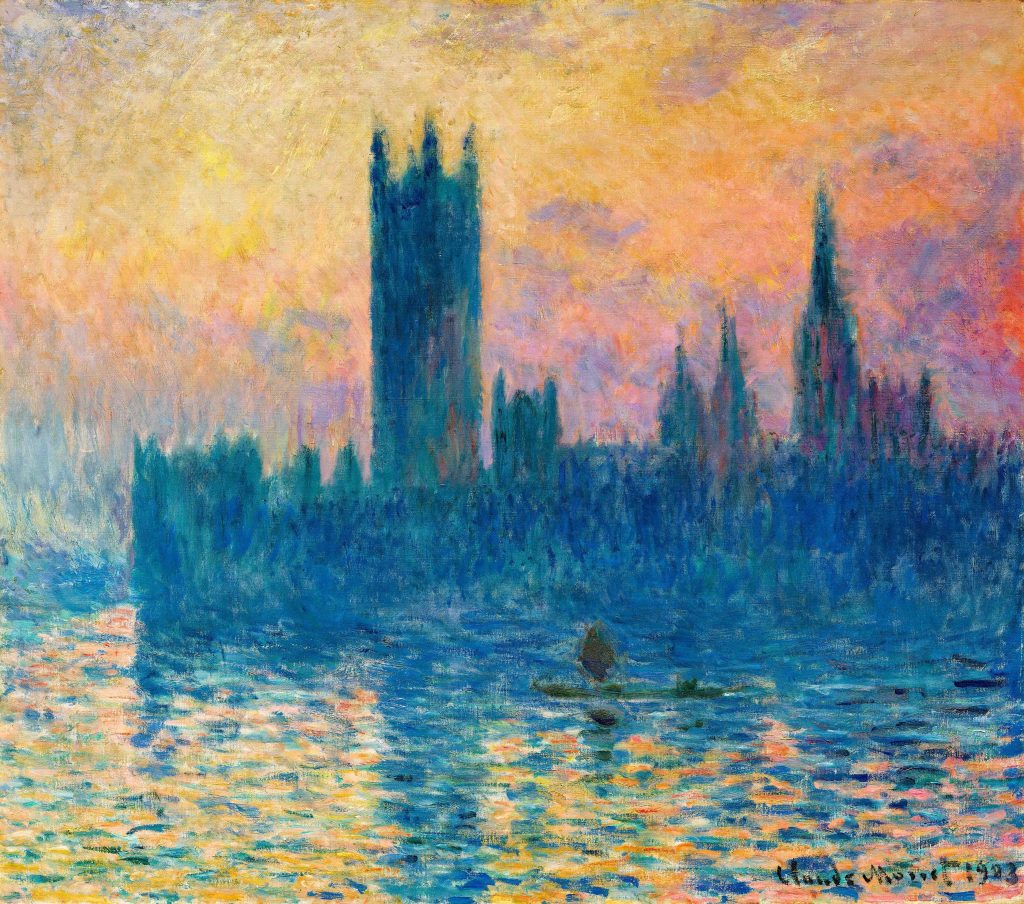
Much like his earlier work at Giverny, Claude Monet focused entirely on the shifting characteristics of light during his winter trips to London. He set up a temporary studio overlooking the Thames to capture how thick industrial smog dissolved the rigid Gothic architecture into pure color.
Wally Neuzil – “Portrait of Wally”
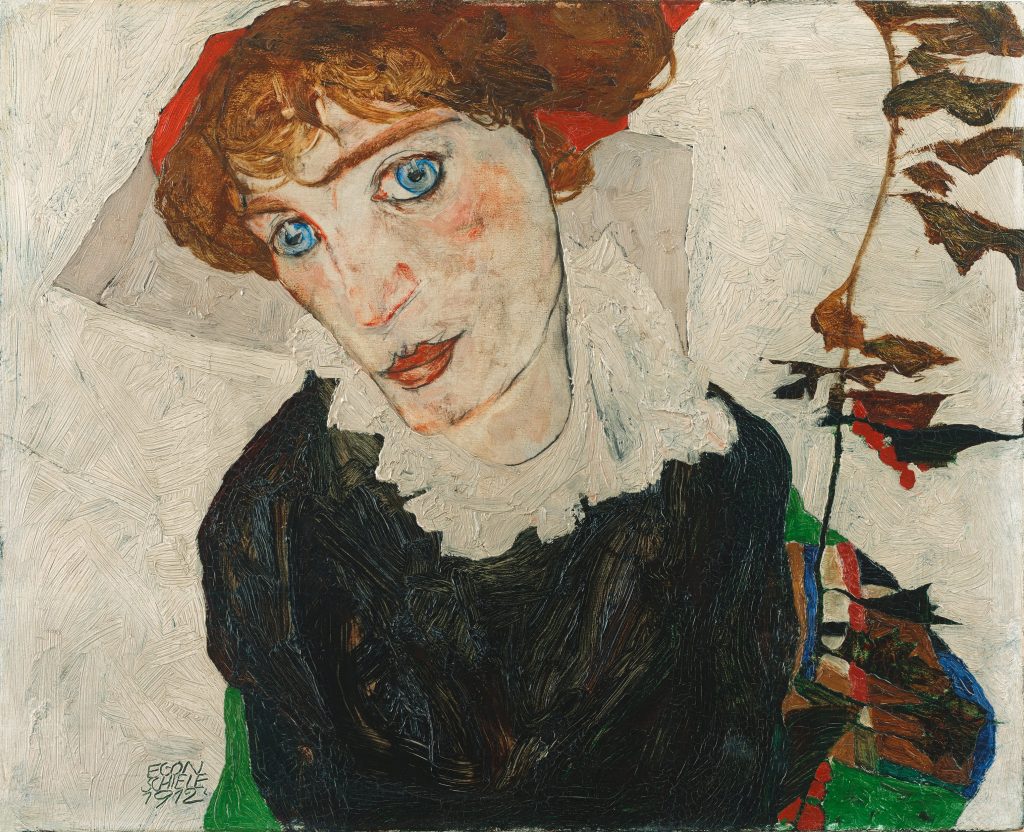
Expressionist intensity radiates from a gaze that challenged the strict bourgeois morality of early twentieth-century Vienna. Egon Schiele relied heavily on Neuzil, who functioned as his primary model during his most controversial creative breakthroughs. Their professional bond fractured abruptly when the painter abandoned her to marry a wealthier woman for social status. Wally subsequently volunteered for the Red Cross, dying as a wartime nurse before the painting achieved global renown.
Mataiea – “Where Do We Come From? What Are We? Where Are We Going?”
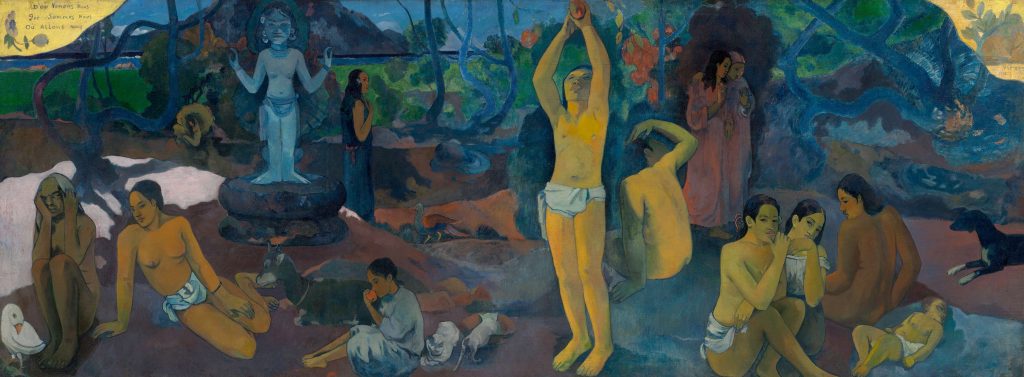
Fleeing Western civilization altogether brought Paul Gauguin to a remote tropical paradise in French Polynesia. The vivid flora and distinct indigenous traditions directly dictated the non-naturalistic color palette of this massive philosophical allegory. Tragically, the artist attempted to end his own life shortly after completing this definitive visual testament.
Bella Rosenfeld – “Over the Town”
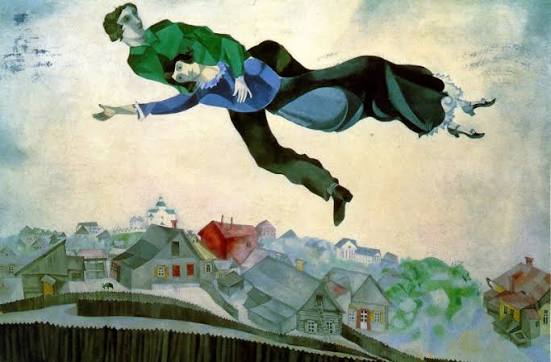
Soaring high above the roofs of Vitebsk, the figures in this whimsical painting defy the heavy constraints of gravity. Marc Chagall used the imagery of flight to convey the exhilarating emotional escape his new wife provided from the bleak realities of wartime poverty.
Gare Saint-Lazare – “The Gare Saint-Lazare”
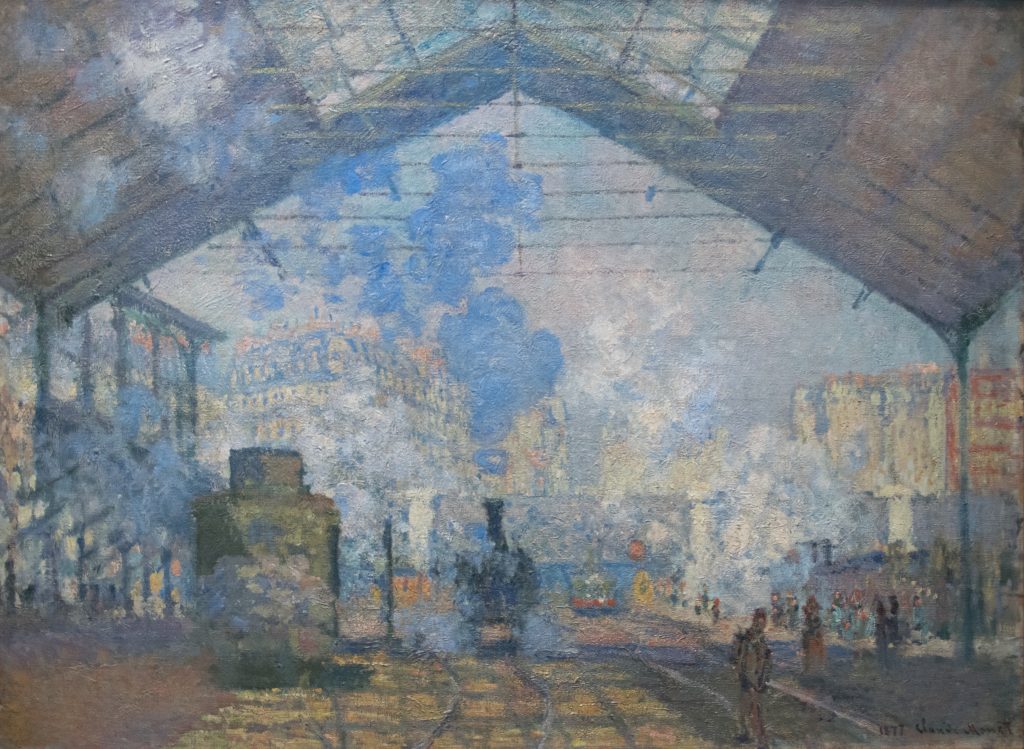
Returning to Paris, Claude Monet traded peaceful water lilies for the mechanical chaos of a bustling train station. The artist desired to study the modern effects of industrial iron beams and billowing clouds of locomotive steam. He successfully bribed the station master to delay scheduled departures and fill the platform with extra coal, maximizing the atmospheric smoke for his brushwork. This gritty, urban subject matter helped legitimize everyday modern life as a worthy topic for fine art.
Jane Avril – “Jane Avril Leaving the Moulin Rouge”
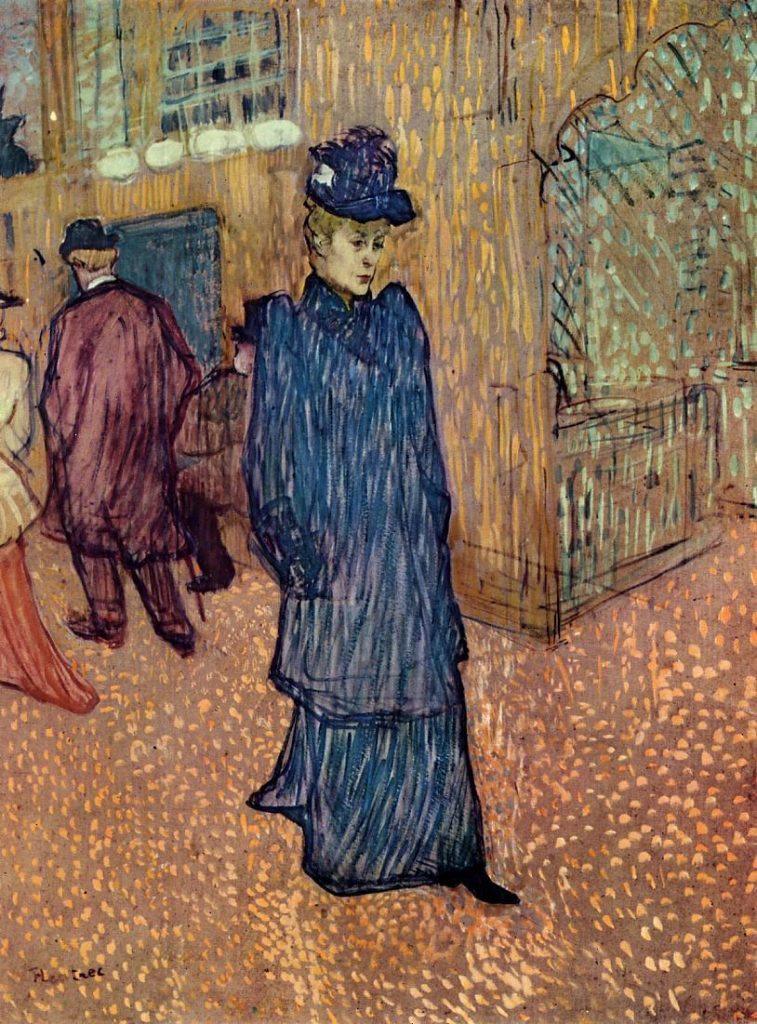
Melancholy replaces the typical high-energy spectacle of the cabaret in this intimate nocturnal study. Henri de Toulouse-Lautrec maintained a deeply loyal friendship with this specific dancer, capturing her complex life beyond the footlights. Her striking silhouette became a defining element of late nineteenth-century poster art.
The Banks of the Seine at Asnières – “Bathers at Asnières”
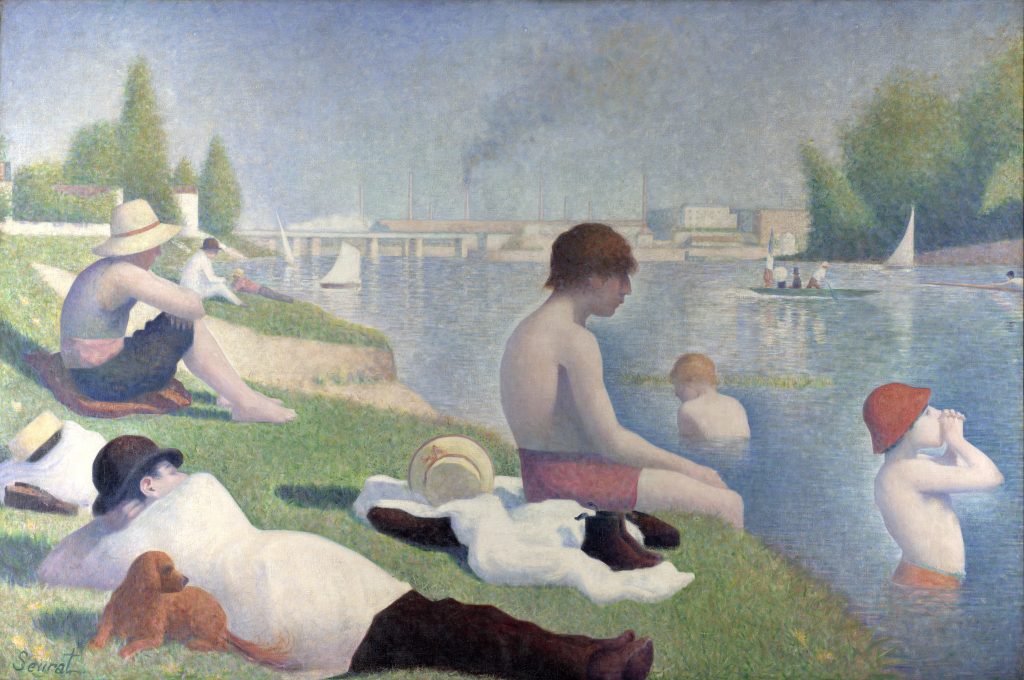
Rejecting the fashionable Parisian parks, Georges Seurat focused his early experimental color theory on a working-class industrial suburb. By applying tiny, unblended dots of paint, he forced the viewer’s eye to mix the colors dynamically from a distance.
Suzanne Valadon – “Dance at Bougival”
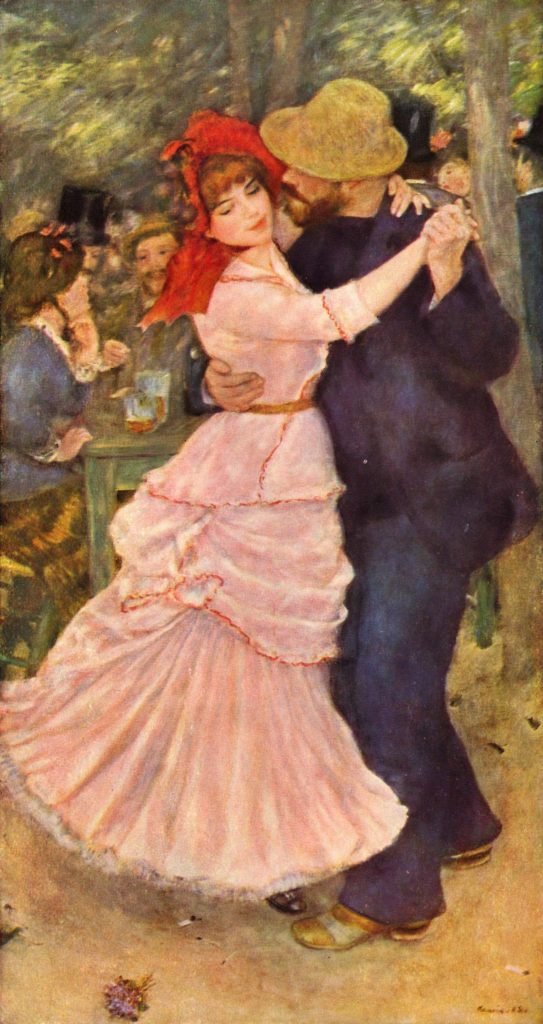
Another familiar face from the circle of Pierre-Auguste Renoir enlivens this sun-drenched depiction of country dancing. Suzanne Valadon began her career as a daring circus acrobat before transitioning into an iconic model and a highly respected painter. Her firsthand understanding of human anatomy allowed her to hold complex poses for hours without losing posture. She eventually shattered institutional glass ceilings by becoming the first woman painter admitted to the Société Nationale des Beaux-Arts.
Collioure – “The Open Window, Collioure”
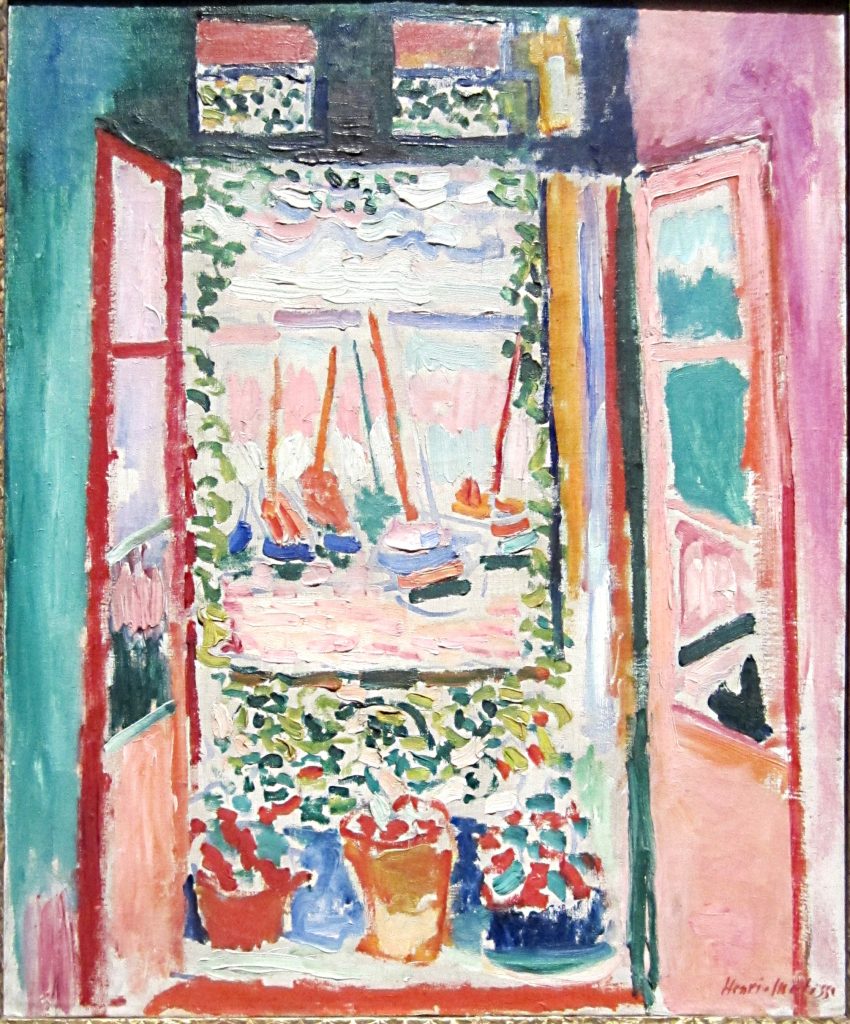
A small Mediterranean fishing port near the border of Spain catalyzed a radical explosion of pure, unmixed pigments. Henri Matisse looked through his simple hotel window to paint boats floating on vibrant pink and turquoise waves. He abandoned academic perspective entirely, triggering a wave of critical outrage that birthed the Fauvism movement.
Berthe Morisot – “Berthe Morisot with a Bouquet of Violets”
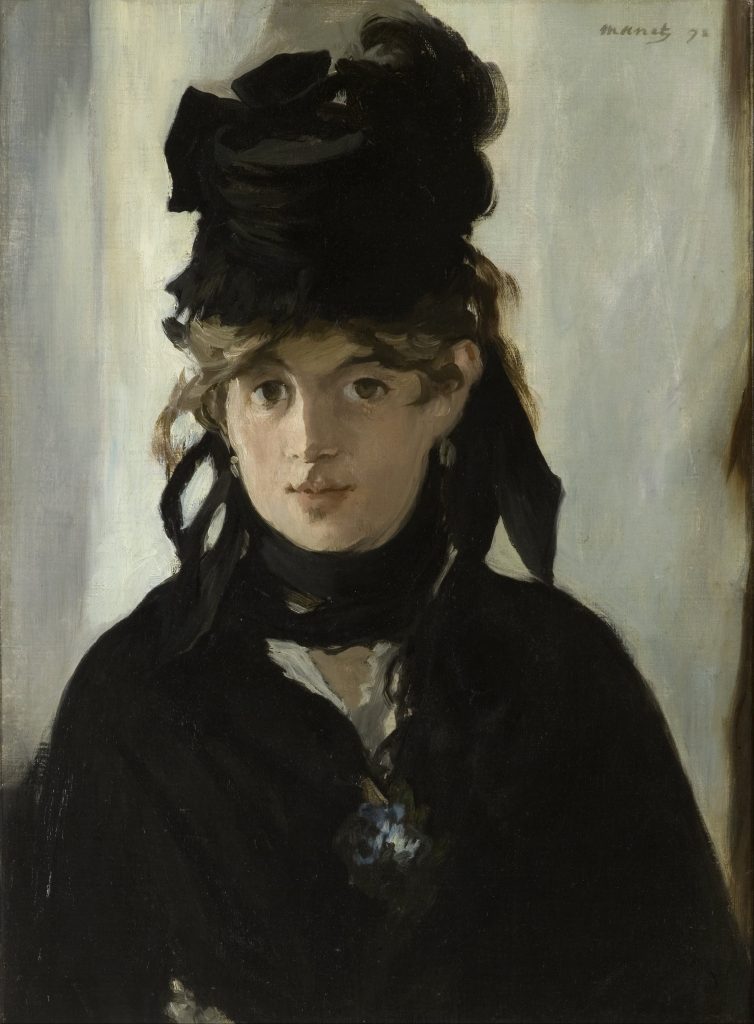
Gazing intensely from beneath a heavy black mourning veil, a brilliant Impressionist artist refuses to be treated as a passive object. Édouard Manet captured his sister-in-law’s formidable intellect over a dozen times on canvas. He allowed her to actively dictate the dramatic, high-contrast lighting of the session, cementing her influence over French realism.
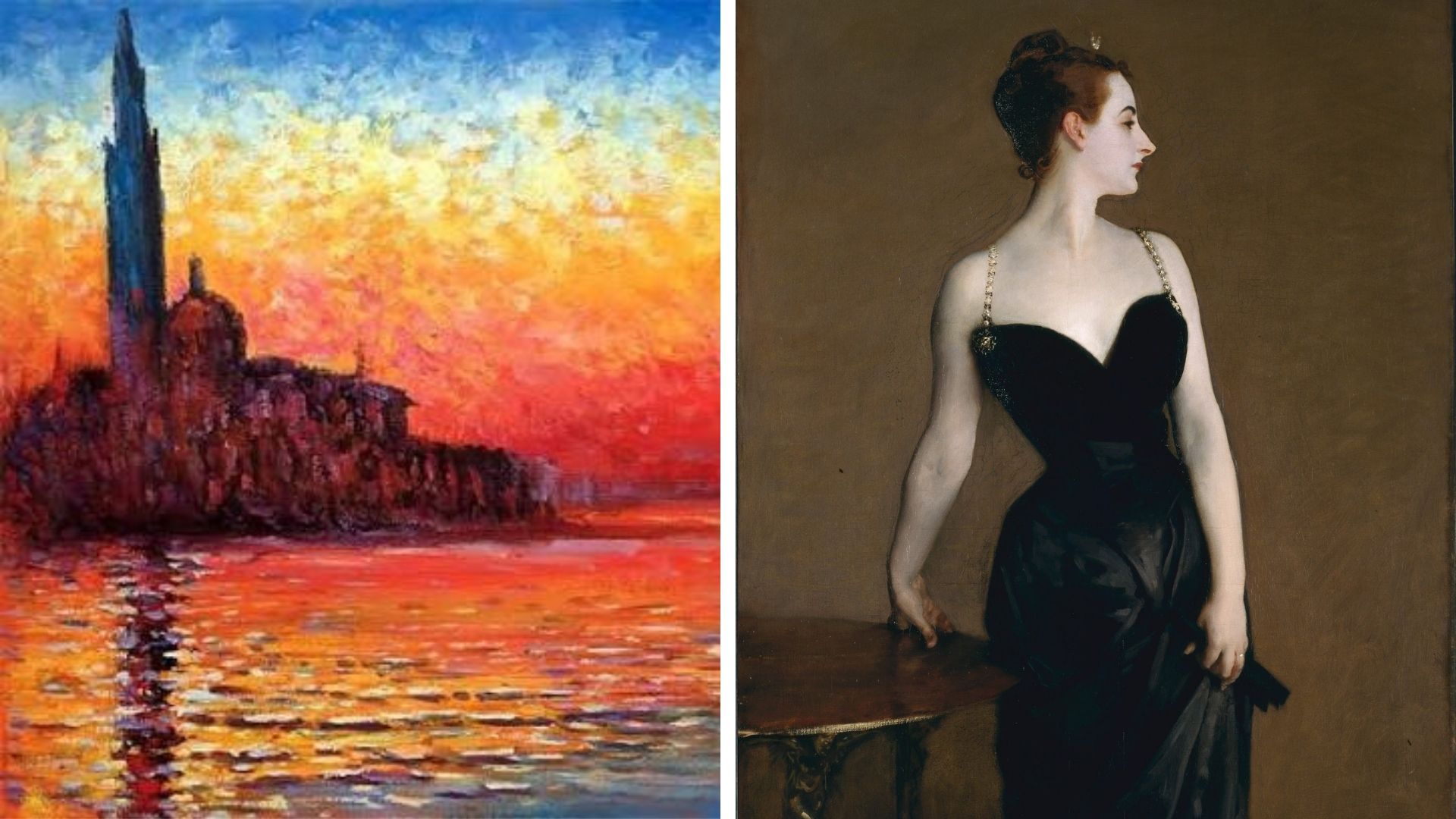
San Giorgio Maggiore – “San Giorgio Maggiore at Dusk”
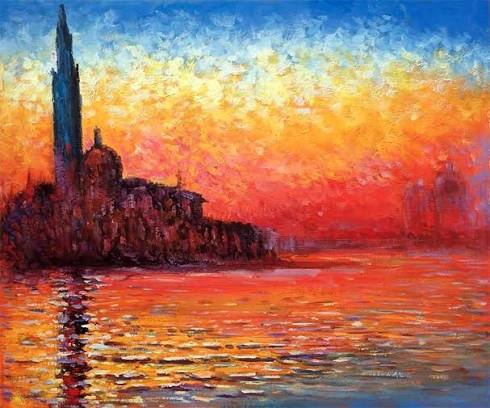
Venice offered the ultimate arena for Claude Monet’s final monumental studies of maritime reflection and dissolving form. The brilliant orange and violet hues capturing this island monastery prove that the master remained committed to pure color over physical detail.
Madame X (Virginie Amélie Avegno Gautreau) – “Madame X”
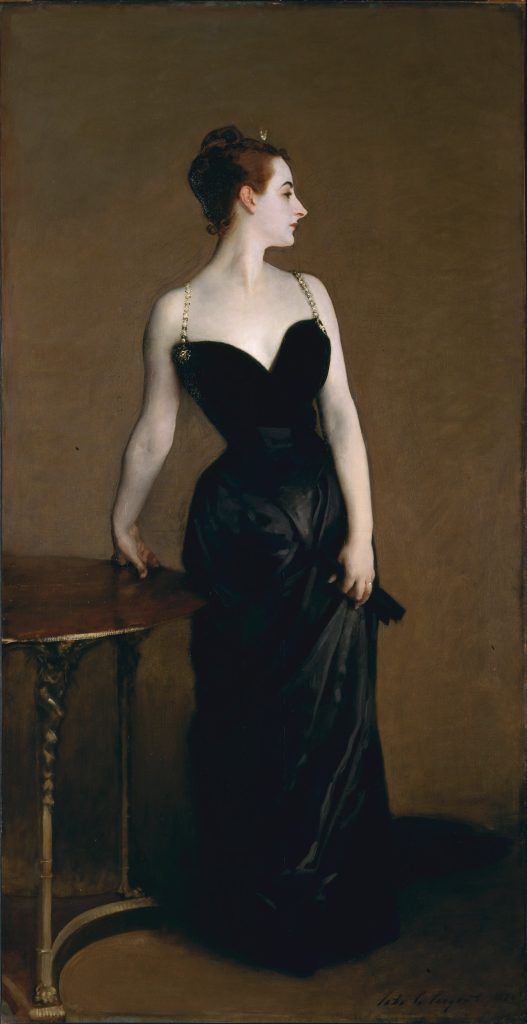
A single slipped dress strap was all it took to destroy a painter’s career in late nineteenth-century Paris. John Singer Sargent hoped to showcase the unconventional beauty of a prominent American expatriate socialite. Conservative gallery viewers deemed the resulting portrait utterly indecent and offensive to public morals. The fierce public backlash forced the artist to repaint the strap and flee the country in disgrace.