The 1970s turned everyday living into a design statement, from thick, long-pile carpets to avocado-green kitchens. Some of these staples quietly lost the market to a better invention, while others were phased out by new safety rules. Take a look back and see how many of these 30 things filled your own childhood home.
The Percolator
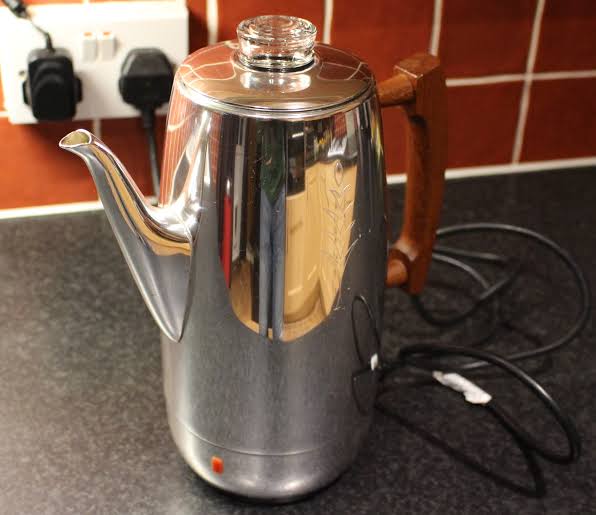
Before there was drip coffee, nearly every American kitchen had a stovetop percolator bubbling each morning. That changed fast: Mr. Coffee, the first automatic drip machine built for home use, hit shelves in October 1972 with Joe DiMaggio as its pitchman. By 1975 it had sold a million units, and within a few years the brand controlled half the U.S. coffee-maker market.
Fondue Pots

Long forks and a pot of melted cheese were a fixture of ’70s dinner parties. The trend had unusual roots: Switzerland’s Swiss Cheese Union spent decades promoting fondue abroad to sell more of its regulated dairy output. Once that marketing push ended in the late 1990s, the fondue pot slowly disappeared from most kitchen cabinets.
Aluminum TV Dinner Trays

The three-compartment foil tray was designed for the oven, and that became its downfall once microwaves took over. Metal doesn’t belong in a microwave, so Swanson switched to microwave-safe plastic across its whole frozen-dinner line in 1986. That same year, the original tray landed in the Smithsonian.
Card Tables and Folding Chairs

A folding card table wasn’t just for card games — it doubled as extra dining space for holidays, a kids’ craft station, or an impromptu fort. Most families kept one stored in a closet for exactly these overflow moments. Lightweight and easy to store, the setup remained practical long after the decade ended.
Popcorn Ceilings

That bumpy, spray-on texture covering ceilings wasn’t just a style choice — it hid drywall seams and dampened noise cheaply. Many versions also contained asbestos, which led regulators to ban the material in ceiling treatments by the late 1970s. A homeowner with an untouched popcorn ceiling today is often looking at a genuine 40-plus-year-old surface.
Rented Telephones

For decades, the phone on the kitchen wall wasn’t owned outright — it was leased for a monthly fee. Millions of phones were still being rented well into the 1980s. New federal rules eventually let people buy outside equipment, and AT&T’s 1984 breakup gave renters the option to finally purchase or return their handsets.
TV Guide

Before an on-screen programming menu existed, TV Guide’s pocket-sized weekly issue was how families planned their viewing. Circulation peaked near 20 million copies in 1970, making it the most widely read magazine in the country. Regional editions ran for decades before the magazine consolidated and shrank dramatically in the 2000s.
Encyclopedia Sets

A matching row of gold-lettered encyclopedia volumes was a common sight, often sold door to door. Sales for the most popular sets kept climbing into the early 1990s. Once CD-ROM encyclopedias arrived, the door-to-door business collapsed within just a few years.
The 8-Track Player

A matching row of gold-lettered encyclopedia volumes was a common sight, often sold door to door. Sales for the most popular sets kept climbing into the early 1990s. Once CD-ROM encyclopedias arrived, the door-to-door business collapsed within just a few years.
The Kodak Carousel Slide Projector

Family vacation photos didn’t go into an album — they went into circular Carousel trays, projected one at a time onto a wall. Kodak introduced the projector in 1961 and kept some version in production for over four decades. Slide night was a real, recurring event in households that owned one.
S&H Green Stamps

Grocery and gas purchases used to earn shoppers little green stamps, pasted into booklets and later traded for household goods. The program issued so many stamps that at its peak it printed more than the U.S. Postal Service. It wound down gradually, with only a handful of stores still participating by the late 1990s.
Glass Fever Thermometers

Checking a child’s temperature meant shaking down a thin glass tube filled with mercury and hoping nobody dropped it. Regulators eventually restricted mercury thermometer sales in several states because of the metal’s toxicity. Digital versions cost about the same and carry no cleanup risk.
Bean Bag Chairs

Casual and impossible to sit in gracefully, the bean bag chair became the go-to seat for kids’ rooms and rec rooms alike. It was patented in Italy in the late 1960s before American manufacturers ran with it. Filled with foam pellets instead of traditional cushioning, it fit right into the decade’s laid-back approach to furniture.
Patterned Vinyl Flooring

Kitchens and bathrooms often had flooring in bold geometric or floral patterns printed onto affordable sheet vinyl. It was durable, easy to clean, and available in louder colorways than most flooring sold today. Plenty of homeowners later ripped it out in favor of neutral tile.
Decorative Kitchen Canister Sets

Flour, sugar, and coffee containers sat out on the counter, often shaped like mushrooms or decorated with bold floral prints. These sets came in ceramic, tin, or plastic, and matching ones were a common wedding gift. Some collectors still hunt for the mushroom-themed versions today.
High-Pile Carpeting

Wall-to-wall carpet with long, loose fibers defined the feel of a ’70s living room or bedroom. It came in colors ranging from earthy browns to bright oranges, often paired with equally bold wallpaper. Vacuuming it properly required a special high-pile attachment most households never bought.
Macramé Wall Hangings and Plant Hangers

Knotted cord art turned up everywhere, from wall hangings to planters suspended near sunny windows. The craft was cheap to learn and required no tools beyond cord and a pair of hands. It’s seen a genuine revival in home decor circles in recent years.
Granny Square Blankets

Crocheted from small, colorful squares stitched together, the granny square blanket was a common handmade gift and a way to use up leftover yarn. Nearly every family had at least one draped over a couch or armchair. The pattern has cycled back into popularity more than once since, including among crafters today.
Conversation Pits

Some living rooms skipped traditional furniture in favor of a sunken seating area built into the floor. The look created a cozy, enclosed space for entertaining, complete with built-in cushions along the edges. Building codes and changing trends made the feature far less common in newer homes.
Waterbeds

Filled with water instead of padding, the waterbed was marketed as a more comfortable way to sleep. It required a reinforced frame to handle the weight and came with its own share of leaks and maintenance headaches. Popularity peaked in the ’80s before newer mattress technology took over.
Console Televisions

TVs in the ’70s weren’t just electronics — they were furniture, built into large wooden cabinets anchoring the living room. Many doubled as a stand for framed photos or houseplants when the set wasn’t in use. As screens got flatter and cheaper, the console TV disappeared in favor of wall-mounted models.
Console Stereos

Similar to the console TV, the console stereo combined a turntable, radio, and speakers inside one long wooden cabinet. It served as a centerpiece for the living room and a symbol of a family’s music collection. Compact stereo components eventually replaced the need for such a large piece of furniture.
Beaded Curtains

Hung in doorways instead of doors, beaded curtains added color, movement, and a distinctive sound to hallways and bedrooms. They were inexpensive to make and just as easy to find pre-made in department stores. Today they’re more associated with a retro aesthetic than any real household use.
Colored Toilet Paper and Fuzzy Toilet Seat Covers

Even bathrooms got the decade’s color treatment, with toilet paper sold in shades like pink, blue, and avocado green. Fuzzy, carpet-like toilet seat covers matched the rest of the bathroom’s coordinated palette. Both trends faded by the 1980s as manufacturers moved toward plain white paper products.
Formica Countertops

Laminate countertops from Formica brought bold colors and patterns into kitchens at a fraction of the cost of stone. The material was scratch-resistant, easy to wipe down, and came in dozens of finishes, some mimicking wood grain or marble. Many ’70s kitchens are still identifiable today by their original Formica surfaces.
Sectional Sofas
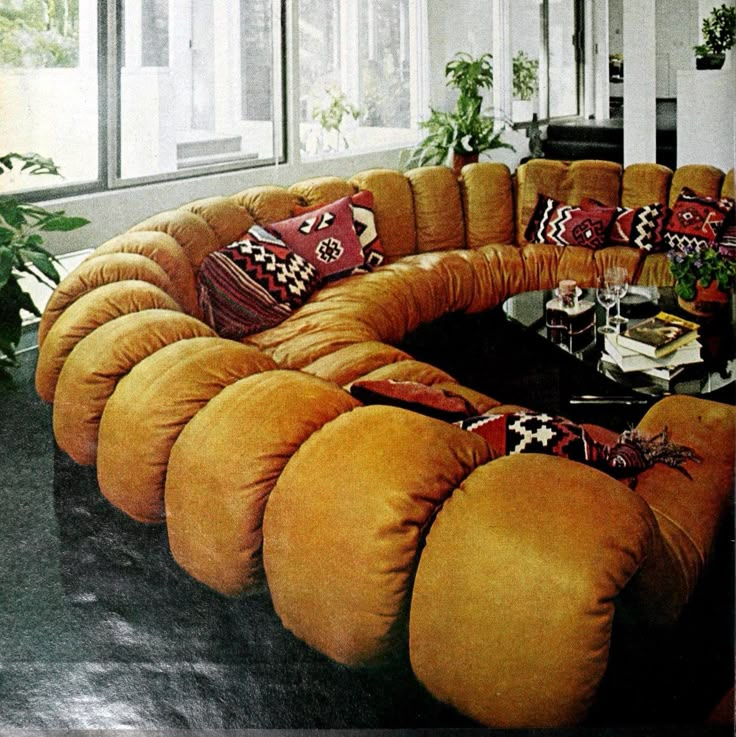
Instead of a single sofa facing a set of chairs, many living rooms switched to modular sectional seating that wrapped around a corner. The style offered more seating for large families and a more relaxed layout overall. Sectionals never really went away, though the boxy ’70s versions looked distinctly different from today’s.
Rocker-Recliners

La-Z-Boy and similar brands turned the recliner into a rocking chair, giving one piece of furniture two functions at once. It became a fixture in dens and family rooms, often reserved as one family member’s designated spot. The style is still sold today, though ’70s versions came in far bolder upholstery.
Avocado Green and Harvest Gold Appliances

No ’70s kitchen felt complete without a fridge or stove in avocado green or harvest gold. General Electric had introduced both colors years earlier, and by the mid-’70s they were still popular enough to get refreshed versions. The look faded out entirely once manufacturers shifted to all-white appliances in the 1990s.
Lava Lamps

The slow-moving wax blobs inside a glowing lava lamp made it one of the most recognizable pieces of ’70s bedroom decor. It had actually been invented in England in 1963, but found its biggest audience once tied to the era’s laid-back aesthetic. Original working models from the decade are now sought after by collectors.