The ancient world produced engineering feats that seemed almost impossible for their time. Without modern machinery or advanced technology, civilizations across the globe constructed monuments, cities, roads, aqueducts, and other incredible works that continue to impress engineers and historians thousands of years later. Here are 29 of the greatest engineering achievements of the ancient world.
The Great Pyramid of Giza (Egypt)

Completed around 2560 BC for Pharaoh Khufu, the Great Pyramid originally stood about 146.6 meters (481 feet) tall. It remained the world's tallest human-made structure for nearly 3,800 years.
Roman Aqueducts (Roman Empire)

The Romans built more than 500 aqueducts, with some carrying fresh water over 90 kilometers (56 miles) using gravity alone and a slope of just a few centimeters per kilometer.
The Colosseum (Italy)

Opened in AD 80, the Colosseum could seat about 50,000 spectators and featured retractable awnings, elevators, trapdoors, and an elaborate underground network for gladiators and animals.
The Great Wall of China (China)

Built and expanded over centuries, the combined defensive system stretches more than 21,000 kilometers (13,000 miles) across northern China.
Petra's Water System (Jordan)

The Nabataeans carved channels, pipelines, dams, and huge cisterns into the desert landscape, allowing Petra to support tens of thousands of residents despite scarce rainfall.
The Lighthouse of Alexandria (Egypt)

Standing an estimated 100 to 120 meters (330 to 390 feet) tall, the Pharos guided ships into Alexandria's harbor for more than 1,500 years before earthquakes destroyed it.
Göbekli Tepe (Türkiye)

Dating to around 9600 BC, its massive limestone pillars weighing up to 16 tons were erected thousands of years before pottery, metal tools, or the wheel.
The Pantheon (Italy)

Completed around AD 125, the Pantheon still has the world's largest unreinforced concrete dome, spanning 43.3 meters (142 feet).
The Antikythera Mechanism (Greece)

Built around the 2nd century BC, this intricate device used more than 30 bronze gears to predict eclipses, planetary movements, and astronomical cycles.
The Qanat System (Persia)

Engineers dug gently sloping underground tunnels that carried groundwater for dozens of kilometers while minimizing evaporation in desert climates.
Machu Picchu (Peru)

The Inca built precisely fitted stone walls without mortar, allowing many structures to withstand earthquakes for more than 500 years.
The Roman Road Network (Roman Empire)

Rome constructed over 80,000 kilometers (50,000 miles) of paved roads, enabling rapid military movement and efficient trade across the empire.
The Canal of the Pharaohs (Egypt)

Centuries before the Suez Canal, Egyptian rulers built and expanded waterways linking the Nile River to the Red Sea through a series of canals.
The Long Walls of Athens (Greece)

Stretching roughly 6 kilometers (4 miles), the walls permanently linked Athens with its port at Piraeus, allowing supplies to reach the city even during sieges.
Mohenjo-daro Drainage System (Pakistan)

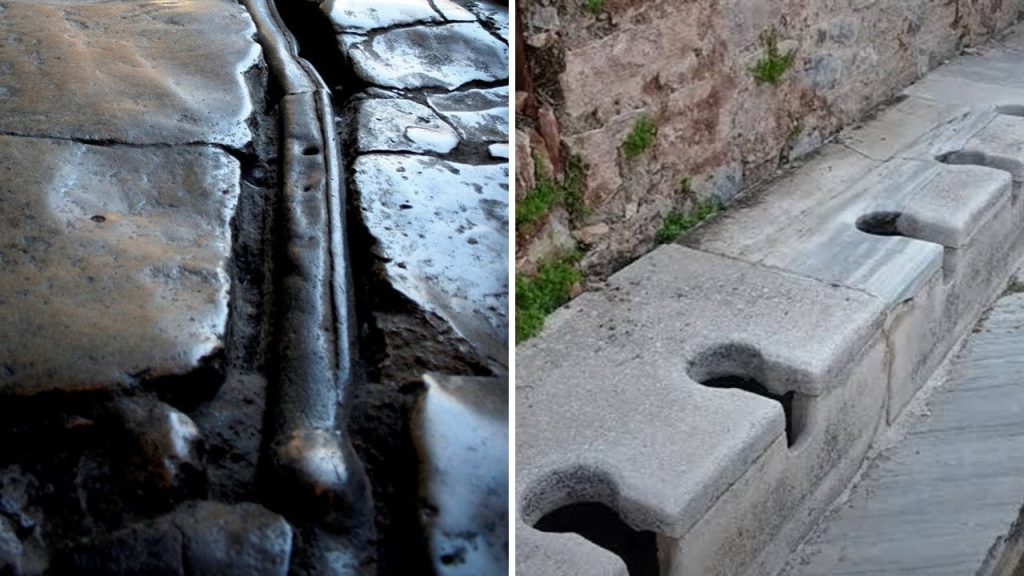
Nearly every house connected to covered brick drains that carried wastewater away through one of the ancient world's most advanced urban sanitation systems.
The Temple of Artemis (Türkiye)

Completed around 550 BC, the enormous marble temple measured about 115 by 55 meters (377 by 180 feet) and was counted among the Seven Wonders of the Ancient World.
Baalbek Trilithon (Lebanon)

Three limestone blocks built into the Temple of Jupiter each weigh roughly 800 tons, making them some of the largest stones ever incorporated into a building.
The Inca Road System (Peru and Andes)

The Qhapaq Ñan road network stretched more than 30,000 kilometers (18,600 miles), connecting mountains, deserts, and forests across the Inca Empire.
The Eupalinian Aqueduct (Greece)

Built in the 6th century BC, engineers excavated a tunnel from opposite ends of a mountain and successfully met in the middle with remarkable accuracy.
Angkor's Hydraulic System (Cambodia)

The Khmer Empire created an enormous network of canals and reservoirs that controlled seasonal floods and supplied water to one of the medieval world's largest cities.
Stonehenge (England)

Some of Stonehenge's smaller bluestones were transported more than 200 kilometers (125 miles) from Wales before being erected on Salisbury Plain.
The Walls of Constantinople (Türkiye)

Completed during the 5th century AD, the massive triple-layer defensive walls protected Constantinople from major invasions for nearly a thousand years.
The Mausoleum at Halicarnassus (Türkiye)

Standing roughly 45 meters (148 feet) tall, the monument was so famous that the word "mausoleum" comes directly from its owner, Mausolus.
The Roman Sewers (Cloaca Maxima)

Originally constructed around the 6th century BC, the Cloaca Maxima drained marshland and remained in use for more than two millennia.
The Ziggurat of Ur (Iraq)

Built around 2100 BC, the massive stepped platform used millions of mud bricks and served as the ceremonial centerpiece of the Sumerian city of Ur.
Roman Concrete Harbors (Roman Empire)

Roman engineers developed volcanic concrete that hardened underwater, allowing them to build durable ports that still survive after nearly 2,000 years.
Derinkuyu Underground City (Türkiye)

The multi-level underground city reached depths of about 85 meters (279 feet) and could shelter approximately 20,000 people along with livestock and food supplies.
The Temple Complex of Karnak (Egypt)

Expanded over nearly 2,000 years, Karnak became the largest religious complex ever built, covering more than 100 hectares (250 acres).
The Sacsayhuamán Fortress (Peru)

Some limestone blocks weigh over 100 tons and fit together so precisely that even a thin blade cannot be inserted between many of the stones, all without the use of mortar.