The history of comic book movies is much bigger than Marvel and DC. From Japanese manga and European graphic novels to underground comics and superhero classics, these 30 films show just how many different kinds of stories can make the jump from illustrated page to screen.
The Dark Knight

Christopher Nolan takes Batman into the territory of crime thrillers and post-9/11 political dramas without losing the scale of a comic book blockbuster. Heath Ledger’s Joker dominates every scene he enters, but the film works because Bruce Wayne, Harvey Dent, and Gotham itself all become part of the same moral crisis.
Spider-Man 2

Peter Parker spends much of Spider-Man 2 wondering whether being Spider-Man has ruined every other part of his life. Sam Raimi balances that character drama with some of the genre’s finest action, particularly Doctor Octopus’s hospital escape and the famous elevated-train sequence.
Akira

Katsuhiro Otomo’s adaptation of his own manga throws biker gangs, psychic children, political unrest, military conspiracies, and grotesque body horror into a rapidly collapsing Neo-Tokyo. Its extraordinary hand-drawn animation still makes the city feel enormous, dangerous, and alive decades after its release.
Spider-Man: Into the Spider-Verse

Miles Morales gets an origin story that treats comic-book imagery as part of the movie’s actual visual language rather than something to hide. Different animation styles, halftone textures, split screens, and deliberately imperfect frame rates turn the multiverse into one of the most visually inventive superhero films ever made.
Superman II

Christopher Reeve remains the standard against which live-action Superman performances are measured, and the sequel gives him a surprisingly personal dilemma alongside the expected spectacle. General Zod and his allies bring genuine danger, while Clark’s relationship with Lois gives the movie an emotional center beneath all the Kryptonian chaos.
Oldboy

Park Chan-wook took a Japanese manga and turned it into a vicious Korean revenge thriller whose reputation eventually surpassed that of its source material. Choi Min-sik’s performance, the labyrinthine mystery, and that astonishing side-scrolling hallway fight make it difficult to forget even before the story reaches its infamous revelations.
Scott Pilgrim vs. the World

Edgar Wright approaches Bryan Lee O’Malley’s graphic novels as permission to ignore the usual boundaries of live-action filmmaking. Video-game graphics, manga exaggeration, music, editing, and comic-book effects constantly collide as Scott battles his girlfriend’s seven evil exes.
A History of Violence

David Cronenberg’s graphic-novel adaptation looks nothing like the stereotypical comic book movie, which is part of what makes it so interesting. Viggo Mortensen plays a seemingly ordinary family man whose violent abilities raise uncomfortable questions about identity, repression, and whether someone can ever truly escape his past.
Logan

James Mangold imagines an aging Wolverine as the exhausted gunslinger at the center of a bleak modern Western. Hugh Jackman and Patrick Stewart get some of their richest material in the X-Men series, while Dafne Keen gives Logan one final relationship worth fighting for.
Ghost World

There are no costumes or superpowers in Terry Zwigoff’s adaptation of Daniel Clowes’s comic, only two teenagers trying to figure out what comes after high school. Thora Birch, Scarlett Johansson, and Steve Buscemi turn its awkward characters and uncomfortable observations into something funny, melancholy, and painfully recognizable.
Iron Man

Robert Downey Jr.’s Tony Stark gave Marvel the personality around which an entire cinematic universe could eventually be built. Jon Favreau keeps the first film relatively contained, concentrating on Stark building the suit, confronting the consequences of his weapons business, and gradually discovering what kind of person he wants to become.
Persepolis

Marjane Satrapi and Vincent Paronnaud preserve the graphic simplicity of Satrapi’s autobiographical comic rather than forcing it toward photorealism. The black-and-white animation follows her childhood in Iran and later experiences in Europe with humor and warmth, even as revolution, repression, displacement, and loneliness reshape her life.
Black Panther

Ryan Coogler makes Wakanda feel like a place with its own politics, history, technology, traditions, and conflicting ideas about its responsibility to the outside world. Chadwick Boseman gives T’Challa a quiet authority, while Michael B. Jordan’s Killmonger provides the MCU with one of its strongest antagonists.
Ghost in the Shell

Mamoru Oshii uses Masamune Shirow’s manga as the foundation for a much colder and more philosophical science-fiction film. Major Motoko Kusanagi’s hunt for the Puppet Master gradually becomes an exploration of consciousness, identity, technology, and what remains human when bodies can be manufactured.
Snowpiercer

This adaptation turns the French graphic novel Le Transperceneige into a class system that can literally be walked through from one train carriage to another. Each new section reveals another piece of the bizarre society aboard the train, allowing the movie to continually change tone without losing its political anger.
Captain America: The Winter Soldier

Steve Rogers finds himself trapped inside a conspiracy thriller where unquestioning loyalty to institutions becomes more dangerous than any costumed villain. Chris Evans and Scarlett Johansson make an excellent central pairing, while the return of Bucky Barnes forces Steve’s political crisis into deeply personal territory.
Guardians of the Galaxy

Marvel took a group that most moviegoers had never heard of and somehow turned a talking raccoon and a tree into major pop-culture characters. James Gunn’s affection for dysfunctional outsiders holds together the space battles, strange planets, comedy, and carefully selected ’70s pop songs.
Hellboy II: The Golden Army

Guillermo del Toro uses Mike Mignola’s characters as an excuse to fill the screen with creatures, hidden kingdoms, ancient machines, and beautifully strange production design. Ron Perlman keeps all that fantasy grounded by playing Hellboy as a guy whose supernatural problems frequently feel as irritating as his relationship problems.
The Avengers

Seeing Iron Man, Captain America, Thor, Hulk, Black Widow, and Hawkeye together now feels routine, but in 2012 the entire idea was still a huge gamble. The film spends enough time letting its heroes argue and clash that their eventual assembly during the Battle of New York actually feels earned.
X2: X-Men United
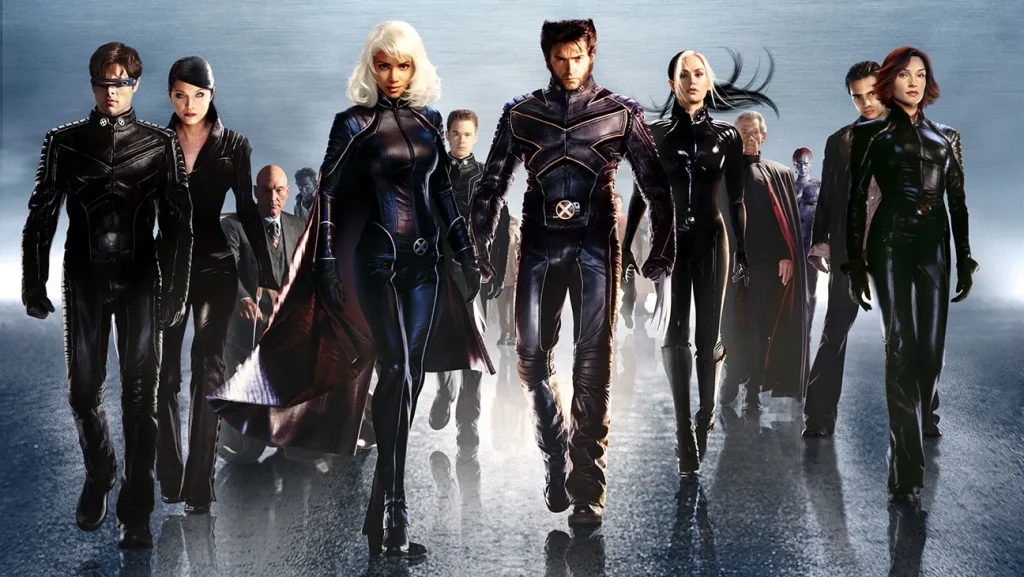
The second X-Men movie expands everything the first film established while sharpening the series’ central themes of persecution and prejudice. Nightcrawler’s White House attack remains a terrific opening, and the assault on Xavier’s school gives the film a sense of danger the franchise rarely matched afterward.
American Splendor

Harvey Pekar built a comic series out of the frustrations and small victories of ordinary life, and the film finds an equally unusual way to tell his story. Paul Giamatti plays Pekar while the real Pekar appears as himself, with animation and documentary footage further blurring the line between the man and his comic-book persona.
Road to Perdition

Sam Mendes turns Max Allan Collins and Richard Piers Rayner’s graphic novel into an unusually elegant gangster movie. Tom Hanks plays against his familiar persona as a hitman, while Conrad Hall’s Oscar-winning cinematography gives the violence and rain-soaked landscapes a mournful beauty.
Men in Black

Barry Sonnenfeld takes a relatively obscure comic and builds a hugely likable science-fiction comedy around Will Smith and Tommy Lee Jones. The secret agency, bizarre aliens, memory-erasing Neuralyzer, and matter-of-fact approach to extraterrestrial life make its world feel fully established almost immediately.
When the Wind Blows
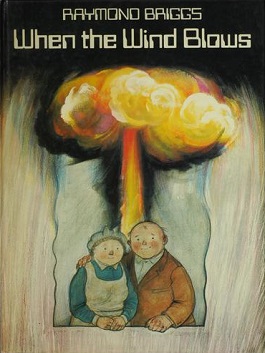
Raymond Briggs’s elderly couple respond to nuclear war using the same cheerful faith in government advice that shaped much of their ordinary lives. That gentle domestic humor makes the gradual physical consequences of radiation even harder to watch as the animated film moves toward its devastating conclusion.
The Crow
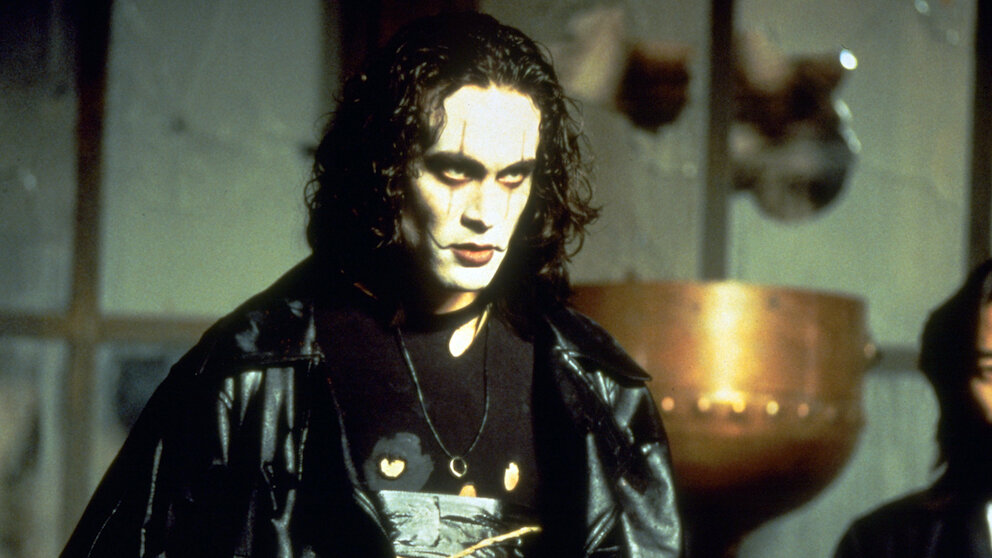
Alex Proyas fills the screen with rain, fire, ruined buildings, black leather, and the kind of urban gothic atmosphere that instantly places the movie in the 1990s. Brandon Lee’s final performance gives its supernatural revenge story a sadness that has only become more pronounced with time.
V for Vendetta

The Wachowskis’ screenplay and James McTeigue’s direction reshape Alan Moore and David Lloyd’s dystopian comic into an accessible political thriller. Hugo Weaving manages to give V charisma from behind an unmoving Guy Fawkes mask, while Natalie Portman carries much of the story’s emotional transformation.
Joker

Todd Phillips borrows heavily from the grimy character studies of 1970s and ’80s American cinema while placing a familiar DC villain at the center. Joaquin Phoenix’s physically committed performance makes Arthur Fleck increasingly uncomfortable to watch as humiliation, resentment, and fantasy become impossible to separate.
Avengers: Infinity War

The Russo brothers somehow keep dozens of established characters moving through several simultaneous stories without allowing the movie to collapse under its own weight. Giving Thanos so much screen time provides the enormous crossover with a clear dramatic center, leading to an ending that genuinely stunned blockbuster audiences.
X-Men: Days of Future Past

Bryan Singer combines the original X-Men cast with the younger prequel ensemble through a time-travel story built around Wolverine. The Sentinels create a frightening future, while the conflict between Charles Xavier and Magneto keeps the film centered on the ideological divide that has always defined the franchise.
Batman Returns

Tim Burton gets even more freedom with Gotham in his second Batman film, creating something closer to a gothic Christmas nightmare than a conventional superhero adventure. Michelle Pfeiffer’s Catwoman and Danny DeVito’s Penguin fit Burton’s world so naturally that Michael Keaton’s Batman almost becomes a supporting character in his own movie.