Easter shows up each year with bright colors, candy overload, and traditions that feel older than anyone can remember. Behind the chocolate eggs and family gatherings, there is a mix of ancient customs, religious meaning, and surprisingly quirky habits that have shaped how the holiday is celebrated today.
1. Easter gets its name from a pagan goddess

The word Easter is believed to come from Eostre, an Anglo Saxon goddess linked to spring, fertility, and new beginnings. Her festivals celebrated the return of warmth and light after winter, which helps explain why symbols like eggs and hares became tied to the holiday long before its Christian meaning took hold.
2. The Easter Bunny legend began in Germany

The story of a rabbit delivering eggs dates back to pre Christian Germany, where the hare symbolized fertility and renewal. Over time, this mythical creature became part of spring celebrations and eventually transformed into the Easter Bunny that appears in modern traditions.
3. The bunny delivering eggs was first written about in 1680

One of the earliest recorded stories of an egg bringing rabbit appeared in Germany, describing a creature that rewarded well behaved children. That idea slowly spread across Europe and later reached America, where it became a core part of Easter folklore.
4. Easter’s date is based on the moon

The holiday is celebrated on the first Sunday after the full moon that follows the spring equinox. This connection to the lunar cycle is why Easter can fall anywhere between late March and late April each year.
5. Decorating eggs has deep Ukrainian roots

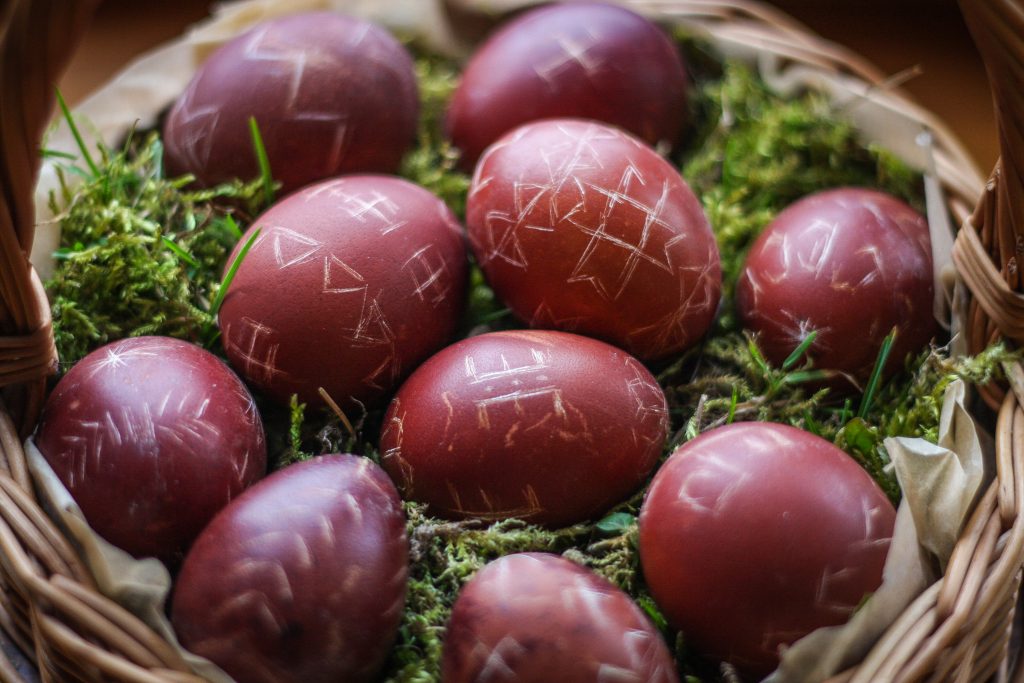
The tradition of creating intricate designs on eggs comes from Ukraine, where pysanka techniques have been practiced for generations. Each pattern and color often carries symbolic meaning tied to protection, prosperity, or health.
6. Pretzels were once part of Easter meals

In parts of Europe, pretzels symbolized prayer because their shape resembled crossed arms. They were commonly eaten during Lent and Easter, especially on Good Friday, as a simple food with religious significance.
7. Easter baskets represent new life

These baskets are designed to resemble nests, reinforcing the theme of renewal and fresh beginnings associated with spring. Filling them with eggs and treats adds another layer of symbolism connected to birth and growth.
8. Easter lilies are the official flower

The white lily is associated with purity and resurrection, making it a key symbol of the holiday. Churches and homes often display them as a visual reminder of the spiritual meaning behind Easter celebrations.
9. Peeps are a massive Easter favorite

Hundreds of millions of marshmallow chicks and bunnies are sold every year. Their bright colors and sugary taste have turned them into one of the most recognizable seasonal candies.
10. Cadbury Creme Eggs are produced in huge numbers

Factories produce millions of these chocolate eggs every single day, reaching hundreds of millions annually. Their creamy filling and signature shape have made them a staple of Easter candy culture worldwide.
11. Jelly beans are eaten in staggering quantities

More than 16 billion jelly beans are consumed during Easter season. Their small size and bright colors make them perfect for filling baskets and plastic eggs during celebrations.
12. Most people eat chocolate bunnies starting with the ears

Surveys reveal that a majority of people instinctively go for the ears first. It has become a funny and oddly consistent habit that many people share without even realizing it.
13. The White House Easter Egg Roll has a long history

This event has been held for more than a century, inviting children to celebrate Easter with games on the White House lawn. It remains one of the most famous holiday traditions in the United States.
14. Painting eggs dates back to ancient civilizations

Long before Christianity, cultures like the Persians and Egyptians decorated eggs to celebrate spring. These early customs helped shape the traditions that are still practiced today.
15. Eggs symbolize rebirth and resurrection

Across both pagan and Christian traditions, eggs have represented new life. This shared meaning helped them become one of the most important symbols of Easter.
16. The first chocolate eggs were made in Europe

Chocolate eggs began appearing in France and Germany in the early nineteenth century. These early versions were often solid and less refined than what we know today, but they marked the beginning of a major shift in Easter traditions.
17. The UK helped popularize modern chocolate eggs

In England, companies like Fry and later Cadbury refined the idea by creating smoother, more decorative versions. Their innovations helped turn chocolate eggs into the widely loved Easter treat that spread across the world.
18. Germany bans dancing on Good Friday

In several regions, dancing is restricted as a sign of respect for the solemn religious meaning of the day. Even in major cities, public celebrations are toned down during this time.
19. The world’s largest Easter egg is massive

A giant decorative egg in Canada stands over 30 feet tall and weighs thousands of pounds. It was built as a tribute to Ukrainian heritage and remains a unique landmark.
20. One Easter egg sold for millions

A Faberge style egg once sold for about £9 million, showing how a simple symbol can become an object of extreme luxury. These pieces are often considered works of art.
21. Natural dyes were originally used for eggs

Early egg coloring relied on materials like onion skins, berries, and flower petals. This gave each egg a unique and often more subtle appearance.
22. Medieval fasting shaped Easter traditions

Since eggs were not eaten during Lent, people saved them and later used them for Easter celebrations. This helped reinforce their importance as a seasonal symbol.
23. Easter is older than Christmas in importance

Within Christianity, Easter has long been considered the most significant celebration. Its focus on resurrection gives it a central place in the religious calendar.
24. Egg rolling is a symbolic tradition

Rolling eggs represents the stone being moved away from Jesus’ tomb. This playful activity still takes place in many countries and communities.
25. Chocolate bunnies are usually hollow

Manufacturers make them hollow to save chocolate while keeping their size and appeal. This design also makes them easier to produce in large quantities.
26. Easter is one of the biggest candy holidays

Only Halloween surpasses it in total candy sales. The sheer volume of sweets sold highlights how central treats have become to the celebration.
27. Egg giving spread across many cultures

As traditions blended over time, exchanging eggs became common across Europe and beyond. Each region added its own twist to the custom.
28. Some countries celebrate with water traditions

In parts of Eastern Europe, people splash water on each other as part of Easter festivities. This playful act is linked to ideas of cleansing and renewal.
29. Decorated eggs were once luxury gifts

Royal families often exchanged elaborately crafted eggs made with gold and precious materials. These gifts symbolized wealth as well as celebration.
30. Easter blends ancient and modern traditions
The holiday combines pagan rituals, religious meaning, and modern customs into a unique celebration. That mix is what gives Easter its distinctive character today.