Hollywood blockbusters often rely on massive financial backing to guarantee a return on investment, but throwing millions at a project does not automatically secure an audience. Independent filmmakers have repeatedly proven that constrained resources can inspire unparalleled creativity and result in massive financial triumphs. The global film market frequently rewards original concepts that are executed with passion rather than expensive visual effects. This article explores 30 extraordinary instances where micro budgets translated into staggering theatrical profits.
“Night of the Living Dead” (1968)

George A. Romero revolutionized the horror landscape with a mere $114,000 budget and a cast of mostly unknown stage actors. Shooting entirely in black and white helped conceal the cheap makeup effects while simultaneously creating a bleak, documentary-style atmosphere. This independent feature eventually grossed over $30 million globally. The financial success established the modern zombie archetype that persists in popular media.
“The Texas Chain Saw Massacre” (1974)

Continuing the trend of profitable independent horror from that era, Tobe Hooper crafted this relentless slasher for less than $140,000. Filming in the sweltering Texas heat with actual rotting animal props created a genuinely uncomfortable environment for the cast. New Line Cinema acquired the distribution rights, pushing the final worldwide gross past $30 million. It remains a masterclass in using suggestion rather than explicit visuals to terrify audiences.
“Halloween” (1978)

John Carpenter took the independent horror formula and applied it to the suburban slasher, working with a tight $325,000 allowance. Reusing cheap masks and relying on a legendary synthesizer score kept overheads remarkably low. The film earned roughly $70 million during its theatrical run. Jamie Lee Curtis became an instant horror icon, while the core concept spawned countless imitations.
“Mad Max” (1979)

George Miller financed his dystopian action debut by working extra shifts as an emergency room doctor. The $350,000 Australian production utilized modified decommissioned police cars and real motorcycle gangs to execute dangerous stunts. It held the Guinness World Record for the most profitable film for decades after earning $100 million worldwide. The stark visual style shaped post apocalyptic cinema for generations.
“Friday the 13th” (1980)

Following the financial template set by John Carpenter two years prior, Sean S. Cunningham secured $550,000 to launch a summer camp nightmare. Practical effects artist Tom Savini provided the grim centerpiece elements that drove teenagers to theaters in droves. A massive $59 million return justified Paramount Pictures taking a chance on an independent slasher. The studio immediately greenlit a sequel to capitalize on the masked killer concept.
“The Evil Dead” (1981)

Sam Raimi and Bruce Campbell ventured into the Tennessee woods with $375,000 raised through local investors and dentists. Innovative camerawork, including the famous shaky cam mounted on a wooden plank, compensated for the lack of professional equipment. Favorable reviews from Stephen King at the Cannes Film Festival helped secure distribution deals. The crude supernatural thriller ultimately raked in nearly $30 million across various markets.
“Dirty Dancing” (1987)

Vestron Pictures initially planned to send this $6 million romantic drama directly to video after negative test screenings. Strong word of mouth driven by the dynamic choreography and memorable soundtrack saved the theatrical release. Box office receipts eventually climbed beyond $214 million worldwide. It became the first movie to sell more than a million copies on physical home media.
“El Mariachi” (1992)

Robert Rodriguez famously subjected himself to experimental cholesterol drug testing to raise $7,000 for his debut feature. Using a borrowed camera and substituting a wheelchair for a traditional dolly allowed him to maintain absolute financial control. Columbia Pictures purchased the rights, investing in post production before seeing a $2 million theatrical return. The project launched a successful trilogy and cemented Rodriguez as a pioneer of the micro budget movement.
“Clerks” (1994)

Kevin Smith maxed out multiple credit cards and sold his extensive comic book collection to fund this $27,500 black and white comedy. Shooting took place entirely at the convenience store where he worked, requiring overnight filming sessions to avoid customer interruptions. Miramax acquired the festival darling and propelled it to a $3.1 million gross. The script resonated deeply with a generation of disaffected retail workers.
“Pulp Fiction” (1994)

During the same year that Miramax championed low budget comedies, they also financed Quentin Tarantino with a modest $8.5 million. Most of the budget went directly to securing a stellar ensemble cast that included John Travolta and Samuel L. Jackson. An unprecedented $213 million worldwide gross completely changed how Hollywood viewed independent cinema. The nonlinear narrative structure influenced screenwriting for the next two decades.
“Good Will Hunting” (1997)

Matt Damon and Ben Affleck wrote this screenplay out of frustration with the lack of compelling acting roles available to them. Miramax produced the Boston drama for $10 million, trusting director Gus Van Sant to guide the inexperienced leads. A phenomenal $225 million theatrical run was accompanied by widespread critical acclaim. Both writers won an Academy Award for their original screenplay.
“The Full Monty” (1997)

British cinema saw a massive international breakthrough with this $3.5 million working class comedy about unemployed steelworkers. The grounded humor and heartfelt exploration of male vulnerability resonated far beyond the United Kingdom. Global ticket sales exceeded $258 million, making it the highest grossing film in the UK until major blockbusters arrived later that decade. Its success proved that regional stories could achieve universal appeal.
“My Big Fat Greek Wedding” (2002)

Nia Vardalos adapted her one-woman stage play into a feature film after Rita Wilson and Tom Hanks provided a $5 million production budget. IFC Films utilized a slow rollout strategy, relying on community screenings rather than expensive television marketing campaigns. The romantic comedy steadily accumulated $368 million over a nearly year-long theatrical window. It stands as one of the most profitable independent films in history.
“Open Water” (2003)

Chris Kentis and Laura Lau spent just $120,000 and used standard digital cameras to shoot this survival thriller on weekends. The actors spent over 120 hours in the ocean surrounded by actual sharks, completely eliminating the need for expensive mechanical props. Lionsgate acquired the rights at Sundance, leading to a $55 million global gross. The terrifying premise preyed perfectly on deep-seated aquatic phobias.
“Lost in Translation” (2003)

Sofia Coppola traveled to Tokyo with $4 million and a crew operating on a remarkably compressed 27 day shooting schedule. Securing Bill Murray was essential to the project, as the entire narrative was crafted specifically for his comedic sensibilities. Focus Features guided the quiet romantic drama to a massive $118 million box office total. The atmospheric cinematography established a distinct aesthetic that many indie filmmakers later emulated.
“Saw” (2004)
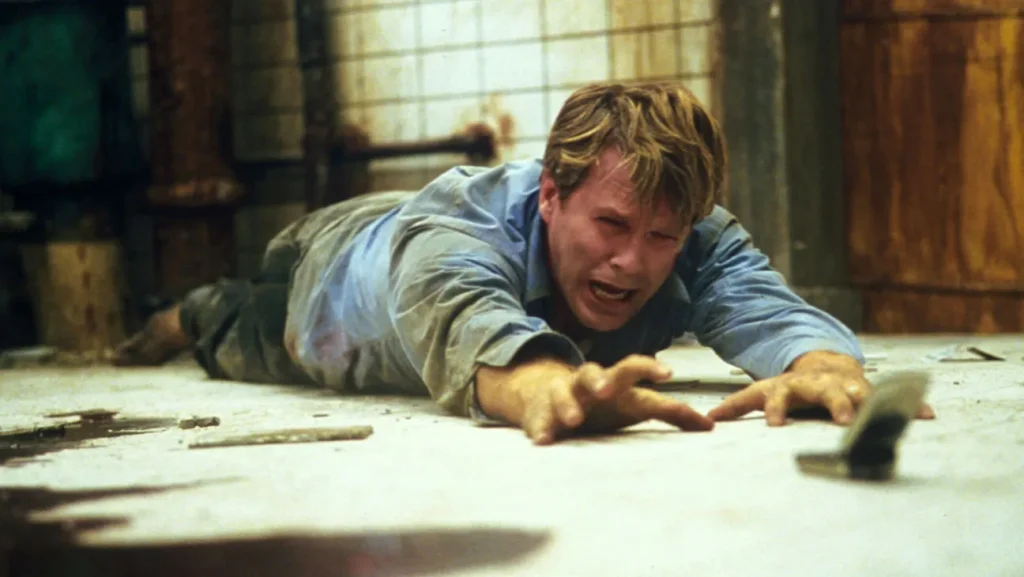
James Wan and Leigh Whannell shot this intense thriller in just 18 days on a heavily restricted $1.2 million budget. Confining the majority of the narrative to a single dilapidated bathroom set kept the production costs manageable. Lionsgate oversaw a brilliant marketing campaign that translated into $103 million at the box office. The property evolved into a massive franchise that dominated October theatrical releases for years.
“Napoleon Dynamite” (2004)

Jared Hess expanded his student short film into a full feature using $400,000 and the support of his local Idaho community. The eccentric characters and completely deadpan delivery offered a sharp contrast to mainstream teen comedies. A joint distribution effort by Fox Searchlight and MTV Films yielded $46 million in ticket sales. Quirky merchandise, particularly the iconic Vote for Pedro shirts, generated significant secondary revenue.
“Little Miss Sunshine” (2006)

A dysfunctional family road trip required an $8 million budget and five years of difficult development before reaching the screen. The casting directors expertly assembled an ensemble that balanced dark humor with genuine emotional weight. Fox Searchlight purchased the distribution rights at Sundance for a record breaking sum, ultimately grossing $101 million worldwide. The bright yellow Volkswagen bus became an enduring symbol of independent cinema.
“Once” (2007)

John Carney directed this modern Irish musical with $150,000, shooting with natural light and relying on friends’ apartments for locations. The two lead musicians recorded the soundtrack live on the streets of Dublin, capturing authentic acoustic performances. A specialized release strategy helped the intimate romance earn $20 million globally. The original song Falling Slowly secured an unexpected Academy Award victory.
“Juno” (2007)

Continuing Fox Searchlight’s streak of indie successes, this $6.5 million coming of age comedy tackled teen pregnancy with razor-sharp wit. Diablo Cody’s distinct dialogue required a lead actress capable of delivering sarcastic lines with underlying vulnerability. Box office numbers swelled to $231 million, largely driven by critical buzz and a memorable indie folk soundtrack. The script earned an Oscar and launched Elliot Page into mainstream stardom.
“Tangerine” (2015)

Sean Baker captured the vibrant chaos of Los Angeles by filming entirely on three customized iPhone 5s smartphones. An incredibly modest $100,000 budget forced the crew to shoot illegally without standard city permits. Magnolia Pictures recognized the raw energy of the project and pushed it to an impressive $936,000 theatrical gross. This production proved that high-end professional cameras were no longer a strict requirement for cinematic storytelling.
“Get Out” (2017)

Jordan Peele transitioned from sketch comedy to suspense by utilizing a $4.5 million budget provided by Blumhouse Productions. The narrative perfectly balanced terrifying psychological tension with sharp social commentary regarding race relations in America. Universal Pictures distributed the film to a massive $255 million return. It redefined the modern thriller landscape and won the Academy Award for Best Original Screenplay.
“Everything Everywhere All at Once” (2022)

Daniel Kwan and Daniel Scheinert created a sprawling multiverse narrative with a surprisingly restrained $14.3 million budget. A small core team of visual effects artists handled the complex digital manipulations directly from their personal computers. A24 handled the theatrical rollout, resulting in a staggering $143 million global gross. The wild martial arts comedy swept the major categories during award season.
“Talk to Me” (2022)

Australian twin brothers Danny and Michael Philippou leveraged their YouTube directing experience to stretch a $4.5 million production budget. Practical makeup effects were heavily utilized to create the terrifying spiritual possessions anchored by the ceramic hand prop. Another major acquisition for A24, the horror film secured $92 million worldwide. A sequel was immediately put into development following the profitable opening weekend.
“Barbarian” (2022)

Zach Cregger faced numerous studio rejections before securing $4.5 million from BoulderLight Pictures to shoot in Bulgaria. The script deliberately subverted traditional horror expectations by completely shifting the narrative perspective midway through the runtime. Strong internet word of mouth helped push the final gross beyond $45 million. The unpredictable plot structure became a major talking point on social media platforms.
“Terrifier 2” (2022)

Damien Leone utilized an initial $250,000 budget, largely crowd funded by fans of his previous independent horror shorts. The intense practical effects led to reports of audiences fainting, which served as organic viral marketing. Cinedigm pushed the unrated slasher into theaters where it unexpectedly generated over $15 million. Art the Clown rapidly ascended to the ranks of iconic cinematic killers.
“Skinamarink” (2022)

Kyle Edward Ball filmed this experimental horror project inside his childhood home using a micro budget of just $15,000. Grainy visuals and obscured camera angles forced the audience to project their own fears into the dark spaces on screen. Leaked festival copies went viral on social media platforms, translating into a $2 million theatrical run. The minimalist approach tapped directly into universal childhood nightmares.
“Godzilla Minus One” (2023)

Takashi Yamazaki delivered a masterclass in efficient filmmaking by bringing the legendary kaiju back to his roots for approximately $10 to $12 million. The visual effects team consisted of just 35 artists who carefully selected where to allocate their rendering resources. It stunned the global box office with a $115 million gross, completely embarrassing Hollywood productions with tenfold budgets. The visual effects team ultimately secured an Academy Award for their breathtaking work.
“The Blair Witch Project” (1999)

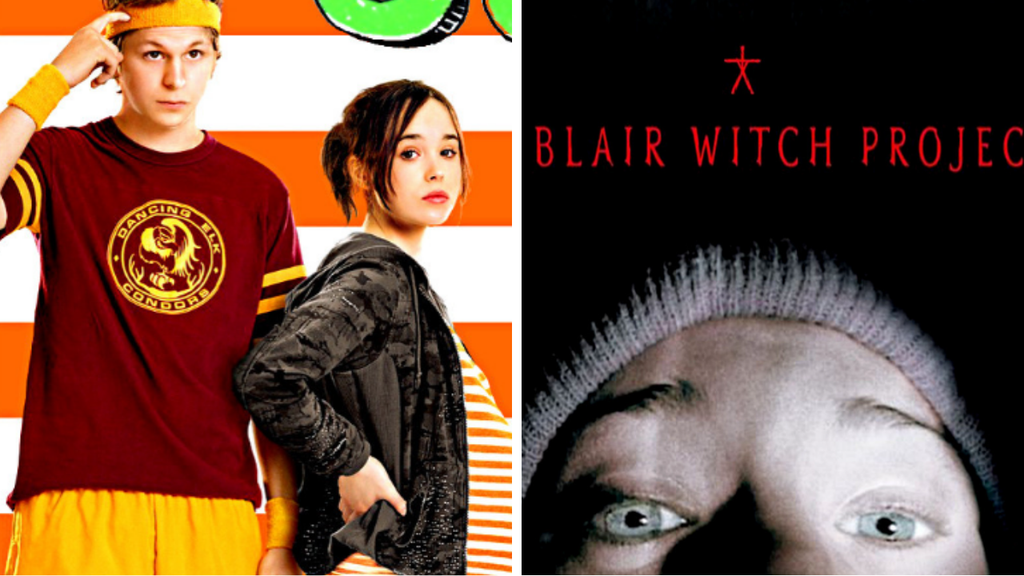
Three unknown actors wandered into the Maryland woods with $60,000 and primitive recording equipment to create a faux documentary. The directors deliberately deprived the cast of sleep and food to capture authentic psychological distress on camera. Artisan Entertainment purchased the footage and crafted a revolutionary early internet marketing campaign that resulted in a $248 million windfall. This massive return on investment effectively popularizing the found footage genre.
“Paranormal Activity” (2007)

Oren Peli accomplished the ultimate cinematic hustle by shooting a supernatural thriller in his own suburban home for a mere $15,000. He served as the writer, director, and camera operator, utilizing a stationary camera setup to build creeping dread without expensive setups. A viral online demand campaign engineered by Paramount propelled the independent feature to a breathtaking $193 million global take. The sheer profit margin remains one of the most astonishing financial feats in Hollywood history.