
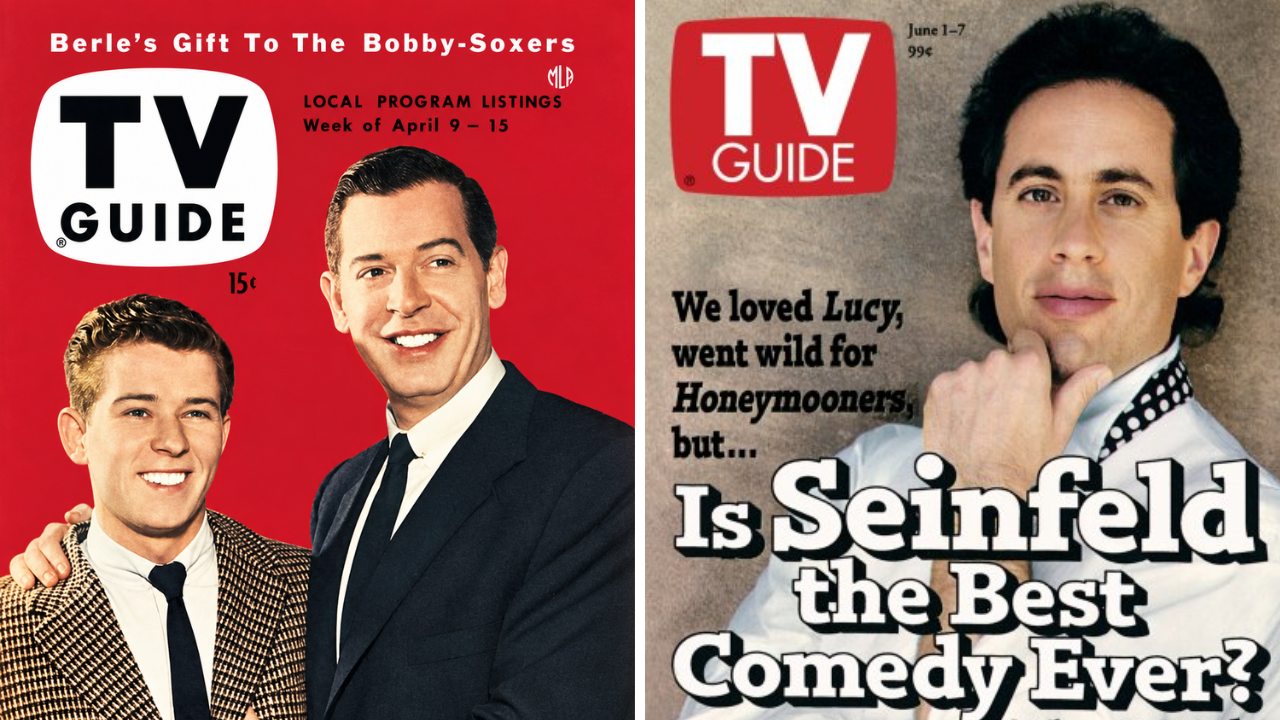
For generations of Americans, TV Guide was more than a weekly schedule. Its small, colorful covers brought television stars into living rooms, grocery stores, and coffee-table conversations across the country. These vintage images revisit the changing faces, artwork, and television traditions of a magazine that became part of American popular culture.
The baby who launched TV Guide in 1953

TV Guide’s first national issue, dated April 3, 1953, put newborn Desi Arnaz Jr. on the cover with a small photograph of his famous mother, Lucille Ball. The headline about Lucy’s $50 million baby captured just how powerful I Love Lucy had become. A television magazine could hardly have asked for a more recognizable introduction.
A television cover from September 1953

By September 1953, TV Guide was already becoming a familiar companion for viewers planning their evenings around the television set. Its early covers remind us how quickly broadcasting had become a subject of national fascination. The compact weekly magazine put entertainment personalities and television schedules in one convenient place.
A snapshot of television in October 1959

By October 1959, TV Guide was documenting a medium that had become central to American home entertainment. Westerns, variety programs, situation comedies, and dramatic series all competed for viewers’ attention. The magazine’s weekly covers offer a visual record of an industry expanding in both ambition and influence.
Milton Berle and television’s first celebrities

Milton Berle became one of the most important entertainers of early American television. His variety performances helped demonstrate television’s ability to attract enormous audiences around a single personality. An image featuring Berle and Charlie Applewhite brings back the lively world of early broadcast entertainment.
TV Guide’s colorful world in January 1954

An archival reproduction of TV Guide material from January 1954 captures the magazine near the beginning of its national history. Its compact format placed programming information alongside photographs, artwork, and stories about the people appearing on screen. Those printed pages became a weekly ritual in countless American households.
Johnny Carson takes a look at The Tonight Show
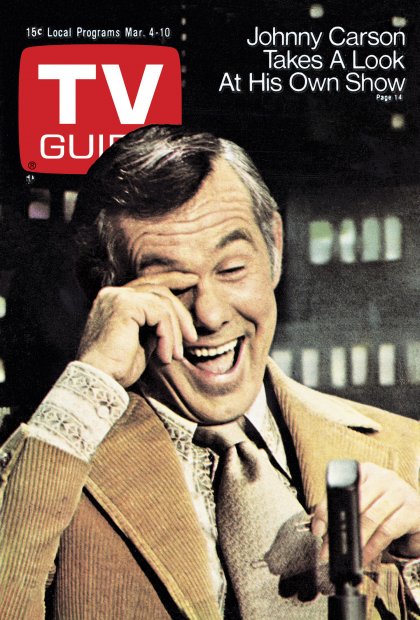
TV Guide put Johnny Carson on its March 4, 1972, cover for a story about his own late-night show. By then, Carson had become a familiar presence in American homes, making the magazine’s choice instantly recognizable. The cover captures television at a moment when a talk-show host could become part of viewers’ nightly routine.
Mary Tyler Moore takes TV Guide to Moscow
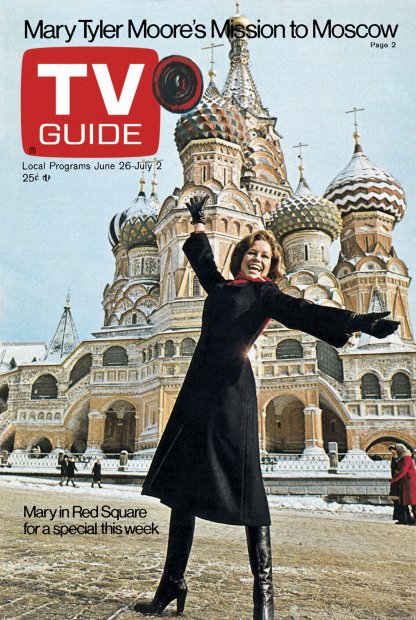
The June 26, 1976, issue featured Mary Tyler Moore with a cover story titled “Mary Tyler Moore’s Mission to Moscow.” Her presence reflects how television performers were increasingly prominent beyond the programs that made them famous. It is a distinctive snapshot of one of the decade’s best-known television stars.
TV Guide surveys the giants of television talk
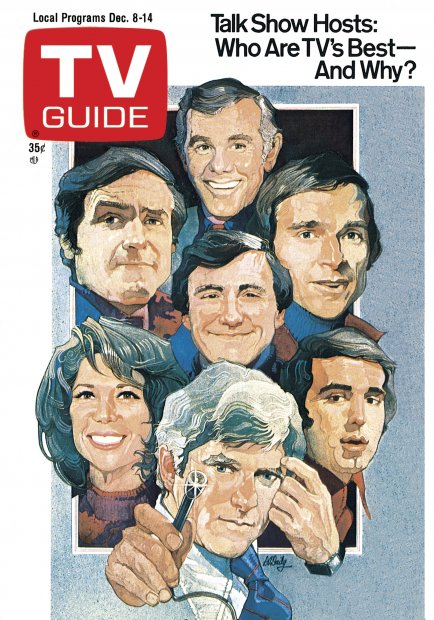
On December 8, 1979, TV Guide gathered leading television hosts for a cover asking who was best and why. Johnny Carson, Dick Cavett, Phil Donahue, and others represented different styles of talk television. The illustrated lineup turns a familiar magazine cover into a portrait of the genre’s range.
M*A*S*H faces a new decade in 1980
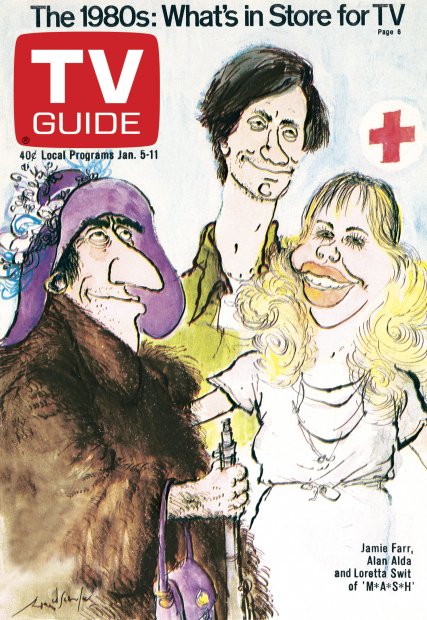
The January 5, 1980, TV Guide cover featured Alan Alda, Jamie Farr, and Loretta Swit in an illustration accompanying a look at the new decade. With M*A*S*H among television’s best-known series, the characters offered an instantly familiar starting point. The artwork captured a shift from the 1970s into the television landscape of the 1980s.
Madonna makes a striking 1985 TV Guide cover
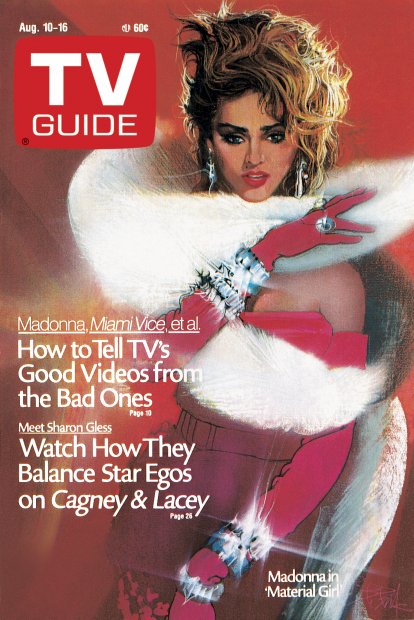
Madonna appeared in vivid illustrated form on TV Guide’s August 10, 1985, issue. The cover accompanied a story about judging music videos, showing how closely television and pop music had become linked. Its bold artwork looks dramatically different from the magazine’s earlier portraits and seasonal previews.
Cheers brings its barroom comedy to the cover
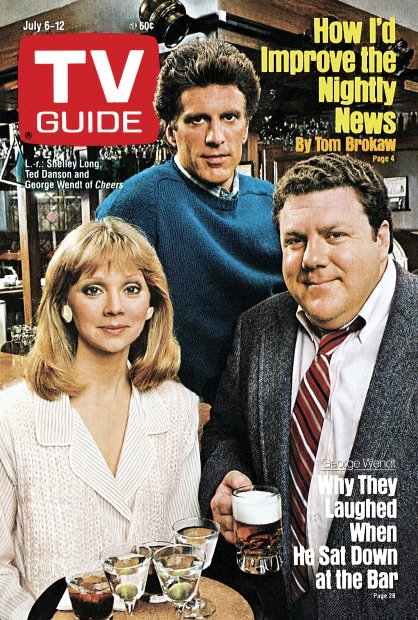
Ted Danson, Shelley Long, and George Wendt appeared on the July 6, 1985, issue of TV Guide for a story about Cheers. The sitcom turned an everyday Boston bar into one of television’s most recognizable settings. Featuring its cast gave the magazine a relaxed, character-driven cover far removed from the annual network preview format.
The changing television landscape of 1976

American television in 1976 combined familiar network traditions with evolving audience interests. Each fall brought decisions about which new series would survive and which established favorites could maintain their popularity. TV Guide’s seasonal preview made those programming choices part of the excitement for viewers.
Dallas, Dynasty, and Knots Landing share a cover
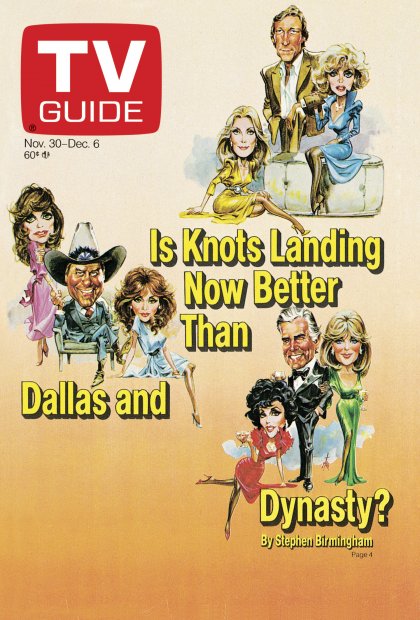
TV Guide’s November 30, 1985, issue brought together stars associated with Dallas, Dynasty, and Knots Landing. Its cover asked whether Knots Landing had surpassed the other prime-time soaps. The crowded ensemble makes a vivid record of the 1980s appetite for glamorous serialized drama.
TV Guide asks whether cartoons have grown up
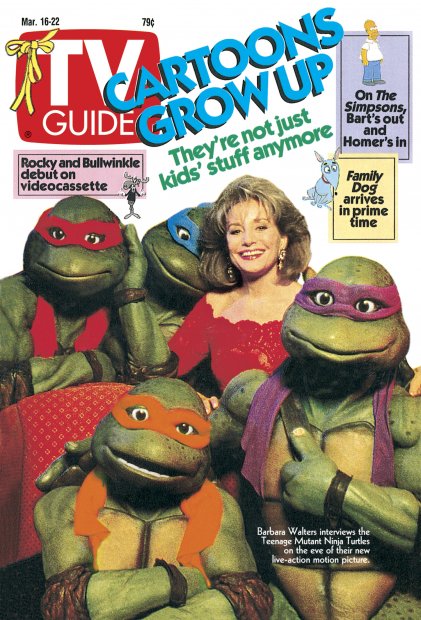
The March 16, 1991, cover explored changing attitudes toward animated television under the headline “Cartoons Grow Up.” Its artwork brought together familiar characters, including Homer Simpson and the Teenage Mutant Ninja Turtles. The result shows how the magazine made room for pop-culture changes beyond traditional live-action celebrities.
Friends becomes a TV Guide returning favorite
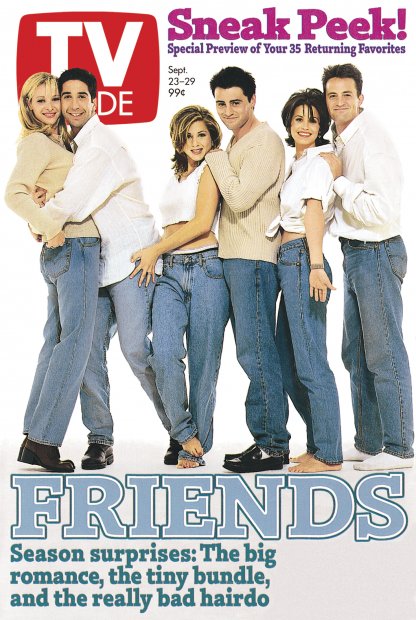
The six principal Friends cast members appeared on TV Guide’s September 23, 1995, issue in its “Returning Favorites” coverage. The ensemble image captures a sitcom that was becoming a major part of 1990s television culture. Compared with the early covers of individual stars, this one sells the appeal of an entire group.
TV Guide asks if Seinfeld is the best comedy
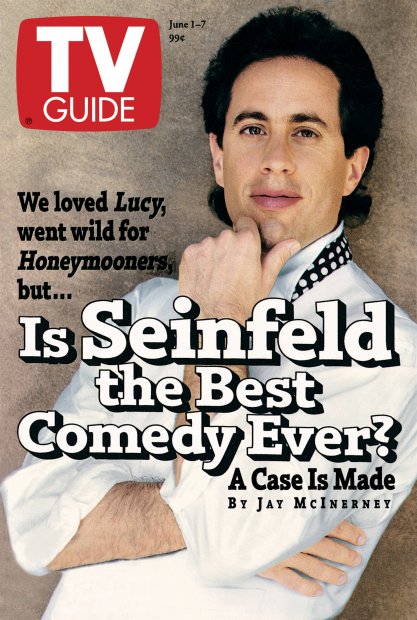
The June 1, 1996, cover placed Jerry Seinfeld at the center of a question about his show’s standing among television comedies. TV Guide was reflecting a discussion already familiar to many viewers: just how far could a sitcom built around ordinary frustrations go? It is a memorable example of the magazine turning a popular series into a larger conversation.
The X-Files gives TV Guide a sci-fi mystery
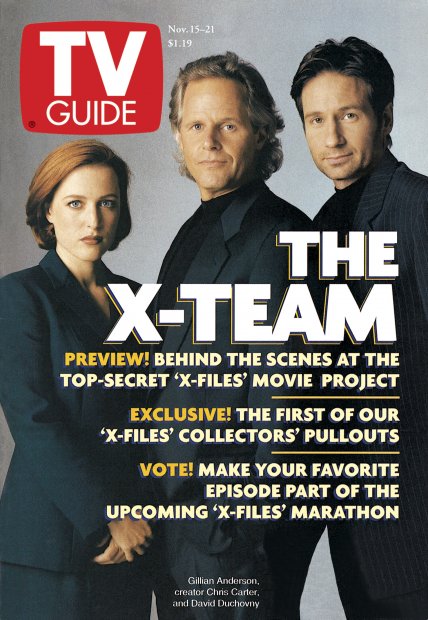
Gillian Anderson, David Duchovny, and series creator Chris Carter appeared in TV Guide’s November 15, 1997, coverage of The X-Files. The cover captured the popularity of a show built around investigations, uncertainty, and conspiracies. Its science-fiction subject brings a very different mood to the final stretch of the gallery.
TV Guide’s Fall Preview reaches 1982

By 1982, television was moving toward an era shaped by cable expansion and home video recording. TV Guide’s annual Fall Preview still reflected the established excitement surrounding new network shows. Looking at its cover today offers a reminder of how quickly the way Americans watched television was about to change.







