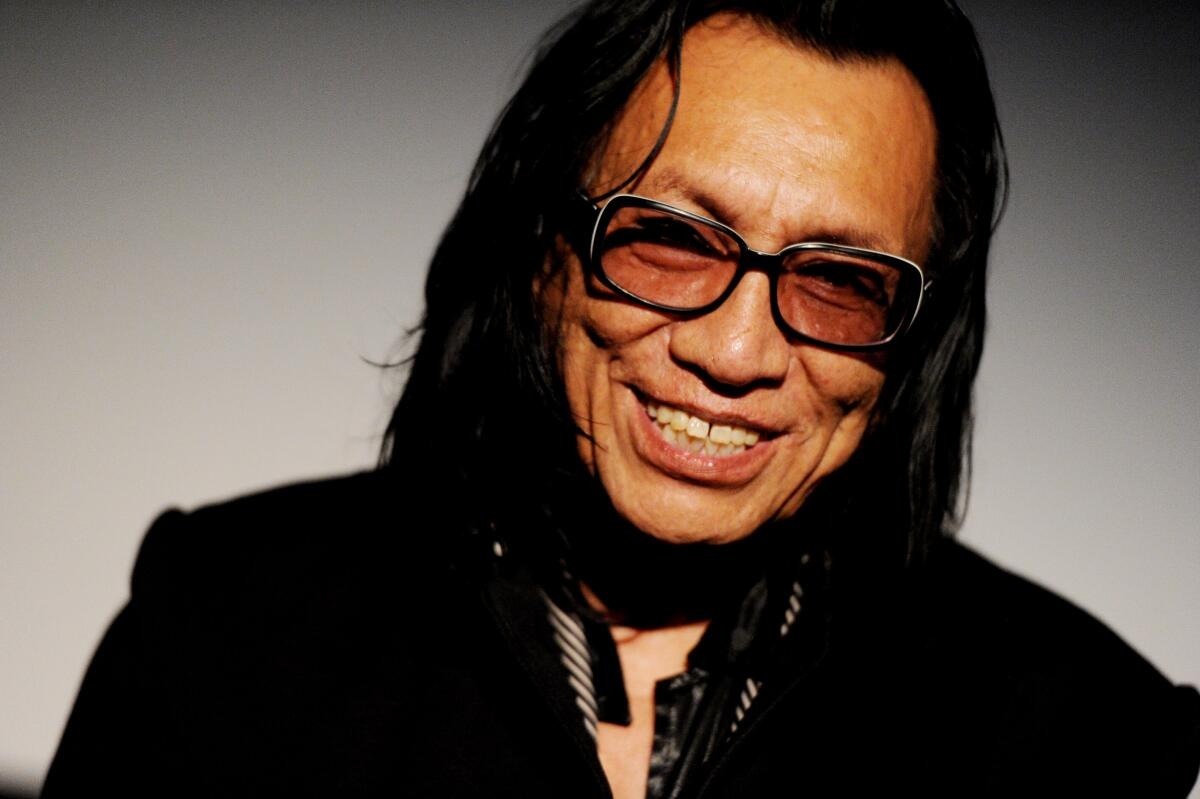
Sixto Rodriguez, better known as Sugarman, is one of the most interesting figures in the history of modern music. A man kept far away from the public light, barely popular in his home country, managed to achieve legendary status on the opposite pole of the world, all without even knowing it, and spawned an Academy Award-winning film. This is his story.
1. This Is Sixto

Sixto Diaz Rodríguez was born in the early 40s in Detroit, Michigan to Mexican parents. Sixto grew up in desolate poverty, facing racism and alienation from everyone around him. His mother passed away when he was only three, and he saw nothing but challenges throughout his early life.
2. Finding An Outlet

In his teenage years, Sixto often used music as an outlet to express his feelings. His upbringing heavily inspired the type of music he listened to and eventually wrote for himself.
3. Career Beginnings

In the late 60s, Sixto started performing in Detroit under the stage name “Rod Riguez”. He became a small-time success story in the city and became known for his deep, soulful lyrics.
4. Getting Discovered

After seeing some success in the local music scene in Detroit, Sixto was discovered by music producers Mike Theodore and Dennis Coffey in 1969. They saw his potential and knew he could make it big in the music industry.
5. Signing A Deal

After a few auditions and negotiations, Sixto found himself signing a record deal with Sussex Records, which was a part of the national Buddah Records music label. This deal could’ve potentially turned Sixto into a household name, and he was in for a wild ride after that…
6. The First Recording

Soon after getting signed, Sixto recorded his first album with Sussex. The album, titled ‘Cold Fact,’ was a folk/psychedelic rock record that also contained his signature track titled “Sugar Man”. It was released in 1970 with Sixto now assuming the stage name “Rodriguez”, and received some extremely positive reviews. But as far as success goes, fate had other plans…
7.The Flop

Cold Fact failed to attract the attention Sussex Records was hoping it would. Despite the positive reviews, it barely sold a few hundred copies at best, and it likely churned out a net loss for the label. Rodriguez was now on thin ice, but he would have another chance to prove himself.
8. Coming from Reality

Just a few months after the failure of Cold Fact, Rodriguez recorded his second album, “Coming from Reality”. He decided to stick to the same kind of music as before and give it another shot. There was a lot riding on the success of this album, since the first one was such a failure. But unfortunately for Rodriguez, it would be the same story.
9. Two Failures In A Row

Coming From Reality was released in November 1971, and much like Cold Fact, it was a massive commercial failure. The reviews, while still positive, weren’t as universally positive as the first one, and the sales numbers would be even lower.
10. Fired

Rodriguez was in the process of recording a third album for Sussex following Coming From Reality, but after two back-to-back failures, he was promptly dropped by the label right before Christmas in 1971.
11.A Failed Musician

Sixto’s third album would go unfinished after he was dropped by Sussex, and he would quit the music industry altogether a few years later. His chances of ever making it out of poverty were pretty much over, and after buying a broken-down house in Detroit for $50 in a government auction in 1976, he would go completely off the radar.
12. Making Noise Around The World

By the time he retired, Rodriguez was all but forgotten in his home country. But around the same time, some of his songs started to receive radio plays in countries like South Africa, Australia, New Zealand, and Botswana. This would be the beginning of a pivotal moment in his legacy.
13.Gaining Popularity

As more and more people started hearing songs like “Sugar Man,” the demand for full albums started to follow. People in Australia started importing copies of his albums from Sussex Records. They were selling like hotcakes, and similar stories were heard in other countries like South Africa.
14. Selling The Rights

Eventually, an Australian record label called Blue Goose Music would buy the rights to all of Rodriguez’s recordings, all unbeknownst to Rodriguez himself, who was now enjoying his retirement in Detroit.
15. The Compilation Album

Blue Goose Music would release a compilation album of Rodriguez titled ‘At His Best’ in 1977. The album became a relatively big success in Australia, selling thousands of copies and gaining considerable airplay. But it would be another continent where this album would truly leave its impact.
16. Finding Success

Counterfeit copies of “At His Best’ started to be produced in South Africa shortly after the album’s release, and it quickly became the most popular record in the country. It sold hundreds of thousands of copies and even went platinum.
17. Becoming An Icon

Rodriguez’s lyrics and themes resonated with South Africans living under an apartheid system on a far deeper level than anywhere else in the world. It became an anti-establishment anthem, and Sixto became popularly known as “Sugar Man” in the country.
18. Performing Again

Even though the bulk of Rodriguez’s success came from South Africa, he was still pretty popular in Australia. There, some of his fans managed to track him down to Detroit in the late 70s and convinced him to perform a concert tour there. He performed in front of a sold-out crowd for the first and was notably nervous. He had no idea of popular he even was.
19. Later Career

Rodriguez would continue to perform in Australia and in other countries from time to time, and slowly, with time, his newfound fame would start to subside. He would start to lower his profile again and still wouldn’t release any new music for decades to come. In the meantime, South Africa was still feeling Sugar-Man-Fever.
20. An Enigma

Sixto still had absolutely no idea of how popular he was in South Africa. He was one of the most popular artists in the country throughout the 80s, as the anti-apartheid movement grew stronger and stronger. But even though South Africans knew his music, they didn’t know much about the man himself, and this only added more to the mystery.
21. The Rumors

Many South Africans came up with their own explanations of Rodriguez’s life. Some believed he was just retired, while others believed he took his own life during a concert. They didn’t know if he was still making music, what his real name was, or if he was even still alive. Some of these questions needed answers, and that’s what two particular fans got…
22. Searching For Sugar Man

In the late 1990s, two Rodriguez megafans, Stephen “Sugar” Segerman and Craig Bartholomew Strydom, would begin a global search for their favorite musician and record it for a documentary.
They managed to track him down to Detroit, where they found him working as a laborer. It was then that Rodriguez would learn about just how big of a phenomenon he was in South Africa, and he would finally achieve his dream of being known as a successful musician.
23. Newfound Fame

Rodriguez would restart his career in the 90s after being found by his fans. He toured South Africa multiple times since then, selling out countless arenas and gaining more success than ever before in his career. The documentary ‘Searching For Sugar Man’ was released in 2012, and it quickly turned him into a global sensation beyond South Africa, including, finally, in his home country of the United States. The film won the Oscar for Best Documentary Feature at the 2013 Academy Awards.
24. The Final Years

The next few years would be a wild ride for Rodriguez. He was finally a global sensation and was recognized everywhere he went. His hits became all-time classics, and despite all that he stayed true to his roots. He would pass away 12 years after the release of the documentary in 2023 after suffering a stroke. A concert in his honor was held in Detroit’s majestic theater, and he was laid to rest knowing what an impact he made on the music world.