Every so often, a word you have said with complete confidence for years turns out to sound nothing like you imagined. In this article of 30 examples, people describe the moment they learned that the comfortable version in their head was not how most dictionaries or speakers actually say it. Many of these words were first encountered in books or online, so readers built their own best guess and kept using it until someone gently corrected them. From fancy food terms to everyday vocabulary, these little pronunciation plot twists are a reminder that English spelling is more of a suggestion than a rule.
Hyperbole
For a lot of readers, “hyperbole” first lives in their head as “HY-per-bowl”. Once they hear it spoken, they find out it is actually “hy-PER-buh-lee”, with the stress on the second syllable and four clear beats. That final “bole” looking like “bowl” is what tricks so many people into the wrong version.
Quinoa
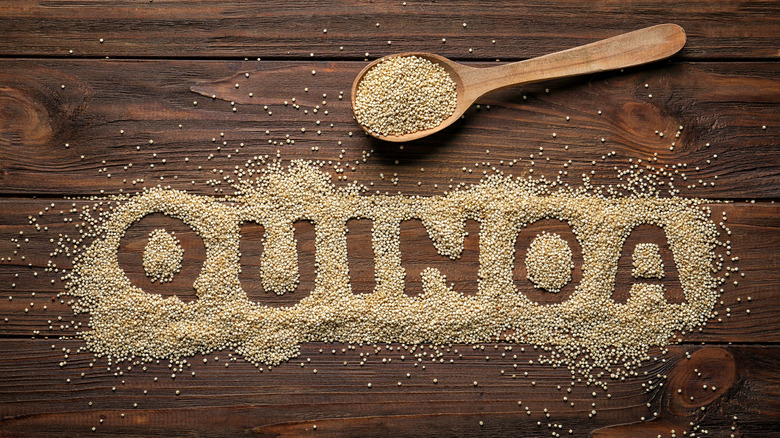
Many people went years calling it “kwin-OH-uh” or “kee-NO-uh”. Then a cooking show or restaurant server introduced them to the usual English pronunciation “KEEN-wah”. The short, two syllable version can feel almost too simple after staring at that spelling.
Colonel

“Colonel” looks like it should sound like “KOL-uh-nel”, and plenty of people quietly read it that way for years. In spoken English, though, it comes out as “KER-nul”. The gap between the spelling and the sound is so extreme that it regularly appears on lists of confusing English words.
Mischievous
Some speakers add an extra syllable and say “mis-CHEE-vee-us”. Dictionaries usually give “MIS-chuh-vus” as the standard pronunciation, with only three beats. Because the four syllable version is so widespread, people are often surprised to learn their tongue has been sneaking in a spare vowel.
Epitome
Plenty of readers carry around “EP-ih-tome” or “EPPY-tome” as their private version of “epitome”. Out loud, however, the word is “ih-PIT-uh-mee”, with the stress near the middle and a soft “mee” at the end. The change feels dramatic because the letters seem to promise a very different rhythm.
Queue

Looking at “queue”, some people jokingly try to pronounce every letter and end up with “Q-oo-eh-oo-eh”. In everyday use, though, the word is simply said as “kyoo”, exactly like the letter Q. The extra vowels are silent passengers that make the spelling look far more complex than the sound.
Facade
Without the little cedilla, “façade” often gets pronounced as “fuh-KADE” or “fack-AID”. The usual pronunciation in English is “fuh-SAHD”, following its French origin more closely. Once someone hears the smoother version, the earlier attempt can start to sound overly literal.
Hors D’oeuvres
On paper, “hors d’oeuvres” invites all kinds of guesses. Caterers and cooking hosts usually say it more like “or-DERVZ”. Hearing the short, compact version can be a bit embarrassing after years of avoiding the word at parties.
Niche

Some people say “NITCH”, others swear by “NEESH”, and many have switched back and forth. Both forms are heard in English, but the French inspired “NEESH” is often presented as the older version. Realizing that there is no single uncontested answer can leave speakers feeling like they have been corrected unfairly either way.
Egregious
It is common to hear someone new to the word say “EGG-ree-gus” or “eh-GREG-ee-us”. Dictionaries usually give “ih-GREE-jus” as the standard pronunciation, with the stress on the second syllable. Once people hear that smoother version, the extra hard consonants tend to drop away.
Paradigm
Before hearing it aloud, a lot of readers go with “PAIR-uh-dig-um” for “paradigm”. The standard form, however, is “PAIR-uh-dime”, with the “g” silent and the final sound matching the word “dime”. Business talks and lectures are often where people first realize their inner version was off.
Onomatopoeia
Readers often wrestle this into “ON-oh-mat-oh-PEE-ah” or cut out syllables altogether. Pronunciation guides usually break it as something like “on-uh-mat-uh-PEE-uh”, with the stress on “PEE”. Once it has been heard a few times, the long word feels less intimidating.
Viscount
Fans of historical fiction often spend years thinking of a “viscount” as a “VISS-count”. When they finally hear it in a show, they find out it is pronounced “VYE-count”, with a silent “s”. That gap between page and speech is especially striking for people who imagined entire families of “VISS-counts” in their heads.
Draught

The spelling “draught” looks like it should rhyme with “caught” or “laugh”. In British English, though, it is typically pronounced just like “draft”. Beer labels and pub menus are often where people learn that the cluster of letters in the middle stays almost completely silent.
Behemoth
Because of how it looks, many readers assume “behemoth” is “BEE-heh-moth”. The pronunciation often given in dictionaries is “buh-HEE-muth”, with the main stress in the middle. That softer opening can feel oddly small for such a big sounding word.
Cache

In tech talk, “cache” often gets turned into “cash-AY” or “kaysh”. In fact, the word rhymes with “cash”. The fancier sounding version belongs to a different word, “cachet”, which leads to even more confusion until someone points out the spelling difference.
Ennui
Some people see “ennui” and say “EN-new-ee” or “EN-oo-eye”. Borrowed from French, it is more like “on-WEE” in English. That short, two syllable version surprises anyone who expected the word to sound as drawn out as the feeling it describes.
Worcestershire
The label “Worcestershire” sauce can lead to tongue twisters like “WOR-chest-er-shy-er”. In practice, many British and American speakers reduce it to something like “WUSS-ter-sher” or “WOOS-ter-sher”. That big drop in syllables is exactly why so many people avoid saying it out loud.
Biopic
You might assume “biopic” should rhyme with “myopic” and say “bye-OP-ick”. Film fans and dictionaries, however, usually treat it as “BYE-oh-pick”, a neat blend of “bio” and “pic”. Once you notice that pattern, the other way around begins to sound a bit off.
Quay

Readers of British novels often imagine a harbor “quay” and quietly think “kway”. The usual English pronunciation rhymes it with “key”. Travel shows and audiobooks are where many people first hear that surprise.
Anemone
With its repeated vowels, “anemone” often comes out as “an-uh-MOAN” on the first try. The usual form in English is closer to “uh-NEM-uh-nee”. It is such a common tongue twister that even movies have joked about characters stumbling over it.
Nuclear

“Nuclear” has two competing versions: “NOO-klee-er” and “NOO-kyuh-ler”. Dictionaries typically mark “NOO-klee-er” as the recommended form and note that “NOO-kyuh-ler” is widely heard but criticized. People who grew up with the second version in political speeches are often surprised to learn that some listeners treat it as a mistake.
Synecdoche
Literature lovers sometimes carry around “SYNEK-doke” or “sine-ECK-dosh” as their private take on “synecdoche”. The version found in pronunciation guides is more like “si-NEK-duh-kee”. Because the word rarely comes up outside classrooms, many people do not get corrected until much later.
Segue
Seeing “segue” in print, it is easy to guess “seeg” or “seg”. In conversation, though, it is pronounced “SEG-way”, just like the scooter brand. People often realise this only after a presenter talks about “a nice segue” between topics.
Forte
When talking about music, “forte” is said “FOR-tay”. In the sense of a personal strength, some style guides note “FORT” as a traditional option and “FOR-tay” as a common modern one. Because both are now widely heard, speakers can feel they are wrong no matter which version they learned first.
Espresso
Coffee fans routinely hear orders for an “expresso”. The Italian word is spelled “espresso” and pronounced “ess-PRESS-oh”, without a hidden “x” sound. Once that detail clicks, the extra consonant suddenly starts to stand out in cafe lines.
Arctic

In quick speech, the first “c” in “arctic” often disappears and the word sounds like “ART-ik”. Pronunciation guides usually include that dropped consonant as a common variant, but also show “ARK-tik” as a careful form that reflects the spelling. People who always said “ART-ik” are sometimes surprised to hear the sharper “ARK” at the start.
Subtle
Because learning readers sound everything out, “subtle” can briefly exist as “SUB-tul” with a clear “b”. In standard pronunciation, the “b” is silent and the word is “SUT-ul”. The extra consonant tends to fade once people encounter the word more often in conversation.
Misled
Many avid readers admit they once thought “misled” was a new vocabulary word pronounced “MY-zeld”. In reality, it is just the past tense of “mislead”, said “MISS-led”. Realising that they invented a whole extra word by mistake is both funny and a little humbling.
GIF
The tiny word “GIF” might be the most debated pronunciation on the internet. Some people have always said it with a hard “g”, like “gift” without the “t”, while others prefer the soft “jif” that the format’s creator has promoted. Dictionaries now tend to list both, which means a lot of users have discovered that no matter which way they say it, someone online will insist they are wrong.